AI Agents - Statistics and Trends (2026)

Businesses are now more than ever eager to automate their business operations with AI agents.
These decision-making algorithms are already transforming the workplace and processes in industries such as customer service, healthcare, and finance.
Let’s take a look at the latest AI agent statistics and trends.
Key Statistics and Trends
- Operational costs of basic tasks can be reduced by 90% with AI agents
- AI agents could replace 300 million full-time jobs by 2030
- 39% of consumers are comfortable with AI agents managing basic tasks
79% of organizations have already implemented AI agents (PwC)
A survey conducted by PwC among 308 senior executives revealed that 79% of organizations had already implemented AI agents.
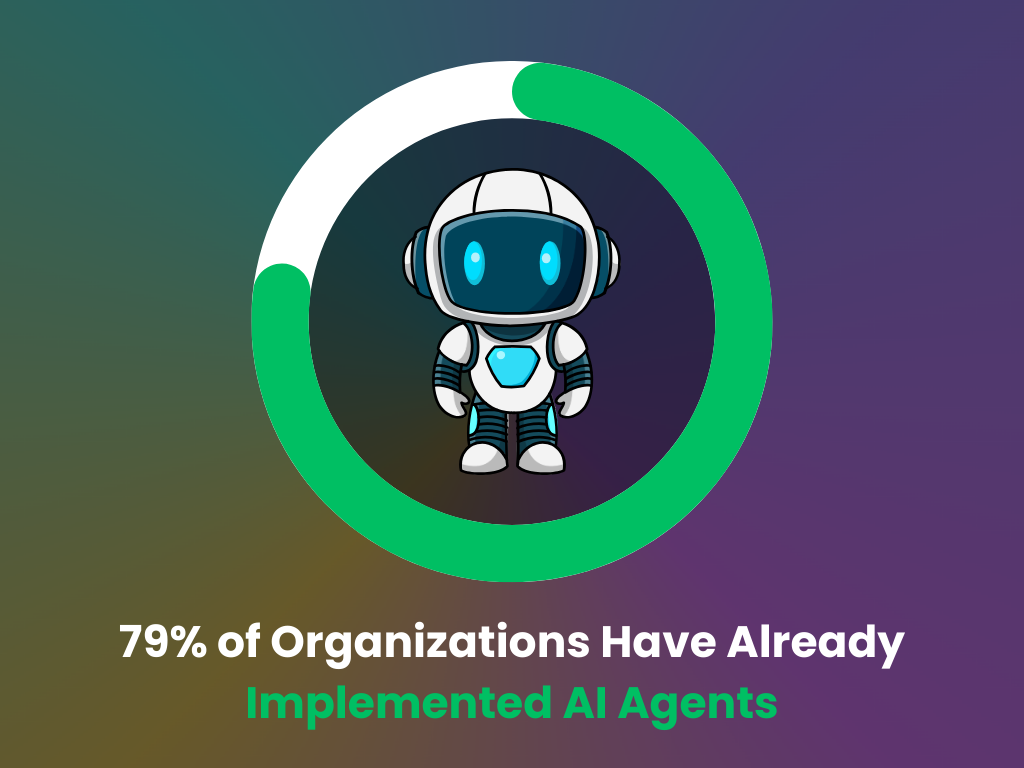
This statistic suggests that AI agents are no longer a competitive advantage for companies, but a capabality that most large organizations already use.
The AI agent market size is expected to grow 45.8% every year until 2030 (Grand View Research)
Statistics published by Grand View Research indicate that the AI agent market is expected to grow at a CAGR (Compound Annual Growth Rate) of 45.8% from 2026 to 2030.
In this scenario, the size of the global AI agent would reach $50 billion per year.
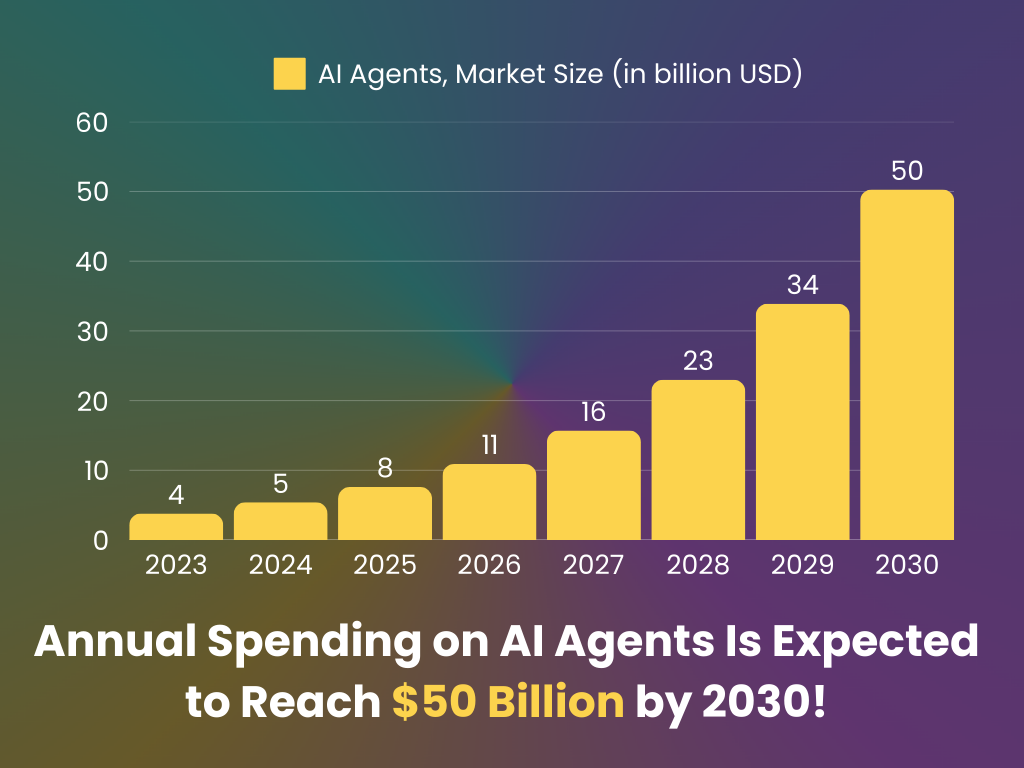
This growth will be driven by companies in the healthcare, finance and e-commerce sectors as they increasingly integrate AI agents to automate routine tasks, improve customer service and streamline operations.
AI tutors are also being used to train employees.
Operational costs of basic tasks can be reduced by 90% with AI agents (BCG)
According to BCG, companies that use AI agents have been able to reduce costs by up to tenfold in routine tasks.
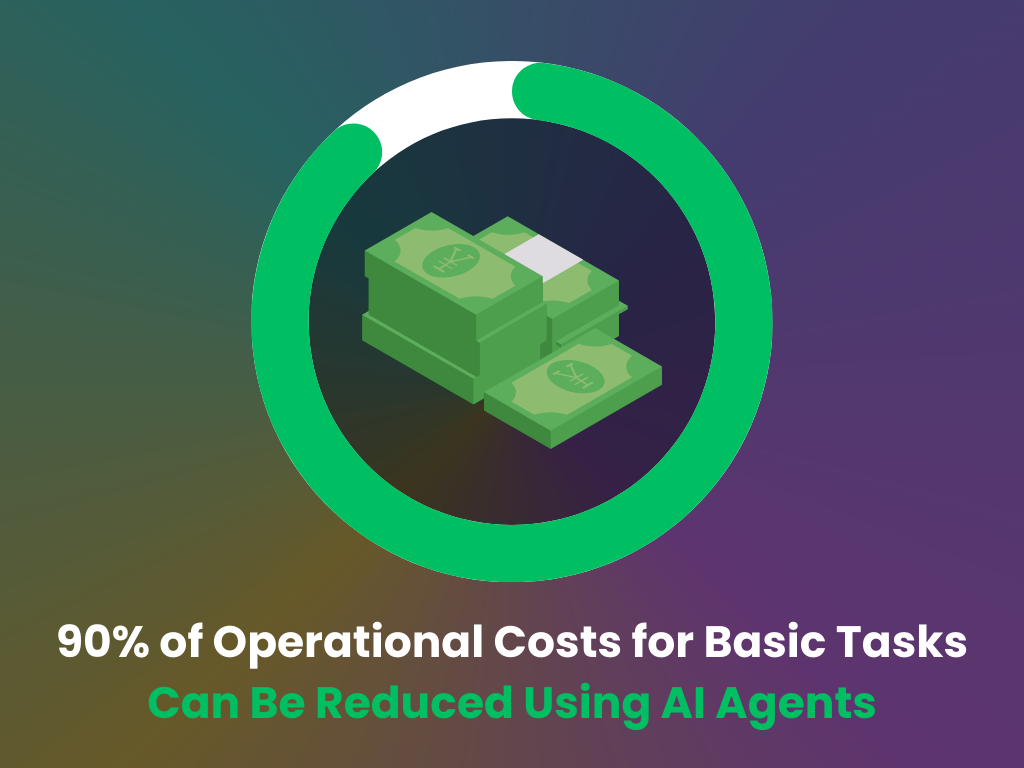
BCG claims that operational expenses related to customer interactions can be reduced by 90% with AI virtual agents.
Similarly, content production costs can be reduced by 95% and the speed of blog publication can be increased by 50 times.
Ready-to-deploy AI agents dominate the market with 69% market share (market.us)
Enterprises favor plug-and-play integrations.
A report published by market.us supports this idea and indicates that ready-to-deploy AI agents dominate the market with 69% market share.
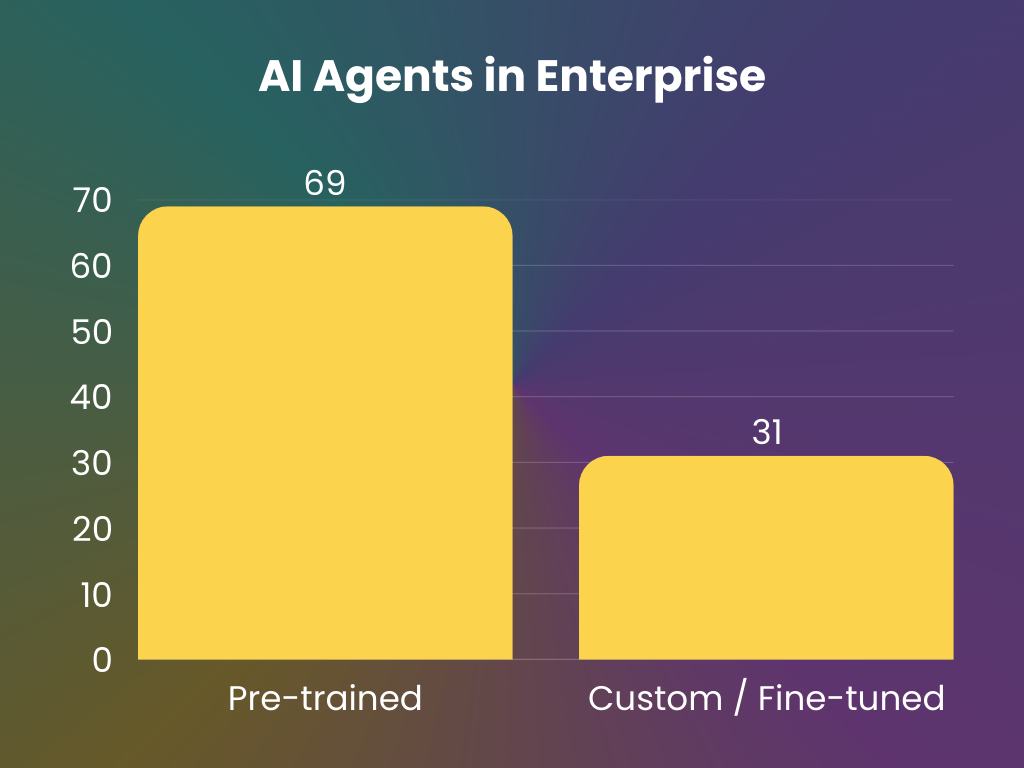
Deploying a pre-trained agent is typically less expensive than developing a custom AI solution from scratch.
With ready-to-deploy AI agents, companies save on development, training, and infrastructure costs while still leveraging AI-powered automation.
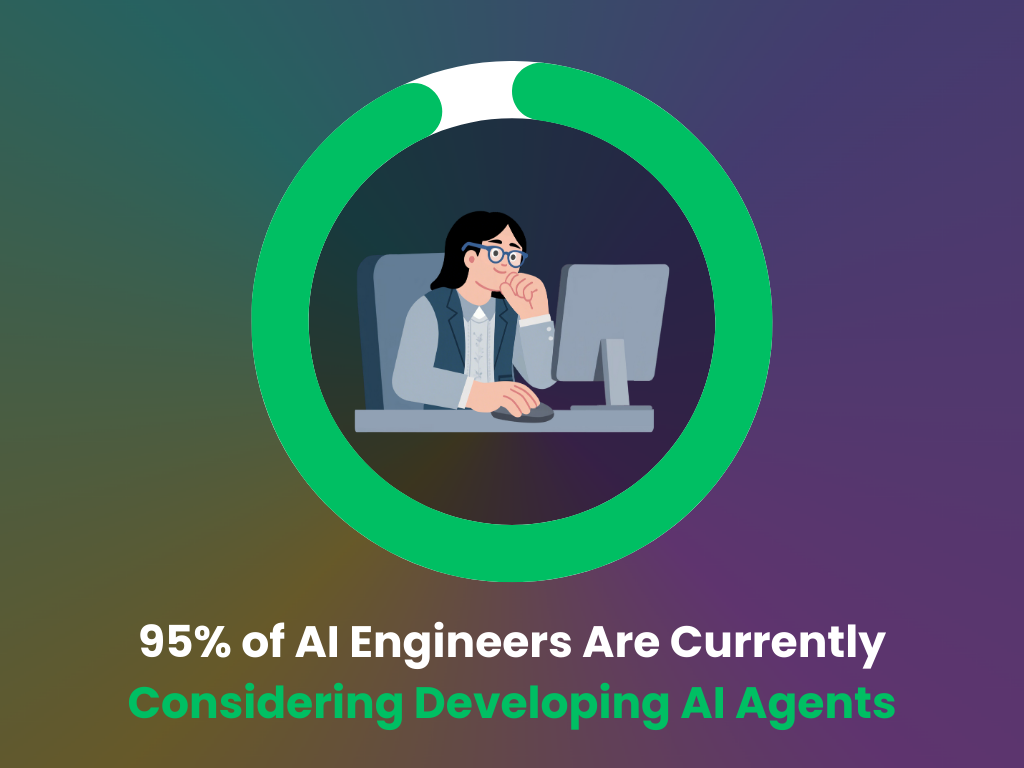
95% of AI engineers are currently considering developing AI agents (IBM)
IBM and Morning Consult did a survey of 1,000 developers who are building AI applications for enterprises, and more than 95% are currently exploring or developing AI agents.
Becoming "agent-ready" takes time, as companies have proprietary data and APIs that need integration with the agent.
Single AI agent systems dominate the market with over 73% market share (market.us)
Most AI agents perform specific, individual tasks, such as managing customer requests, scheduling appointments, or processing transactions.
According to market.us, these simple systems dominate the market with over 73% market share.
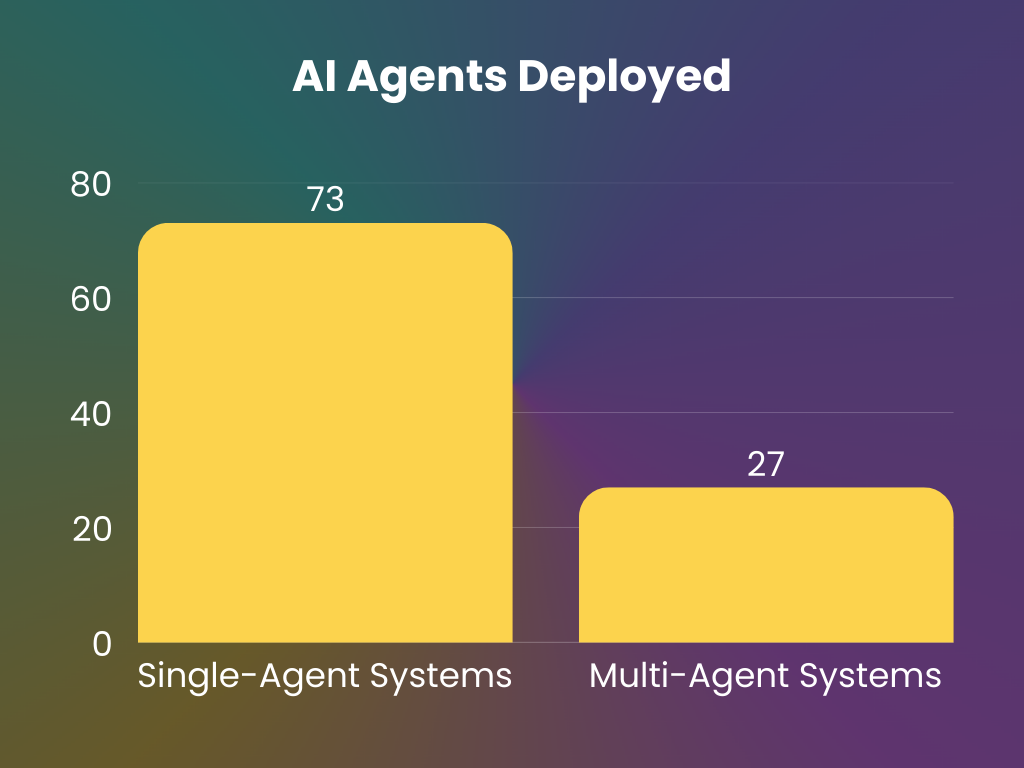
Single-agent systems avoid the complexity of coordinating multiple agents, such as communication protocols, conflict resolution, or synchronization.
Using single-agent systems simplifies development and reduces the risk of errors.
39% of consumers are comfortable with AI agents managing tasks such as scheduling appointments (market.us)
In a survey conducted by market.us, 39% of consumers said they were comfortable with AI agents handling tasks like scheduling appointments.
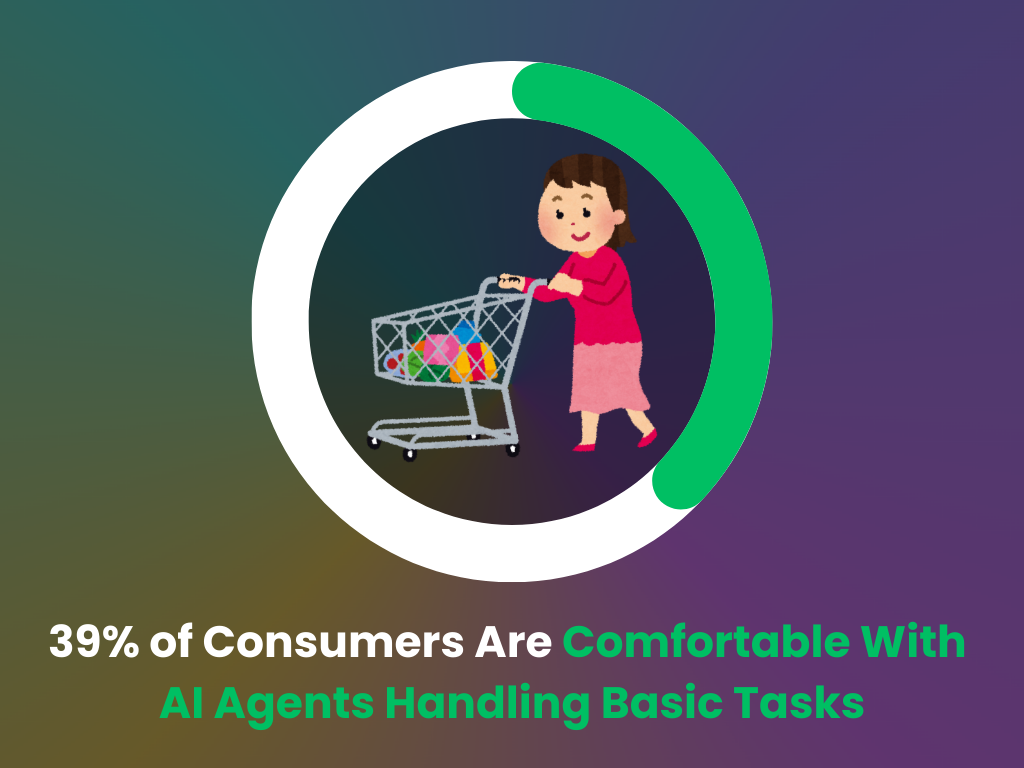
On the one hand, the willingness of nearly 40% of consumers to delegate basic tasks to AI agents provides a solid basis for increasing investments.
On the other hand, nearly 60% of customers are still hesitant to use AI agents, so companies need to build trust by improving transparency and reliability.