Statistics on AI Replacing Jobs (2026 Data)

Several studies and macroeconomic data suggest that, in the year 2026, AI agents could replace approximately 25 million jobs.
However, these disruptions are not evenly distributed across sectors, regions, or demographic groups.
Let’s take a look at the latest statistics on AI replacing jobs.
Key Statistics and Trends
- Generative AI could replace 270 million full-time jobs by 2030
- 60% of jobs in Advanced Economies (AEs) are exposed to some degree of AI automation
- 26% of jobs in Low-Income Countries (LICs) are exposed to some degree of AI automation
- One in four workers worry that AI could make their jobs obsolete, with even more concern among workers of color and younger employees
Generative AI could replace 270 million full-time jobs by 2030 (Goldman Sachs)
A report published by Goldman Sachs claims that generative AI could replace the equivalent of 25 million full-time jobs in 2026 and up to 270 by 2030.
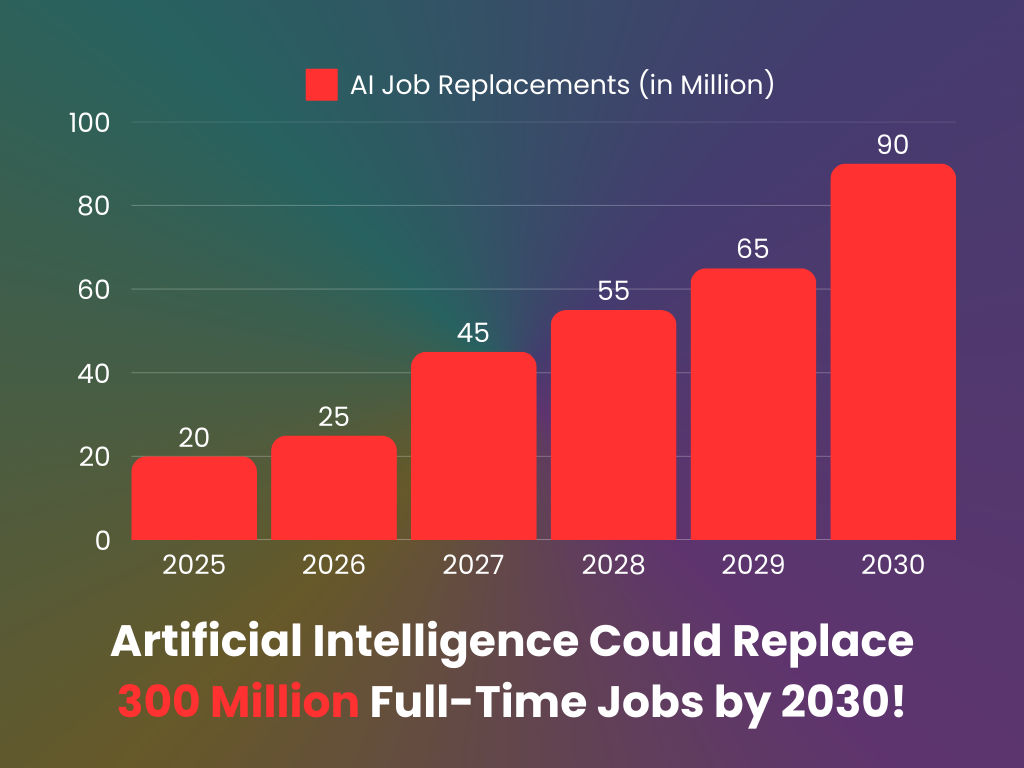
In the same report, Goldman Sachs states that roughly two-thirds of current jobs are exposed to some degree of AI automation, and that generative AI could substitute up to one-fourth of current work.
Early integration of AI will serve as a testing and adaptation phase, while the most transformative effects – where significant portions of work tasks are automated – will occur at the end of the decade.
Please note that this report only reflects the number of jobs lost to AI and does not take into account new jobs created by AI.
26% of office jobs and 20% of customer service jobs are at risk (McKinsey)
Generative AI can more easily automate basic cognitive tasks, but it may take years to automate analytical or social skills.
This means that AI will not have the same impact on all sectors.
An analysis conducted by McKinsey & Company for New York City reveals which careers are most at risk of being replaced by AI.
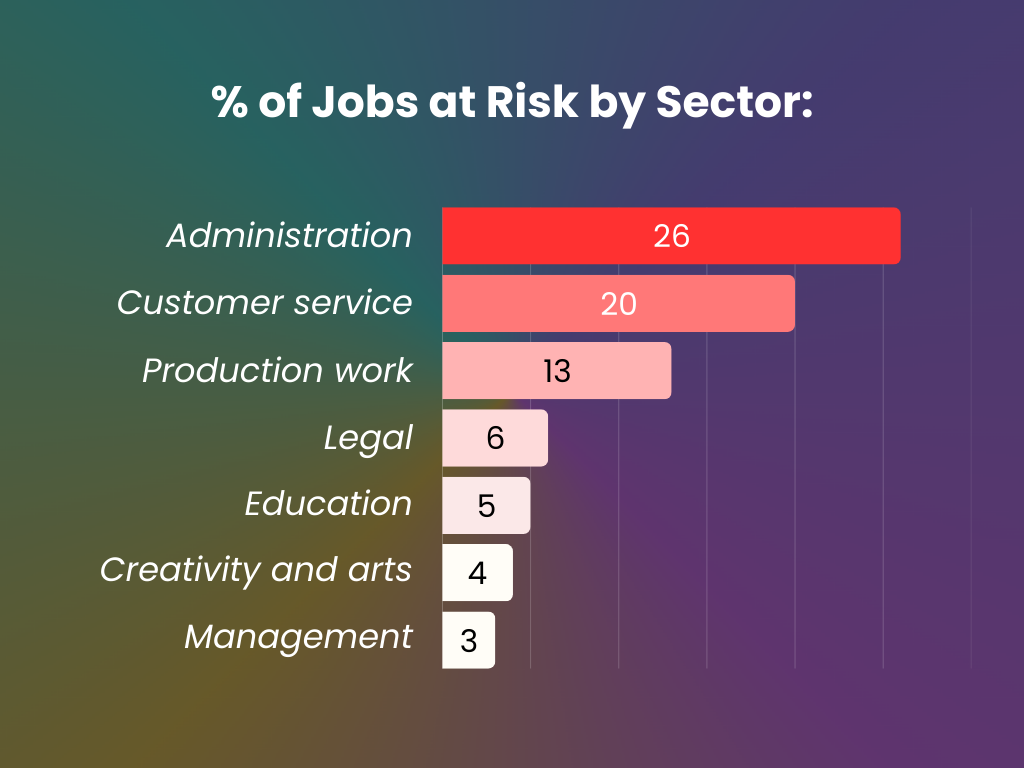
The sectors that will suffer the most job losses are administration (26%), customer service (20%), and production work (13%).
Tertiary sectors such as legal (6%) and education (6%) will also be affected.
Interestingly, the management sector (3%) is the least affected.
Only 26% of jobs in Low-Income Countries (LICs) are exposed to some degree of AI automation (IMF)
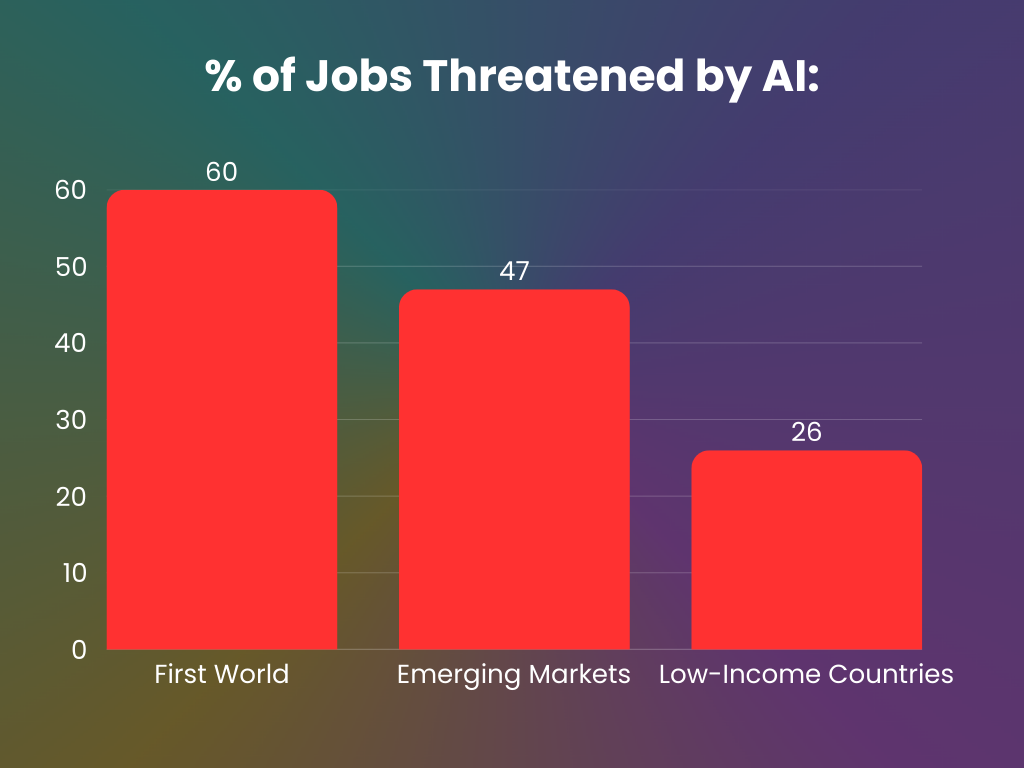
A report published by the IMF indicates that Advanced Economies (AEs) are most exposed to the risk of losing jobs due to AI.
The countries where jobs are most at risk from AI are Switzerland (71%), South Korea (70%), Japan (68%), and Great Britain (67%).
In the United States, 59% of jobs are at risk from AI.
On average, in Advanced Economies, 60% of jobs are exposed to AI due to higher concentrations of white-collar jobs.
In contrast, Low-Income Countries (LICs) such as Nigeria and Kenya exhibit 26% exposure, as their economies rely more on agriculture and informal labor, which are less susceptible to automation.
In Emerging Markets (EMs) such as China, India, or Brazil, about 47% of jobs are exposed to some degree of AI automation.
One in four workers worry that AI could make their jobs obsolete, with even more concern among workers of color and younger employees (CNBC)
A survey for CNBC conducted by SurveyMonkey reveals that roughly a quarter of workers (24%) are worried AI will soon make their job obsolete.
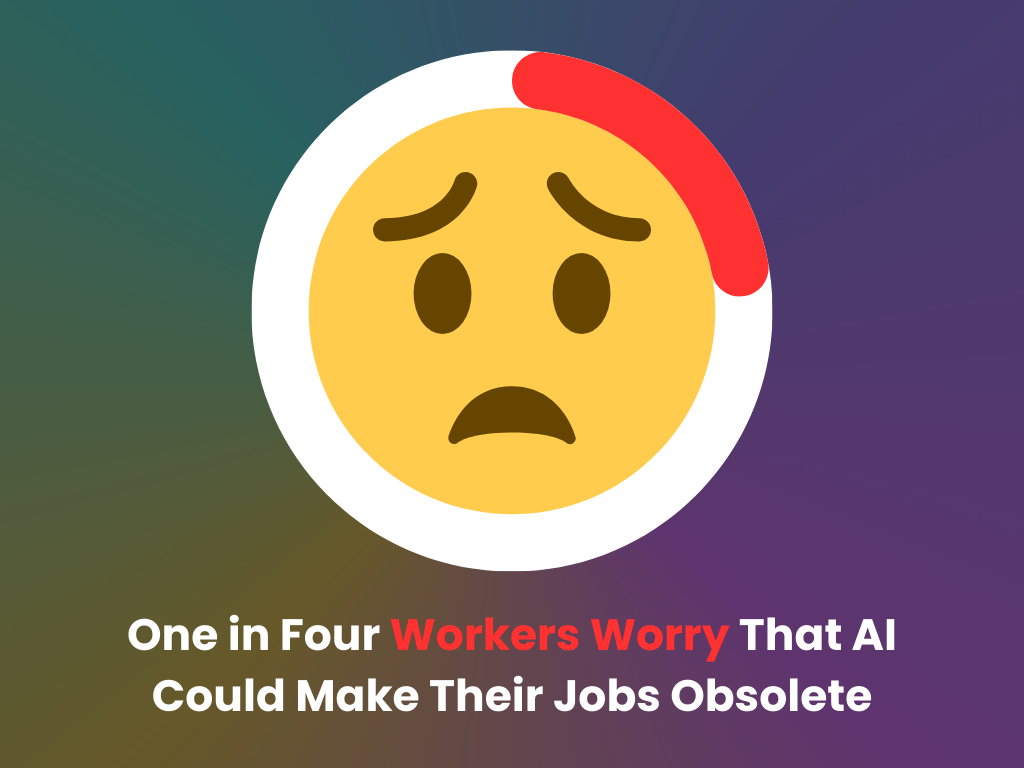
Zoomers feel the most threatened by AI: 32% of workers aged 18 to 24 say they are concerned, compared to just 14% of workers aged 65 and over.
According to the same survey, a smaller share of white workers (19%) are worried about AI compared to Black (32%), Hispanic (35%), and Asian (38%) workers.
This highlights that minority groups feel more threatened by AI, possibly due to concerns about job security.