6 Eye-Opening Active Learning Statistics (2026)

Active learning means students do something with the material, instead of only listening to it.
We surveyed 3,406 students, aged 16 to 34, in 11 countries.
We asked how their classes are taught, and when they think they learn. Let's explore the latest active learning statistics!
Key Active Learning Statistics
- 81% say they learn more when a lesson makes them answer, but 44% say their classes are still mostly lectures
- 63% have sat through a full lecture in which the teacher asked no question
- Students in traditional lectures are 1.5 times more likely to fail than students in active learning classes
Also read: Learning Retention Statistics.
81% say they learn more when a lesson makes them answer, but 44% say their classes are still mostly lectures (Boterview)
In that survey, we asked two questions: when they learn more, and how their current classes are taught.
81% said they learn more when a lesson makes them answer. 44% said their classes are still mostly lectures.
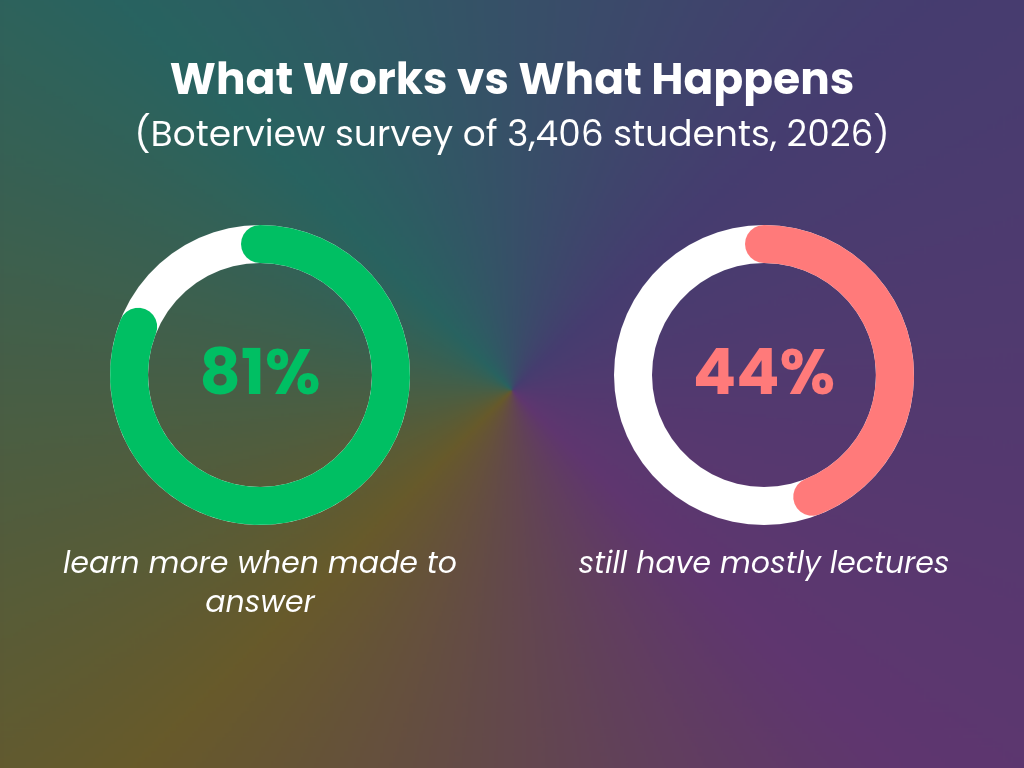
The students have already picked a side. The timetable has not.
63% have sat through a full lecture in which the teacher asked no question (Boterview)
We asked about the last lecture they attended.
63% said the teacher did not ask the class a single question.
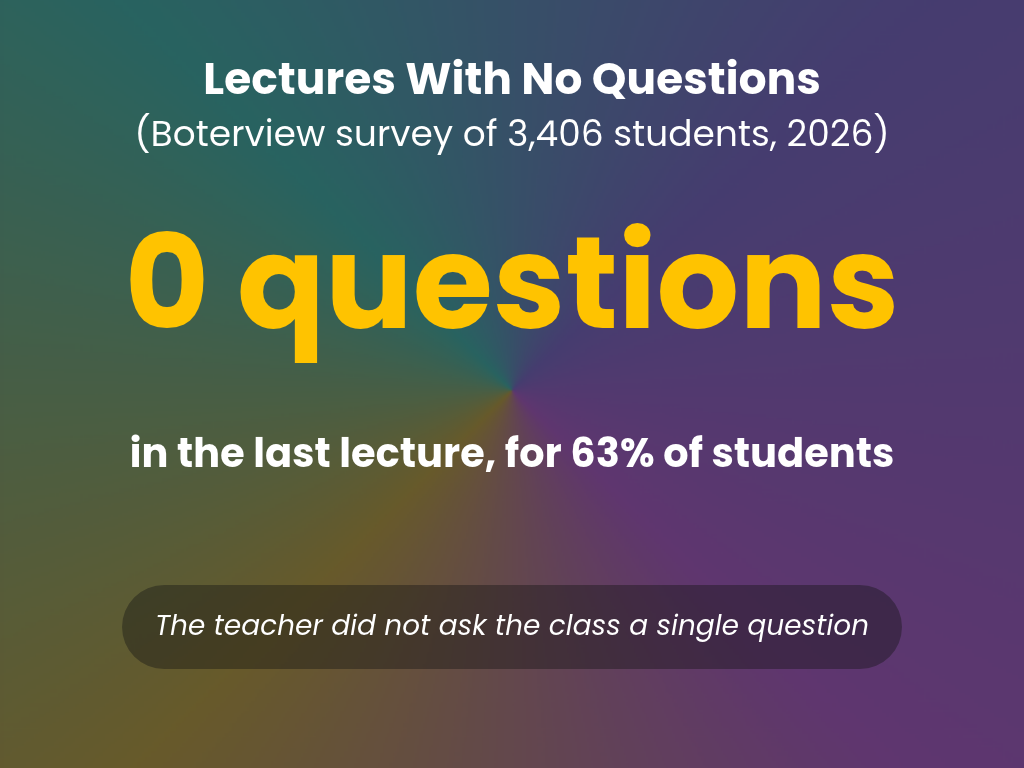
For a lot of students, a lecture with no question is still what class means.
77% say they zone out at least once in a typical lecture (Boterview)
We asked how often they stop following a lecture.
77% said at least once in a typical class. 31% said they miss a large part of it.
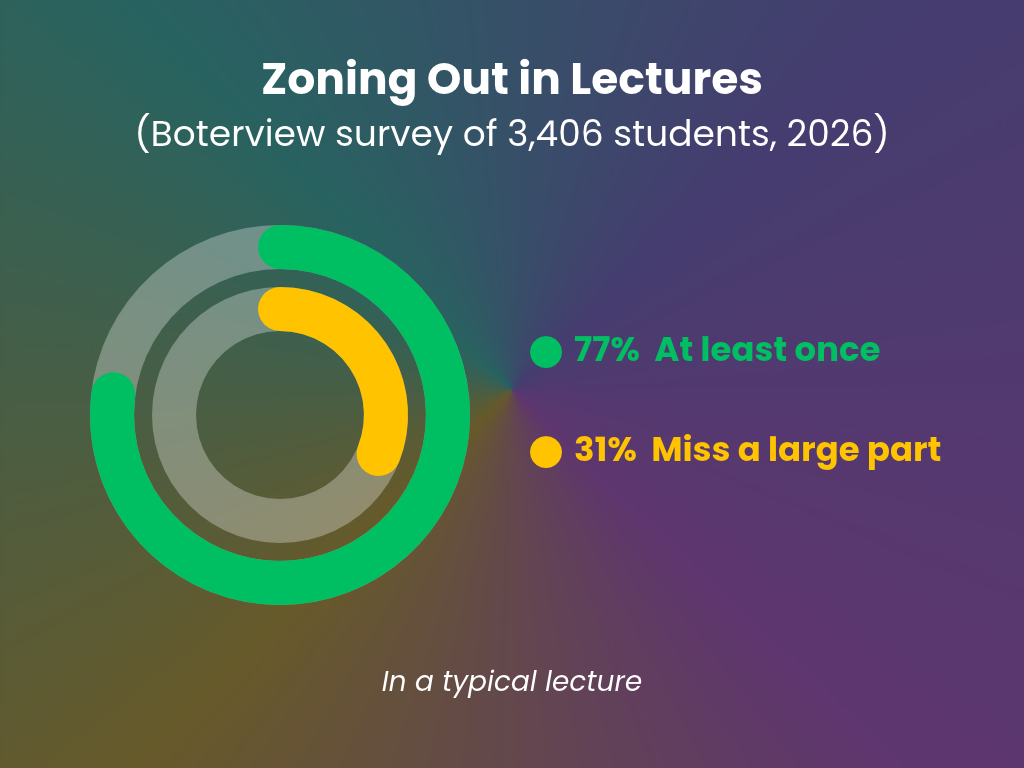
Listening is the method on the timetable. Attention is the part that drops out.
Students in traditional lectures are 1.5 times more likely to fail than students in active learning classes (PNAS)
According to a meta-analysis of 225 studies published in PNAS, students in traditional lecture classes were 1.5 times more likely to fail than students in classes with active learning.
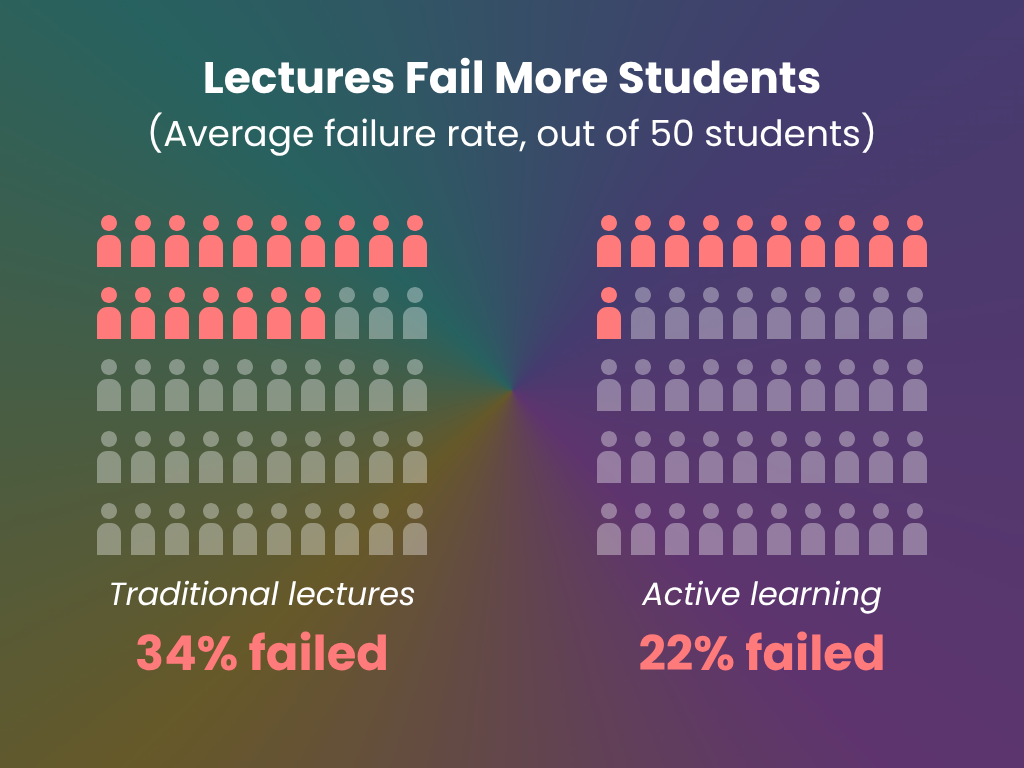
Put differently, failure rates were 55% higher under lecturing.
I still start from this paper. Our survey says students notice the same gap.
52% think highlighting or rewatching a video counts as active learning (Boterview)
We asked whether highlighting notes, or rewatching a video, counts as active learning.
52% said yes.
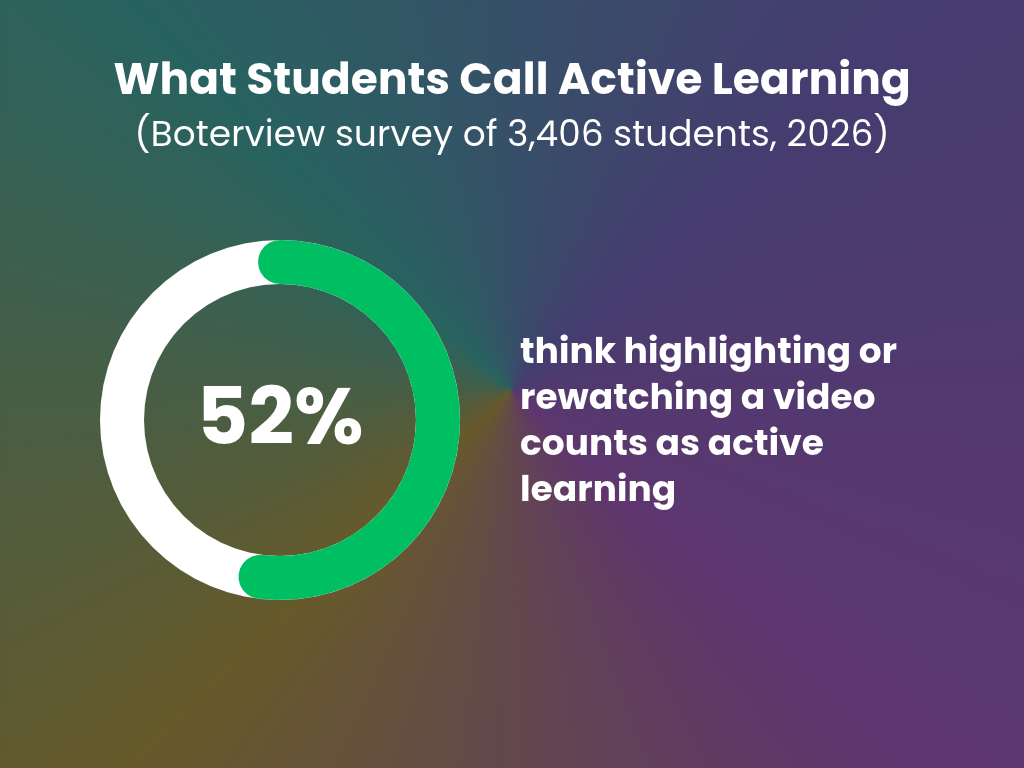
The phrase gets used for almost any study habit, which is why classrooms and research papers talk past each other.
Active learning narrows achievement gaps by 33% in exam scores and 45% in passing rates (PNAS)
According to a study published in PNAS, active learning reduces the gap between underrepresented and other students by 33% in exam scores and by 45% in passing rates in STEM courses.
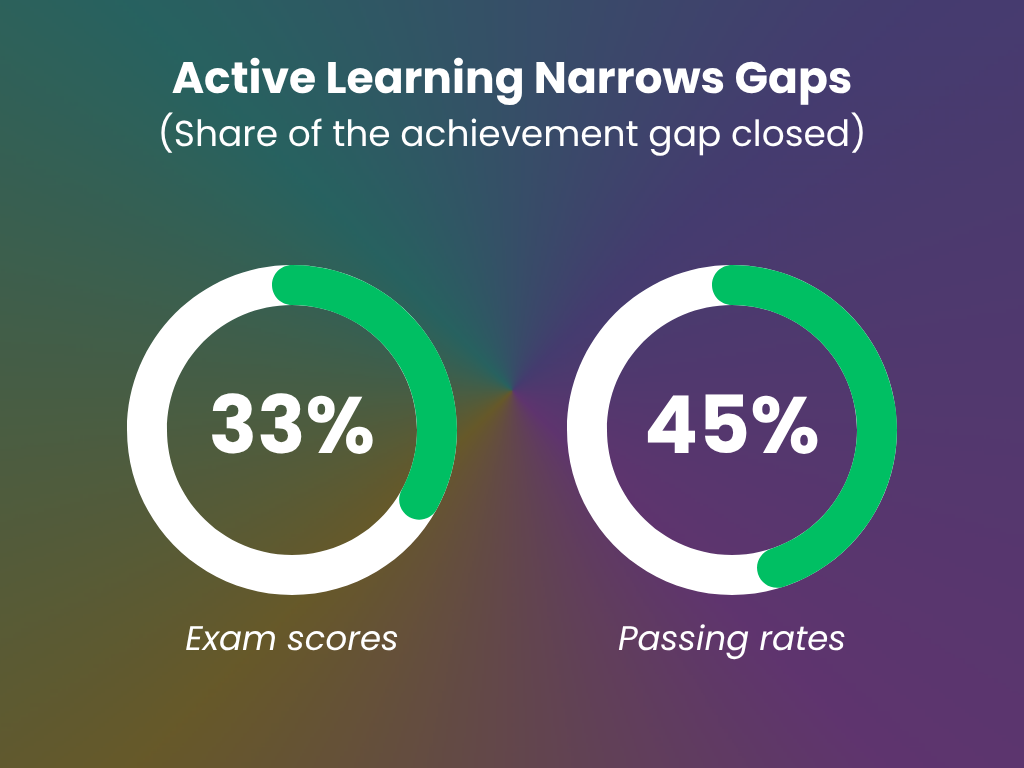
This is the finding I care about most in the older research: the gain is largest for students with the least support outside class.
Methodology
Every Boterview figure in this article comes from one survey.
- Name: Boterview Active Learning Survey.
- Sample: 3,406 students aged 16 to 34, in 11 countries, emailed from Boterview accounts that had studied in the previous 90 days.
- One response each. Incomplete responses were removed.
- Mostly lectures means they said more than half of class time is the teacher talking. Zone out means they stopped following at least once in a typical lecture.
Limitations
These students already use a learning app, so they may be more tired of lectures than the average class.
The figures are what they said about their classes. We did not observe the classrooms.