3 Best AI Alternatives to Coursera

Coursera brings courses from more than 350 universities and companies, like Stanford, Google and IBM, to anyone with an internet connection.
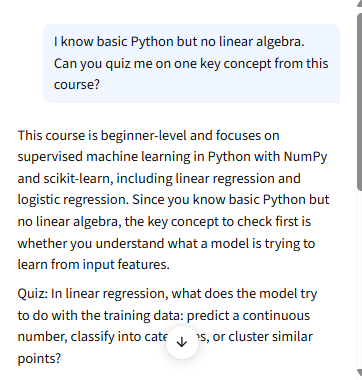
It has also added AI to its course pages. On Andrew Ng's machine learning course, I told Coursera's AI chat what I already knew, and it quizzed me on a key concept:
But the core format hasn't changed much: you watch lectures, then take a quiz at the end of the module.
Here are my favorite alternatives to Coursera, starting with the app I created myself.
1. Boterview: The Best AI Alternative to Coursera for Learning by Doing
Coursera's main promise is access: world-class courses, available to anyone.
Boterview takes a different route: instead of picking a course from a catalog, you create your own with an AI course creator.
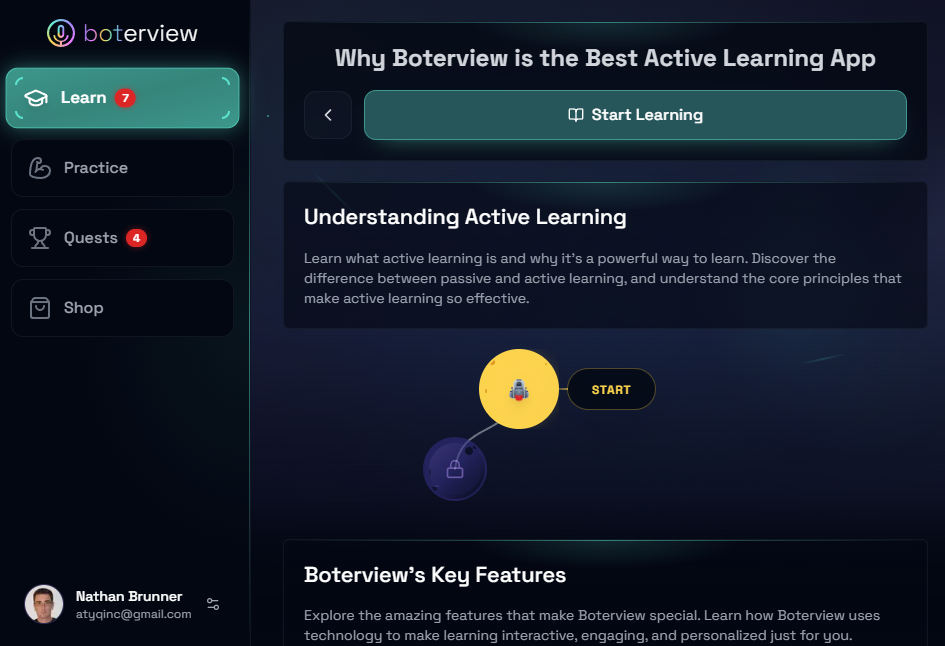
Type a topic, or create a course from a PDF, and the AI builds a complete course with units, lessons and interactive challenges:
I built Boterview based on the idea that passive learning is not the same as learning.
That's why there are no hour-long lectures: every lesson makes you answer something.
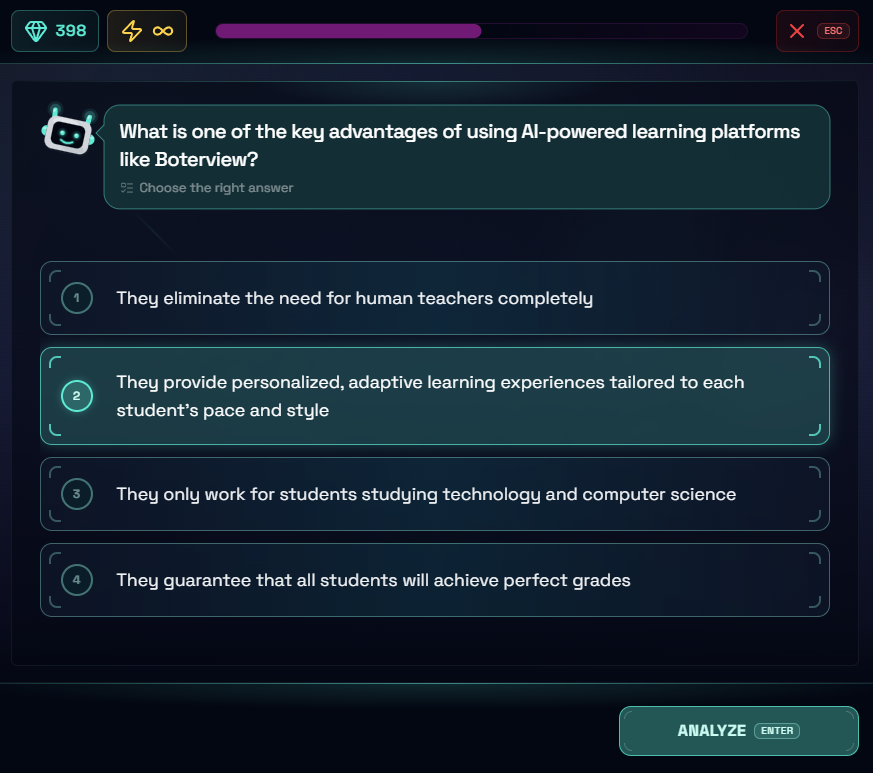
Multiple-choice questions check that you understood the concept, not just that you watched the video:
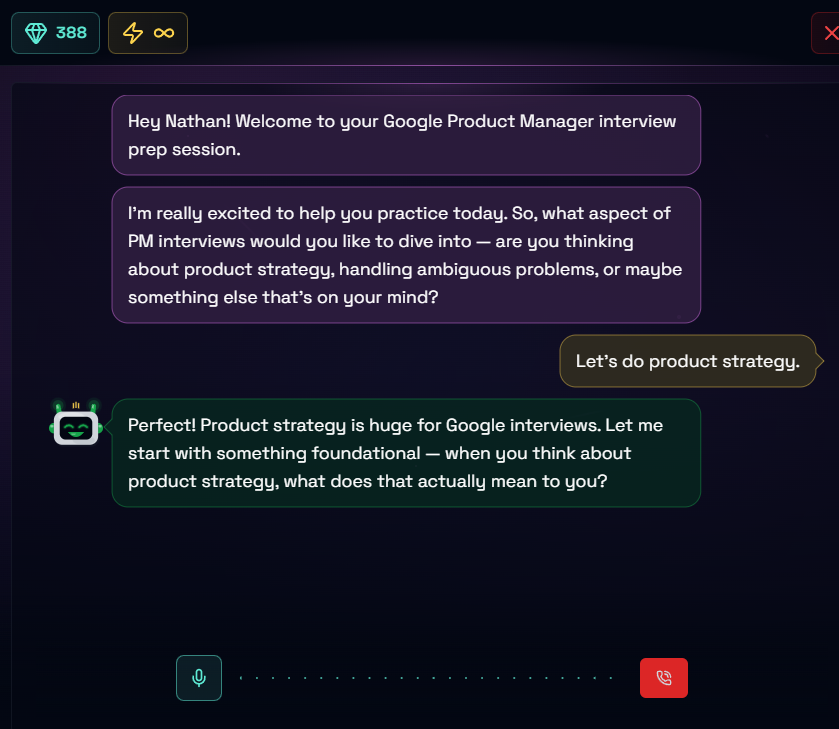
Socratic conversations go further: the AI asks you to explain your reasoning, like in an oral exam:
When I get something wrong, the AI tutor explains my mistake right away, instead of leaving me to wait for a peer-graded assignment:
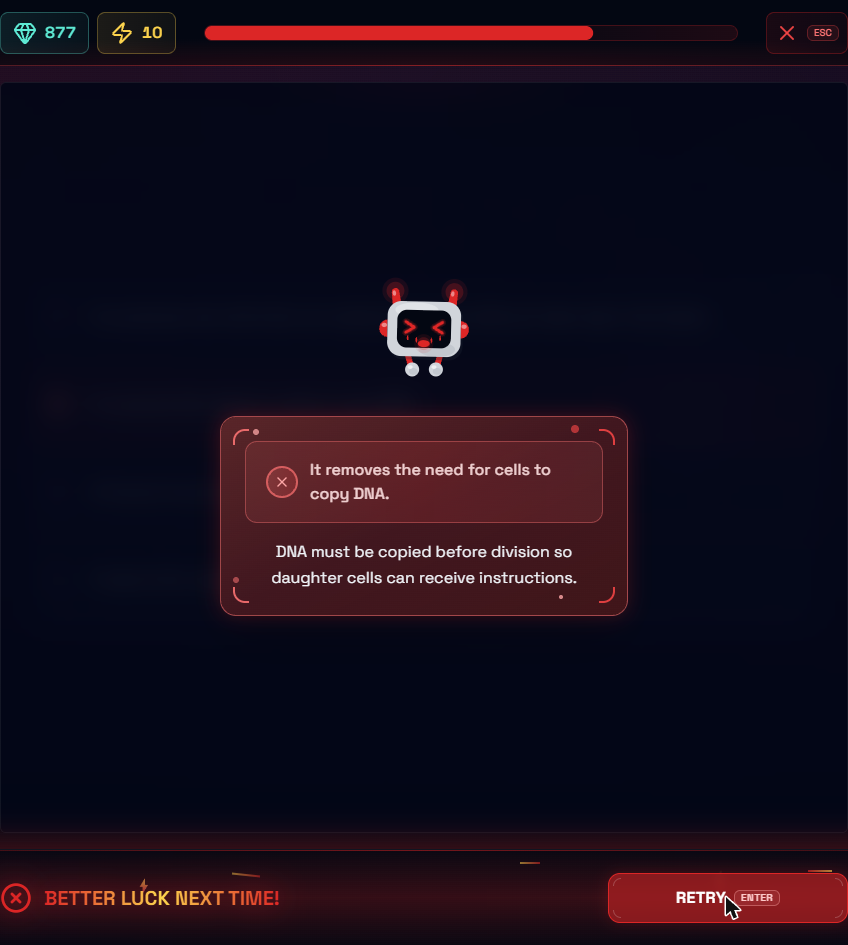
And flashcards with spaced repetition bring the key concepts back right before you forget them.
What Boterview won't give you is a university certificate. If you need the diploma, Coursera is still the place. If you need the knowledge, I think Boterview gets you there faster.
Go here if you want to try boterview's AI:
2. edX: The Best Alternative to Coursera for University Courses
If what you like about Coursera is learning from universities, edX is its closest competitor.
It was founded by Harvard and MIT, and its most famous course, Harvard's CS50, has more than 7.1 million learners enrolled.
edX also has its own AI assistant, Xpert. When I asked it where to start with computer science, it suggested three beginner courses, with the university and the duration of each:
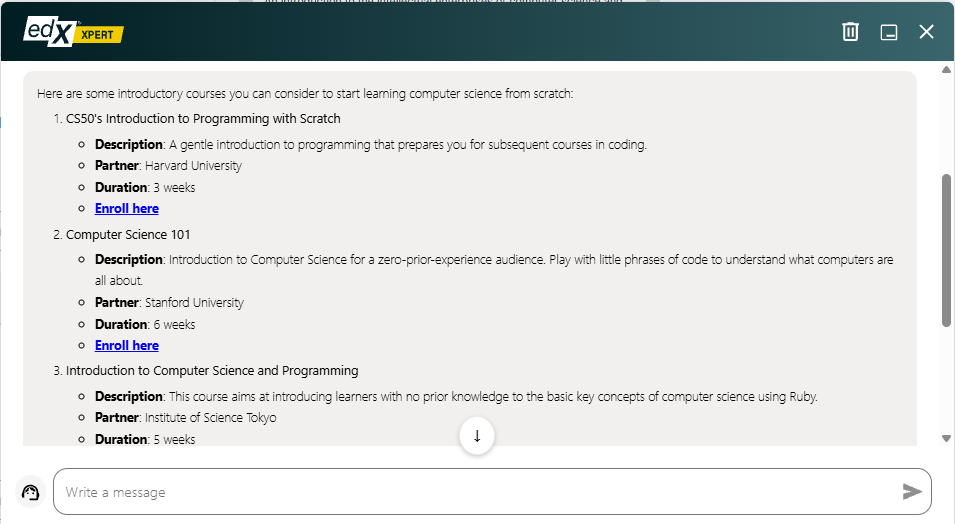
What I appreciate about edX is the depth of its university courses: CS50 is taught exactly as it is at Harvard, with the same lectures and problem sets.
These courses are demanding, though: CS50 estimates 12 weeks at 6 to 18 hours per week, with 9 problem sets and a final project.
And the format is still the classic one: lectures, readings and assignments.
3. Khan Academy: The Best Alternative to Coursera for Building Foundations
Coursera assumes you are ready for university-level content. Khan Academy starts earlier.
It is a nonprofit that covers math, science and humanities from the basics, with a video and a practice exercise for almost every skill:
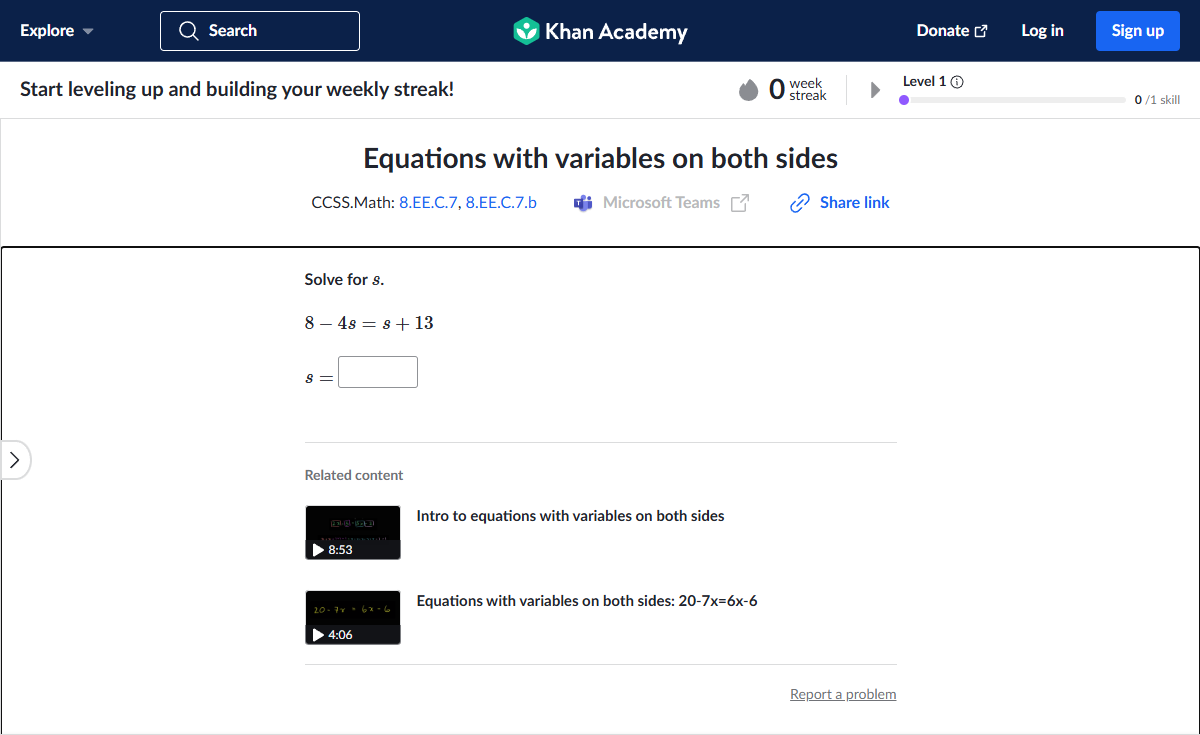
What I like about Khan Academy is its mastery system: each skill moves from Attempted to Familiar, Proficient and Mastered, so you always know what to review.
It is a great way to fill the gaps before a Coursera course in machine learning or statistics.
The drawback is that it is built for school subjects, so you won't find courses on product management or marketing.