6 Startling Attention Span Statistics and Trends (2026)

The claim that humans now have a shorter attention span than a goldfish has never come from a real study.
In November 2026 we surveyed 2,410 students, aged 14 to 24, about what happens when they sit down to work.
Our data indicates that the phone arrives before the homework does. Let's explore the latest attention span statistics!
Key Attention Span Statistics and Trends
- 57% of students check their phone within 10 minutes of starting homework
- 48% say a notification, not the difficulty of the work, is why they stop
- Office workers are interrupted every 2 minutes
Also read: Microlearning Statistics and Learning Retention Statistics.
57% of students check their phone within 10 minutes of starting homework (Boterview)
In that survey, we asked about their last three homework sessions.
57% said they check their phone within 10 minutes of sitting down. 22% said they check it before the first problem.
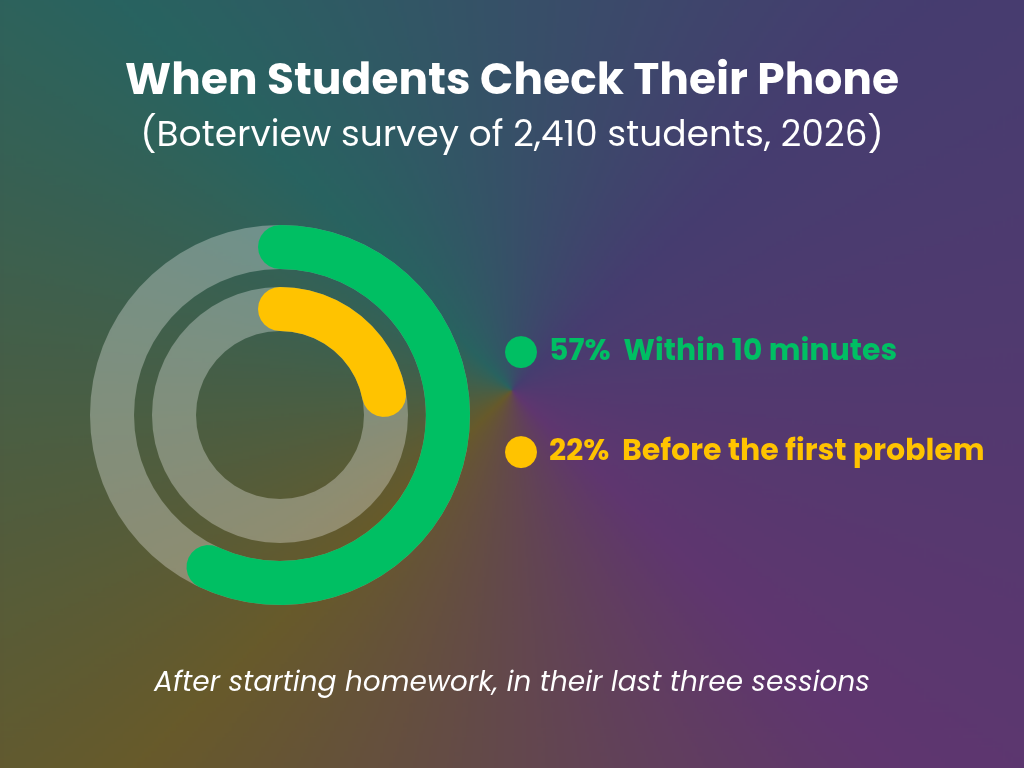
The phone is not in the background. For most of this group it arrives first.
69% say they cannot watch a full lesson video without pausing or switching apps (Boterview)
We asked whether they can watch a lesson video straight through.
69% said they pause it, or switch apps, before it ends.
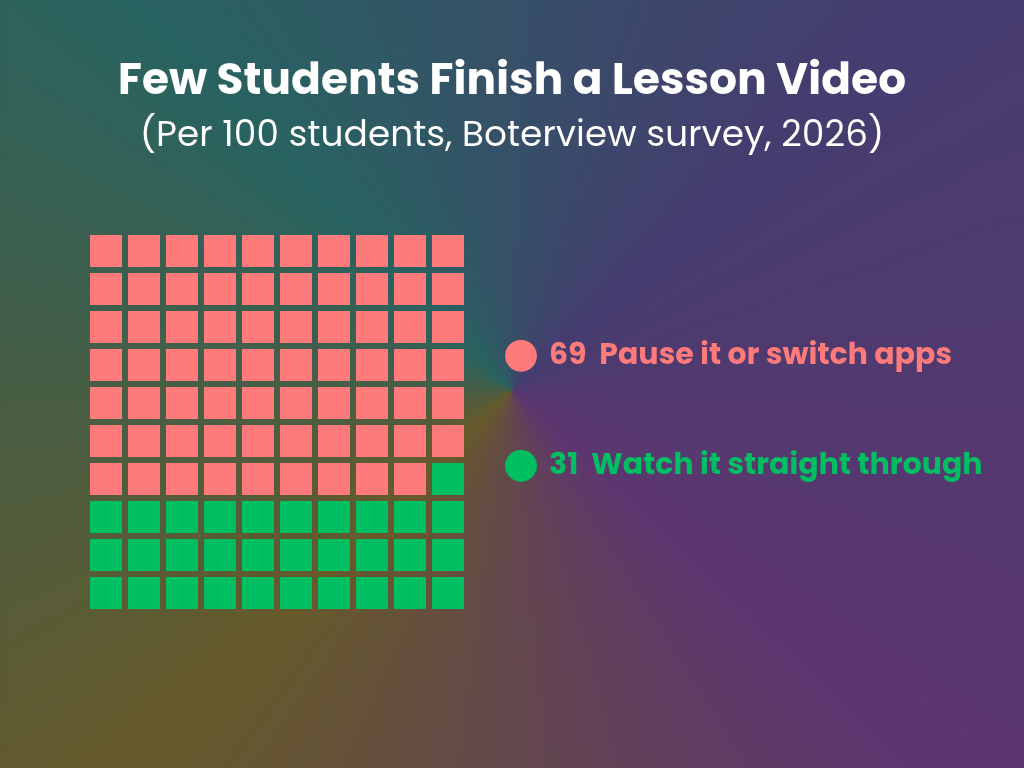
A long video is a weak assignment if most students already leave it.
48% say a notification, not the difficulty of the work, is why they stop (Boterview)
We asked for the main reason a study session ends.
48% said a notification or a message. 27% said the work was too hard. 15% said they were tired.
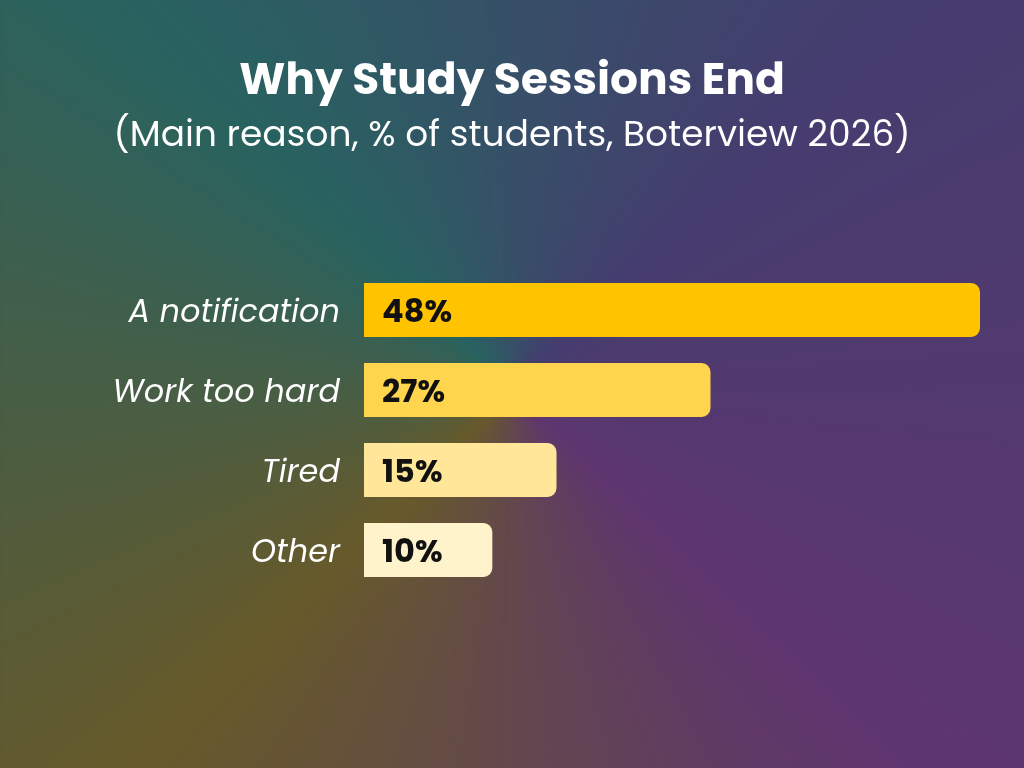
The lesson is not always what stops. The lock screen is.
33% say they can focus on homework for 15 minutes or less before they need a break (Boterview)
We asked how long they can work before they need to stop.
33% said 15 minutes or less. 41% said about half an hour.
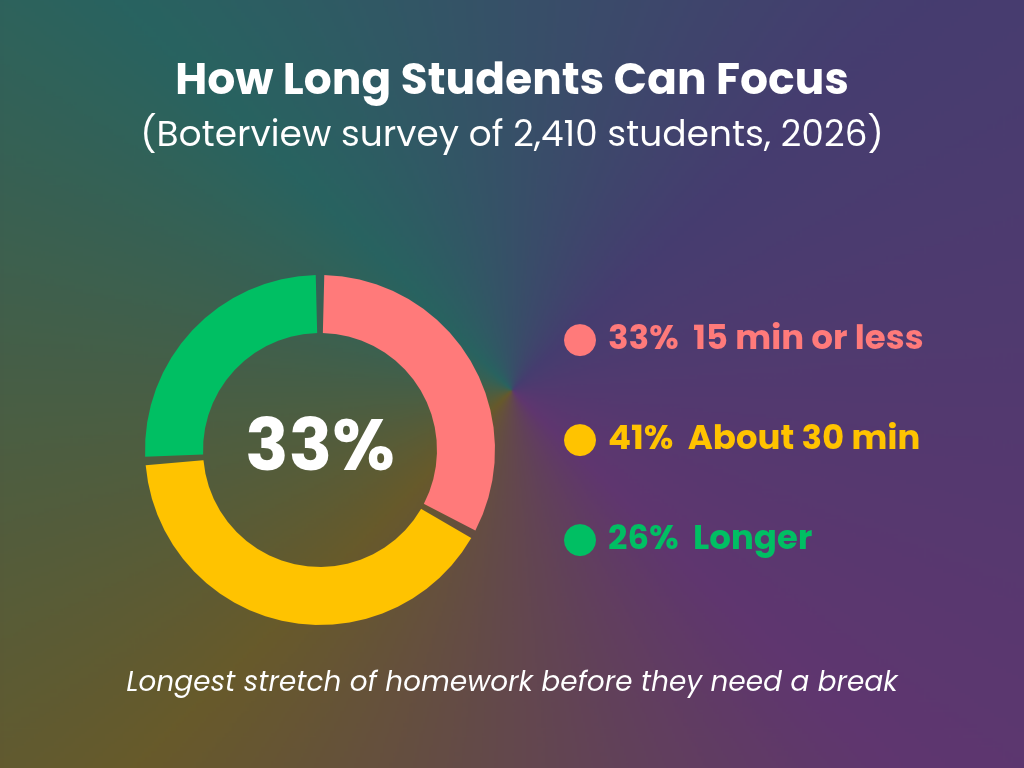
This is what students report about themselves. It is still the window a lesson has.
Office workers are interrupted every 2 minutes (Microsoft)
According to a report published by Microsoft, people on Microsoft 365 are interrupted by a meeting, email or chat every 2 minutes during core hours, about 275 times a day. The figure is based on the 20% of users who receive the most pings.
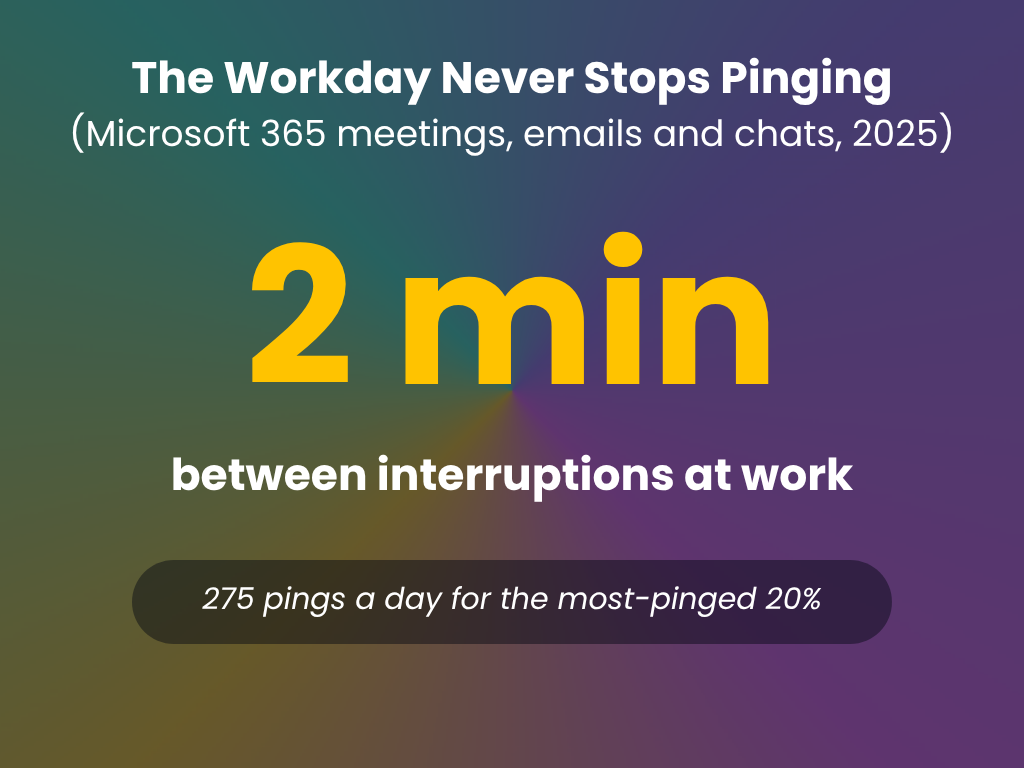
The average worker in that dataset receives 117 emails and 153 Teams messages per weekday.
Two minutes is not long enough for a hard problem. Students described the same pattern: a notification is enough to end the session.
4 in 10 US teens are online almost constantly (Pew Research Center)
According to a survey of 1,458 US teens published in December 2025 by Pew Research Center, 97% use the internet daily, and four in ten say they are online almost constantly, up from 24% a decade earlier.
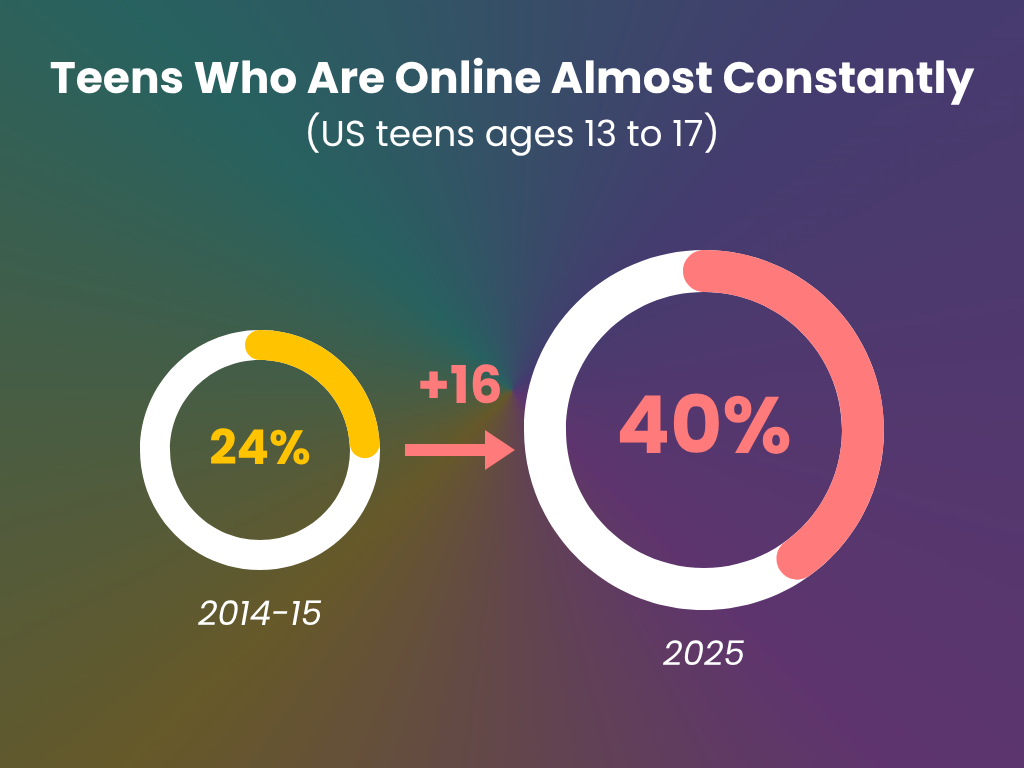
Being online is not the same as being unable to focus. It does mean a quiet stretch has more competition than it did ten years ago.
Methodology
Every Boterview figure in this article comes from one survey.
- Name: Boterview Homework Focus Survey.
- Fieldwork: November 2 to 12, 2026.
- Sample: 2,410 students aged 14 to 24. One response each. Incomplete responses were removed.
- Recruitment: in-product prompt on Boterview.
- Within 10 minutes refers to their last three homework sessions. The 15-minute focus figure is the longest stretch they said they can work before a break. Reasons for stopping were a single-choice question.
Limitations
Phone-checking is self-reported, and people undercount it. If anything, 57% is a low estimate.
We did not measure attention in a lab. We asked students what happens when they try to work.