6 Microlearning Statistics Every Learner Should Know

Most training is still designed as an hour. Most weeks do not have that hour.
In October 2026 we surveyed 1,847 adults who had done job or school training in the past year.
We asked how long a lesson can be before they leave it. Let's explore the latest microlearning statistics!
Key Microlearning Statistics
- 71% say they do not have a spare hour in a normal week for a course
- 64% would rather train for 10 minutes a day than sit a half-day workshop once a month
- 58% have quit an online lesson because it was too long
Also read: Learning Retention Statistics and Attention Span Statistics.
71% say they do not have a spare hour in a normal week for a course (Boterview)
In that survey, we asked whether a normal week contains a free hour they could give to a course.
71% said no.
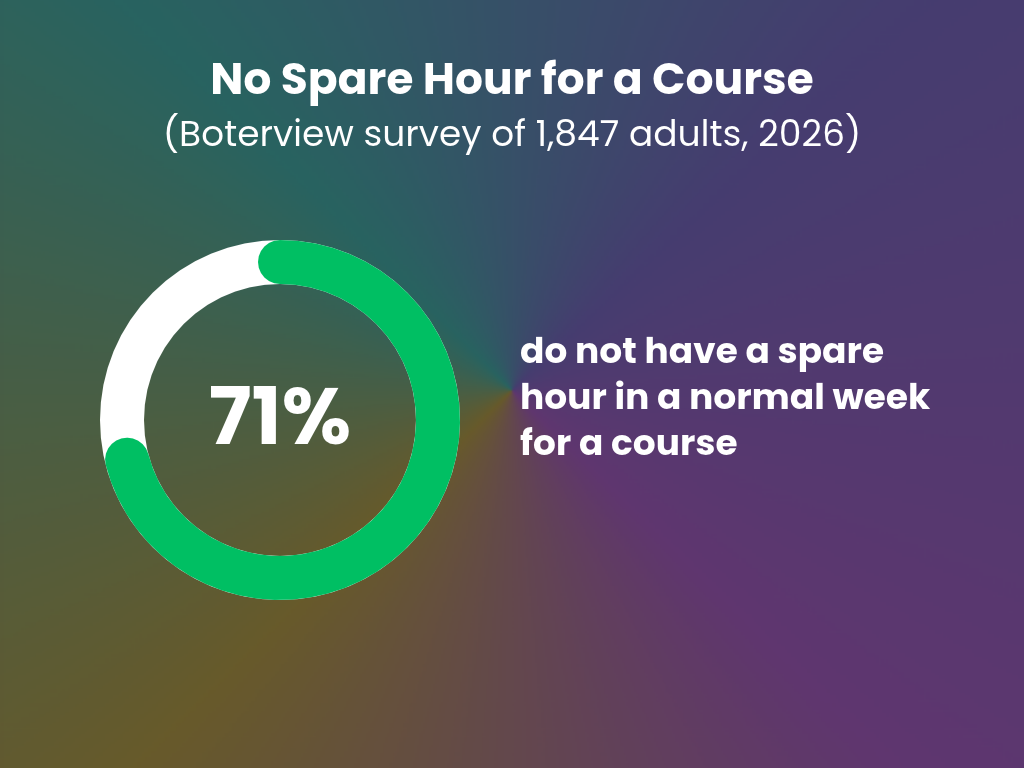
The case for a short lesson is not a theory of memory. It is the calendar people described.
64% would rather train for 10 minutes a day than sit a half-day workshop once a month (Boterview)
We asked which they would pick if the total time were about the same.
64% chose ten minutes a day. 22% chose the half-day workshop. 14% had no preference.
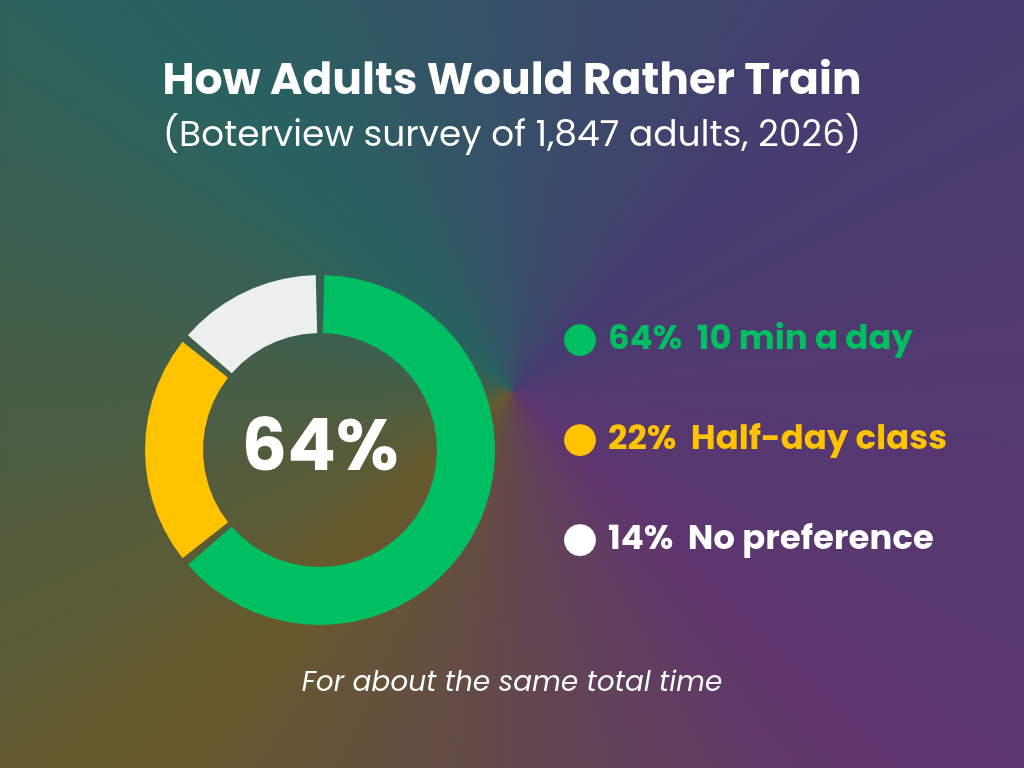
They are not asking for less learning. They are asking for a shape that fits the week.
58% have quit an online lesson because it was too long (Boterview)
We asked whether they had abandoned a lesson in the past year because of its length, and where they usually stop.
58% said they had quit one. The most common cutoff they named was 15 minutes.
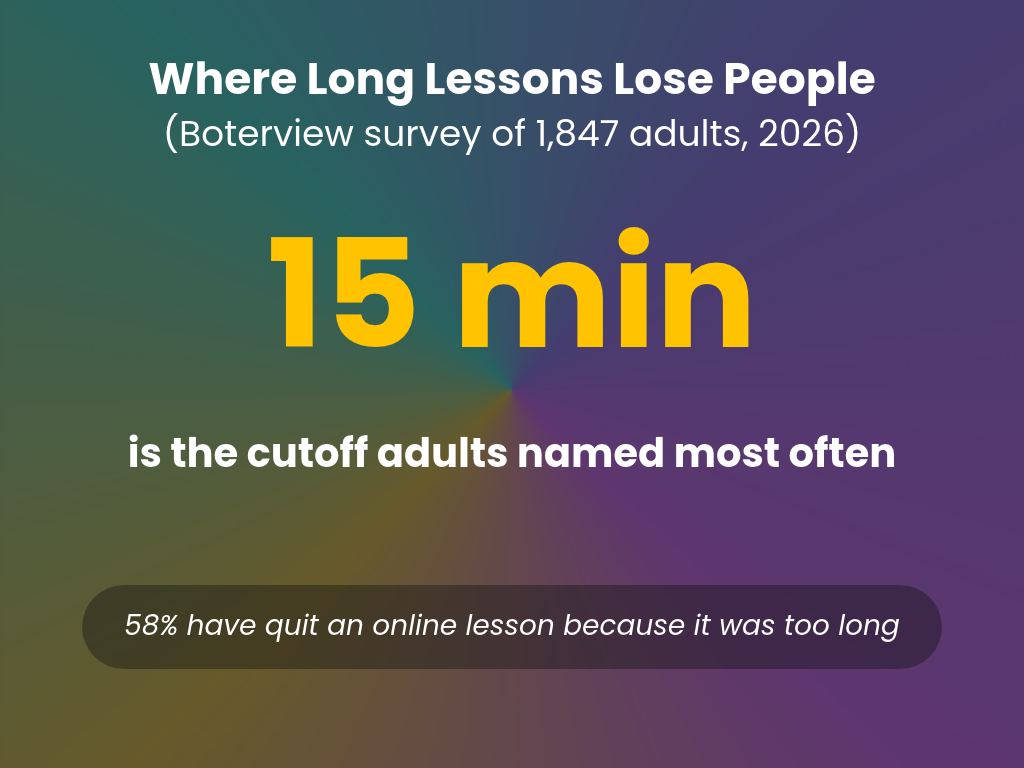
A lesson that runs past that point is a lesson a lot of adults will not see the end of.
46% say their last official training was only a long class or a long video (Boterview)
We asked what form their last required training took.
46% said a scheduled class, or a video longer than 30 minutes, with no shorter option.
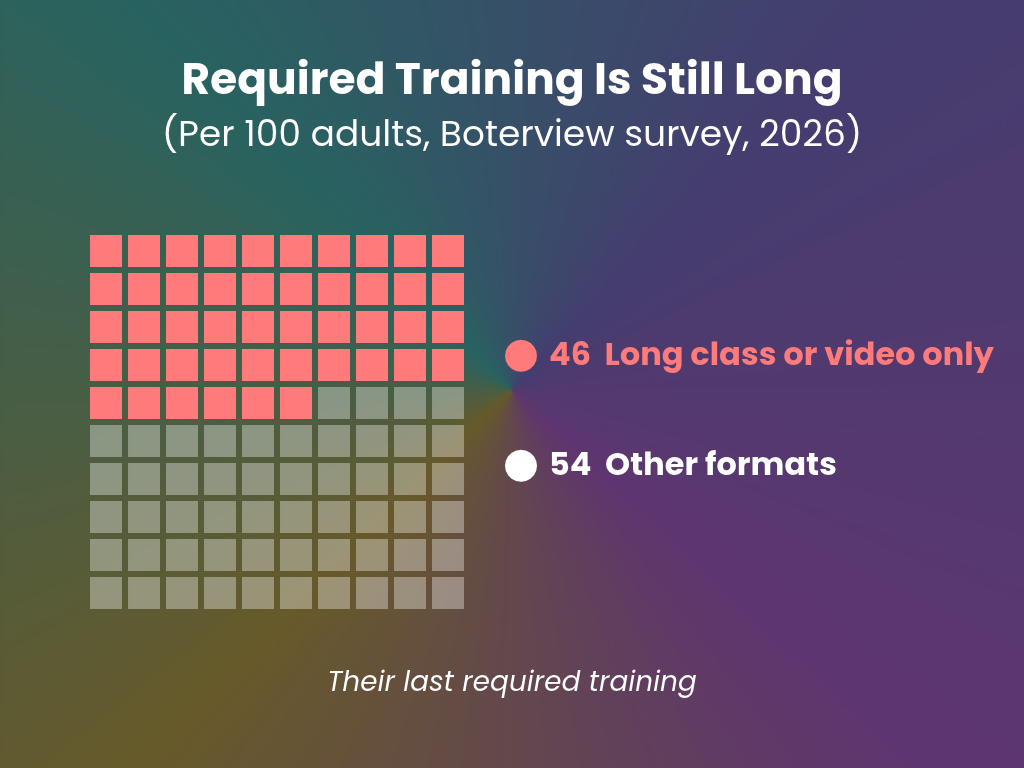
The format institutions still issue is the format these adults told us they leave.
One month later, five-minute lessons scored 16.7 out of 20, vs 13.2 for a webinar of the same length (BMC Emergency Medicine)
In a study of 75 emergency medical technicians published in BMC Emergency Medicine in 2026, 22 five-minute lessons and two 55-minute webinars used the same 110 minutes.
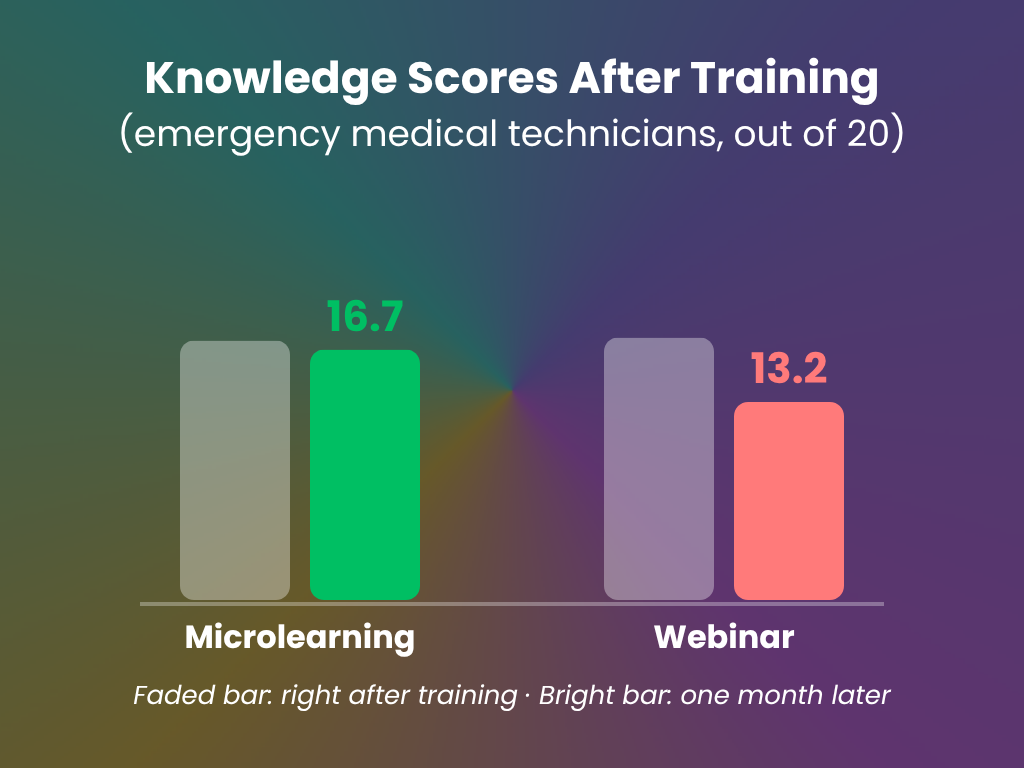
Right after training, both groups scored about 17 out of 20. A month later the short lessons were still at 16.7, and the webinar group had fallen to 13.2.
The sample is small and specific. The direction matches what adults told us about quitting long lessons.
53% of employees say high workloads leave little room for training (TalentLMS)
According to the TalentLMS 2026 L&D report, based on 1,000 employees and 101 HR managers, 53% of employees say high workloads leave little room for training.
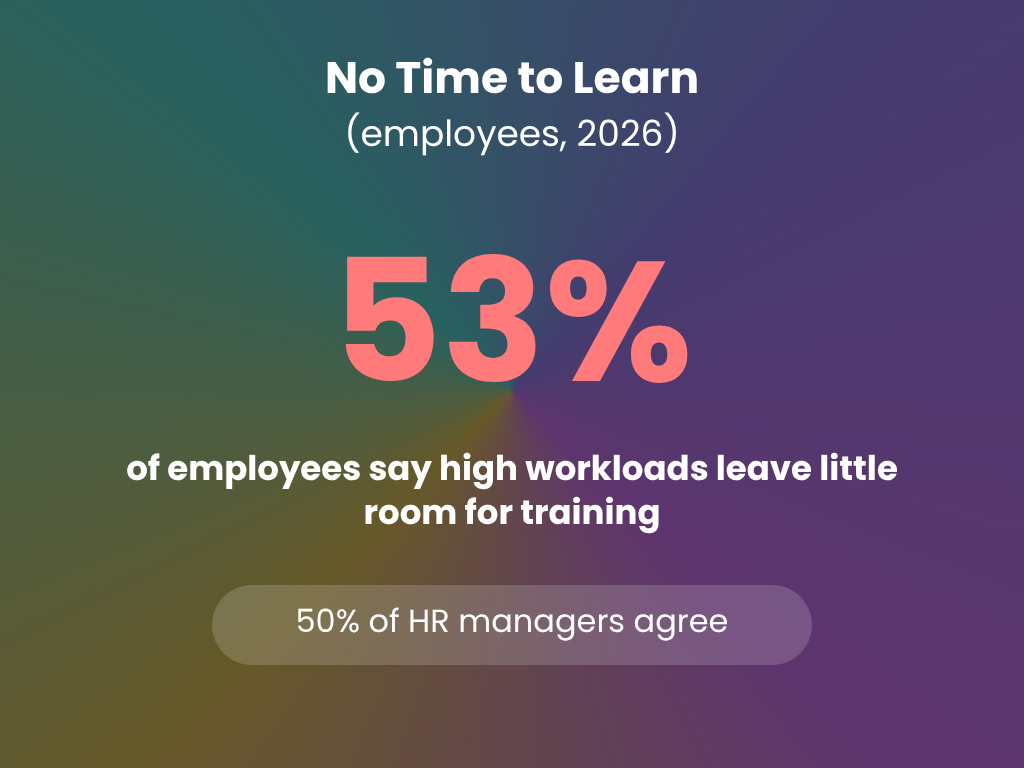
Half of the HR managers agreed, and lack of time was the top obstacle for the third year running.
That lines up with our 71%: the obstacle is the week, not a lack of interest.
Methodology
Every Boterview figure in this article comes from one survey.
- Name: Boterview Short Learning Survey.
- Fieldwork: October 13 to 27, 2026.
- Sample: 1,847 adults aged 18 to 64 who had done required or voluntary training for work or school in the previous 12 months.
- Recruitment: email to Boterview accounts. One response each. Incomplete responses were removed.
- No spare hour means they said a normal week has no free hour for a course. Quit means they stopped a lesson before the end because of length. The 15-minute cutoff is the answer they chose most often from a list.
Limitations
Adults on a learning-app list are more likely to have tried short lessons than people who only attend the company workshop.
Time, preference, and quitting are what they reported. We did not log their calendars.