7 Eye-Opening EdTech Statistics and Trends (2026)

EdTech used to mean a projector and a shared computer lab.
We surveyed 4,216 students and 1,104 teachers, in 14 countries, in a single study.
We asked what they actually do with AI, and whether anyone has told them the rules. Let's explore the latest edtech statistics and trends!
Key EdTech Statistics and Trends
- 47% of students pasted an AI answer into an assignment in the past month, and 73% of them could not explain it afterward
- 79% of students have used AI for an assignment without knowing if it was allowed
- 92% of UK undergraduates use AI tools, up from 66% a year earlier
Also read: Active Learning Statistics and AI in Education Statistics.
47% of students pasted an AI answer into an assignment in the past month, and 73% of them could not explain it afterward (Boterview)
In that survey, we asked students whether they had pasted an AI answer into assessed work in the previous 30 days.
47% said yes. Of that group, 73% said they could not explain the answer without looking at it again.
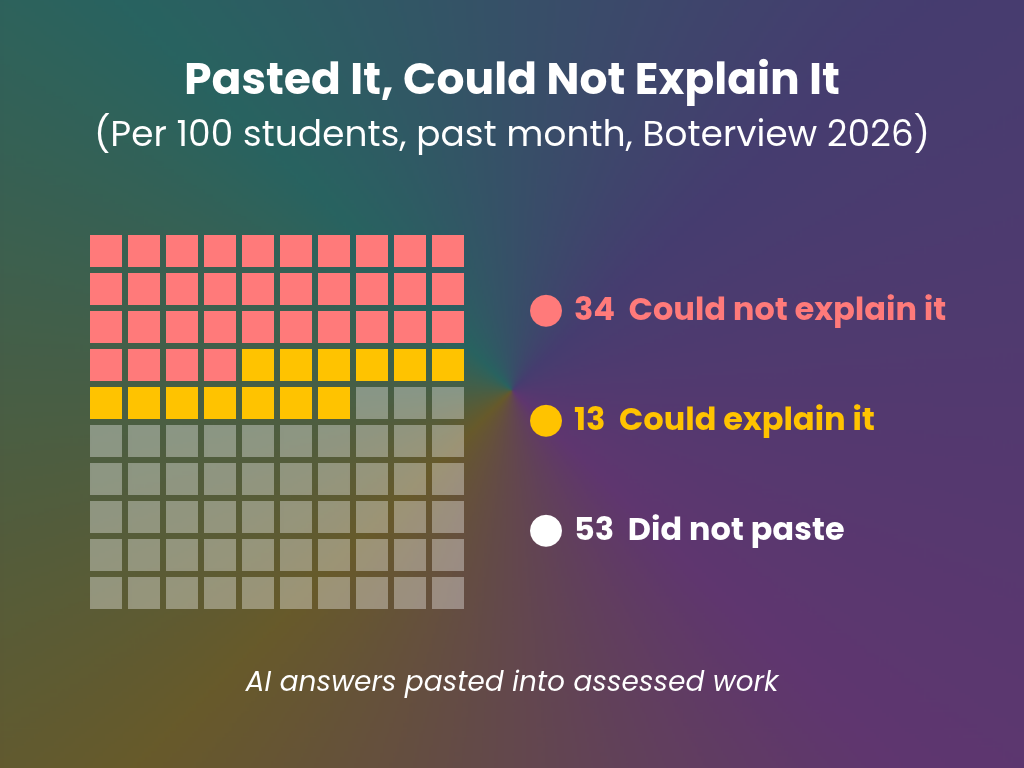
A page you cannot explain is not evidence that you learned the page.
79% of students have used AI for an assignment without knowing if it was allowed (Boterview)
We asked the same students whether they had used AI on schoolwork without knowing if the school allowed it.
79% said yes, at least once in the past school year.
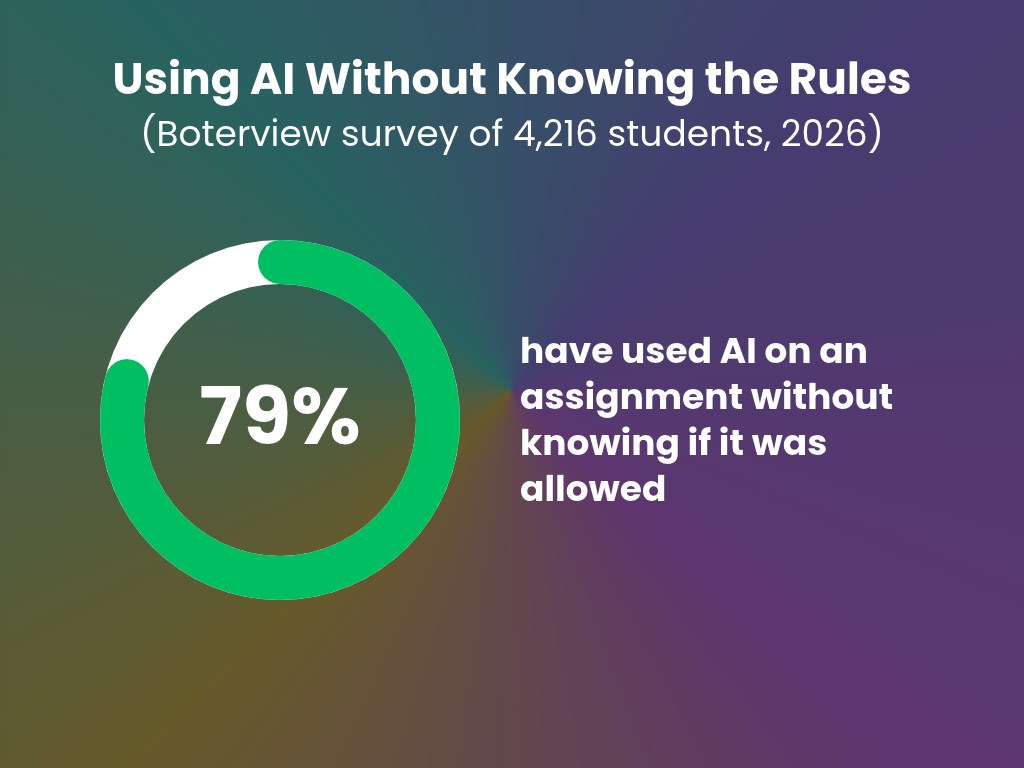
Students are not waiting for a policy. They are guessing, and then submitting.
68% say a tool that explained a mistake helped them, and 19% say that about a tool that only wrote the answer (Boterview)
We asked about two kinds of AI help, separately.
68% said a tool that walked them through a mistake had helped them understand it. 19% said that about a tool that only wrote the answer.
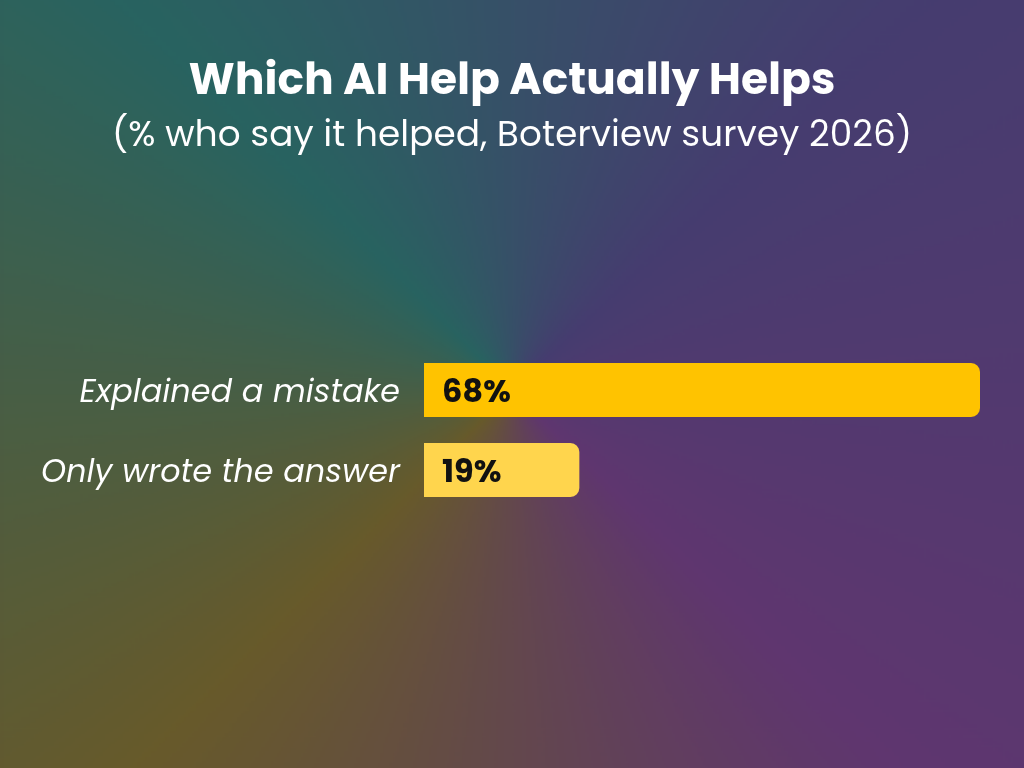
Students can tell the difference. A lot of school rules still treat every AI box as the same thing.
Teachers who use AI weekly save 5.9 hours per week (Gallup)
According to a survey of 2,232 U.S. teachers published by Gallup and the Walton Family Foundation, teachers who use an AI tool at least weekly estimate they save 5.9 hours per week.
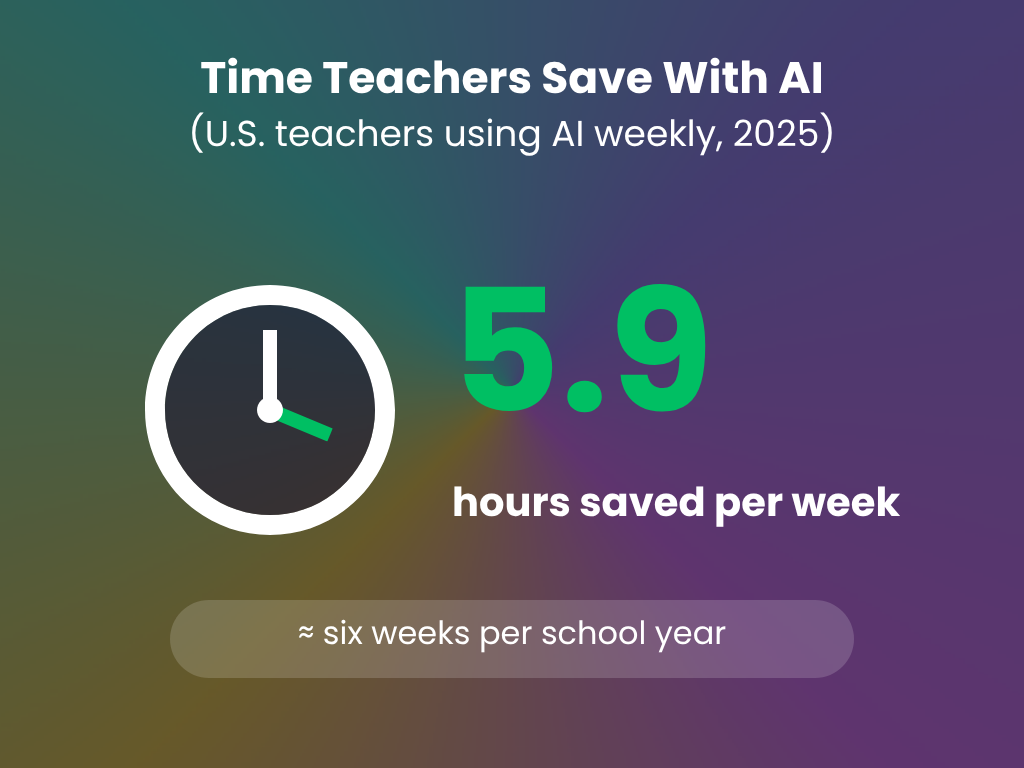
Over a school year, that is about six weeks.
In my opinion, the hours matter if they go back to students, not into a longer queue of generated worksheets.
92% of UK undergraduates use AI tools, up from 66% a year earlier (HEPI)
According to a survey of 1,041 full-time undergraduates published by the Higher Education Policy Institute, 92% of students used at least one AI tool in 2025, up from 66% in 2024.
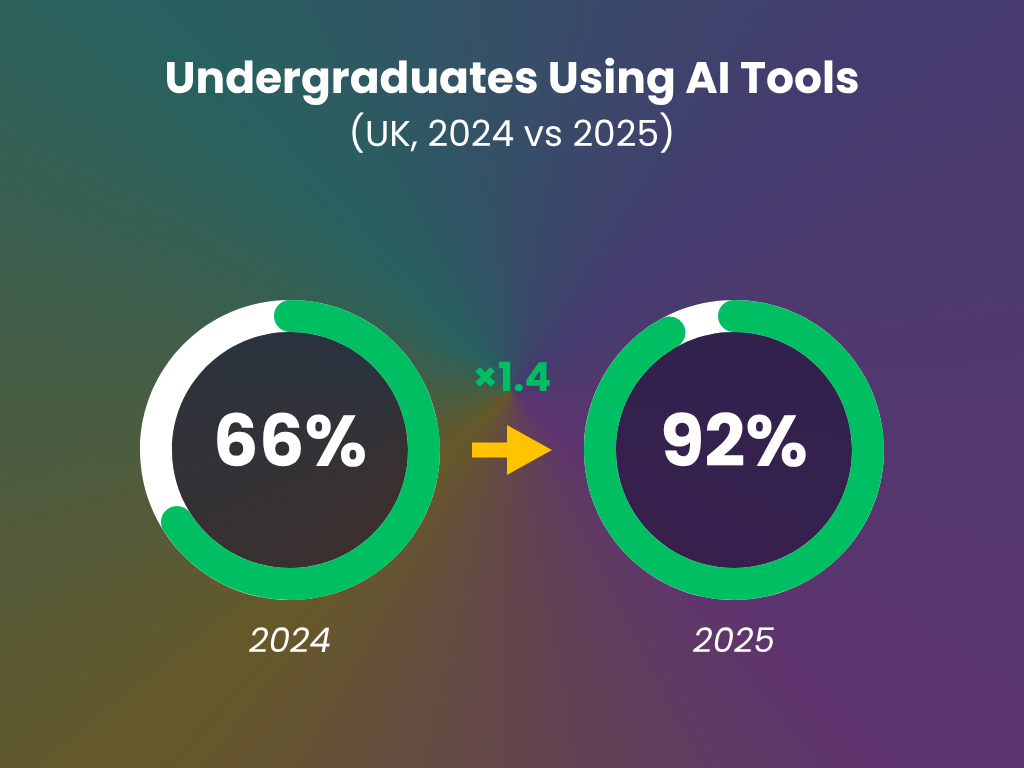
Adoption is no longer the story. What students do with the tool is.
61% of teachers say their school has no clear rule on when students may use AI (Boterview)
We asked the 1,104 teachers whether their school has told staff and students when AI use is allowed.
61% said there is no clear rule.
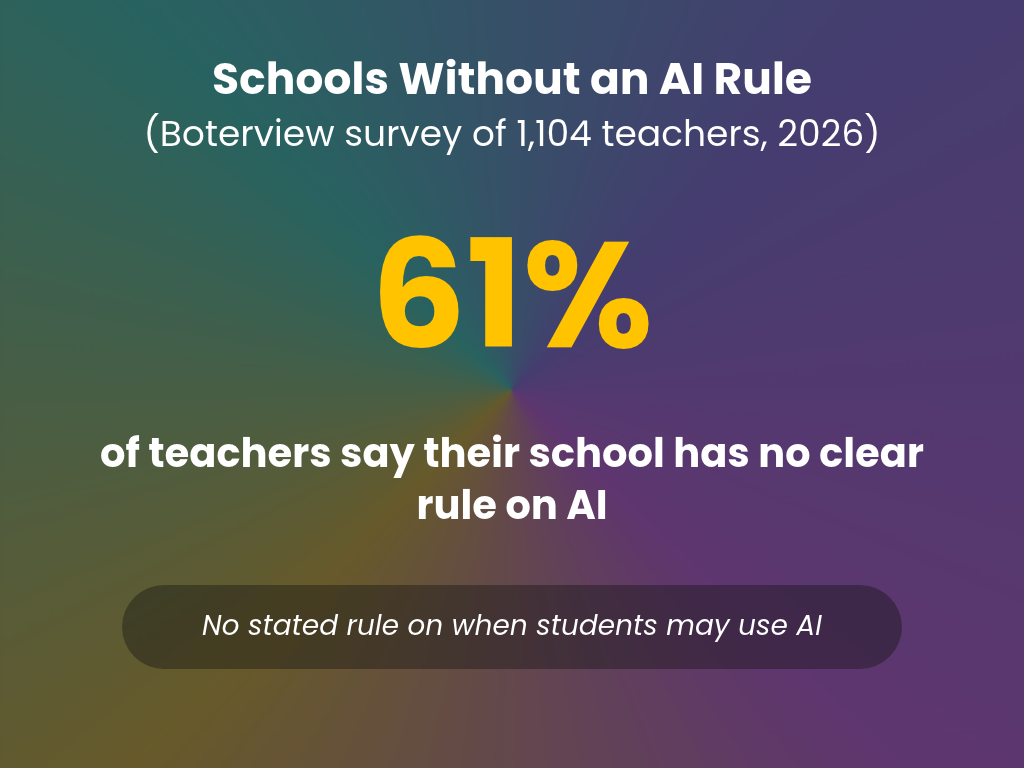
A ban that was never written down is not something a student can follow.
12% of students put AI-generated text in their assessed work, up from 3% in 2024 (HEPI)
According to the 2026 edition of the same HEPI survey, based on 1,054 UK undergraduates, 12% include AI-generated text in assessed work, up from 8% in 2025 and 3% in 2024.
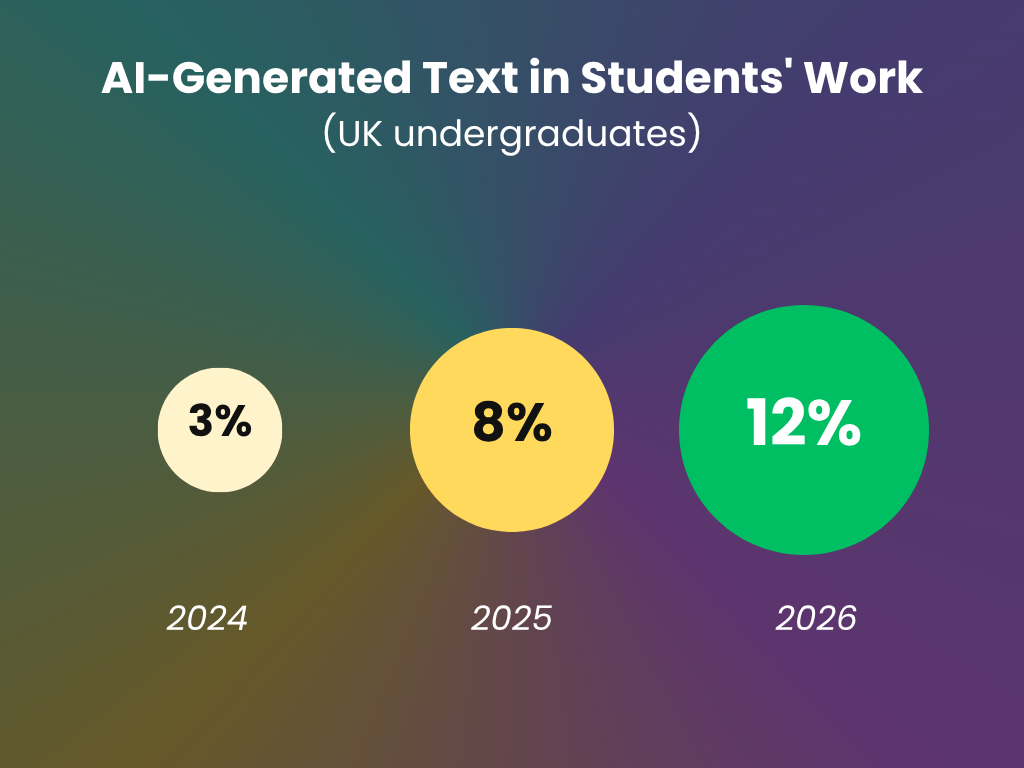
HEPI's 12% is students who say the submitted text was generated. Our 47% is any paste, then a check of whether they could explain it.
Both point the same way: the submitted page is a weak test of what the student knows.
Methodology
Every Boterview figure in this article comes from one survey, with two groups in the same fieldwork.
- Name: Boterview AI in School Survey.
- Students: 4,216 people aged 16 or older. Teachers: 1,104 people who taught at least one class in the 2025-26 school year. Both groups were in 14 countries.
- Recruitment: email to Boterview accounts active in the previous six months. Incomplete responses were removed.
- Could not explain means they said they could not restate the pasted answer without looking at it. No clear rule means the teacher said the school had not stated when AI is allowed.
Limitations
People who already use a learning app will use AI more often than the general population.
Pasting, explaining, and school rules are what respondents told us, not an audit of their files or their school handbook.