7 Eye-Opening Homeschooling Statistics and Trends (2026)

Homeschooling used to be a niche. In the latest national estimates, it is a few percent of American children, and no longer a rounding error.
We surveyed 1,264 parents in the United States who homeschool at least one child.
We asked what they struggle to teach, and what they worry is slipping. Let's explore the latest homeschooling statistics!
Key Homeschooling Statistics and Trends
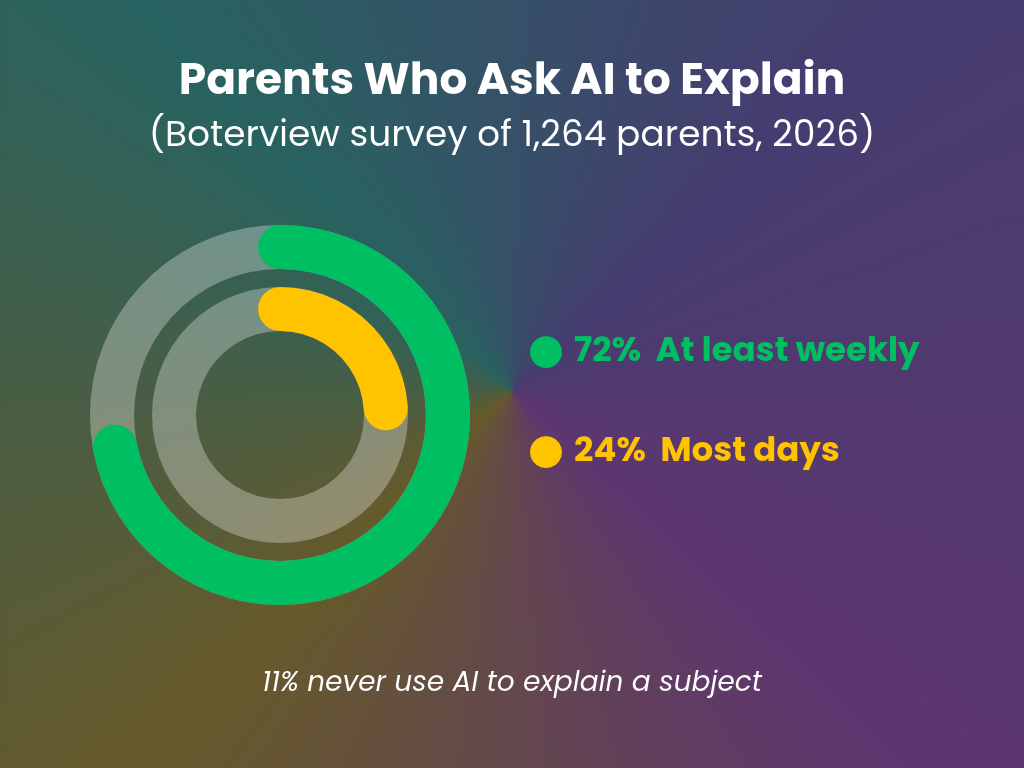
- 72% of homeschool parents use an AI tool at least weekly to explain a subject they are unsure of
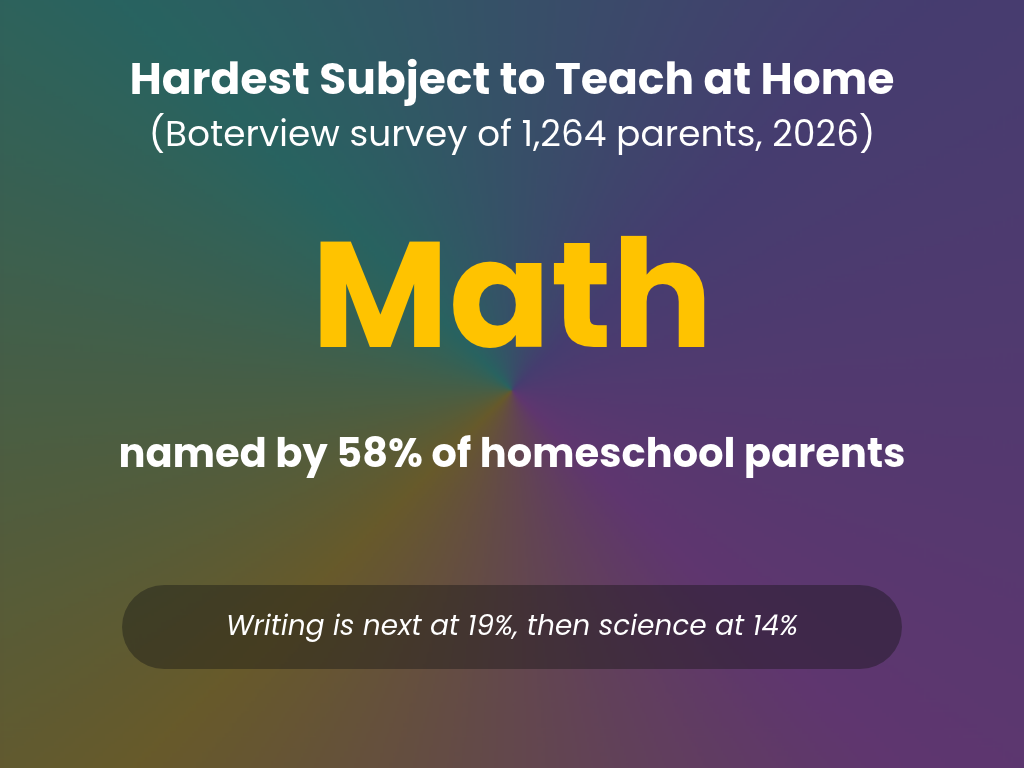
- 58% say math is the hardest subject to teach at home
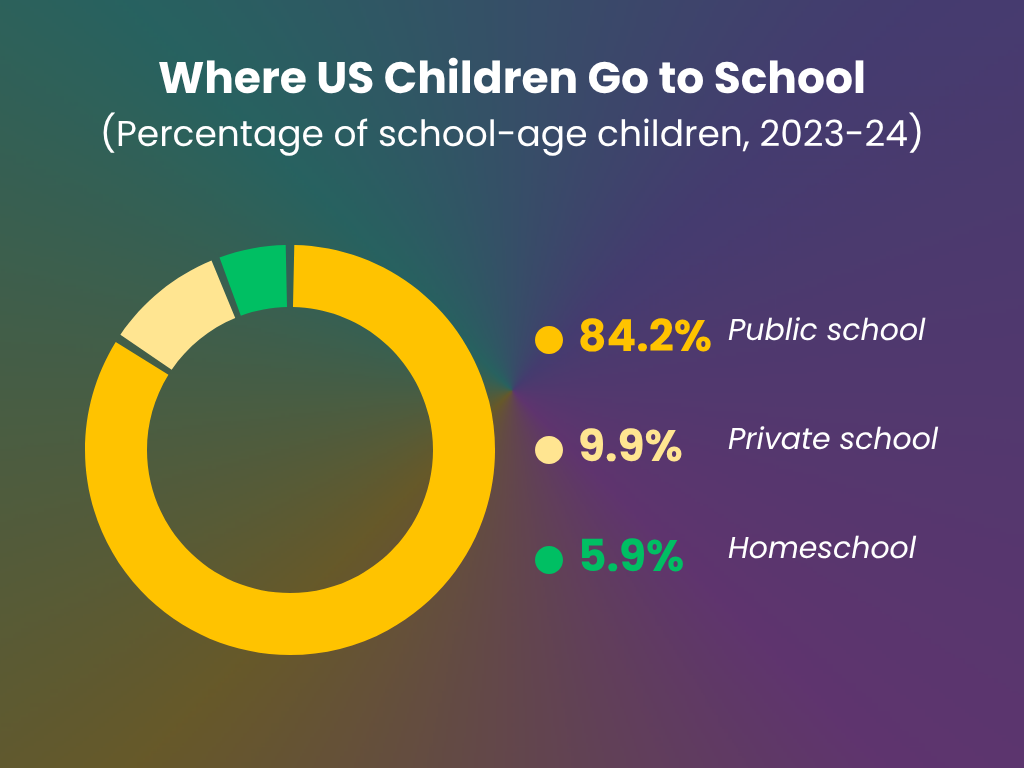
- 5.9% of US school-age children were homeschooled in 2023-24
Also read: Online Learning Statistics and EdTech Statistics.
5.9% of US school-age children were homeschooled in 2023-24 (Johns Hopkins University)
According to an analysis of the US Census Bureau Household Pulse Survey by Johns Hopkins University, 5.92% of school-age children were homeschooled in 2023-24, against 9.92% in private school and 84.16% in public school.
The federal NCES survey uses a stricter definition and counted 3.4% of K-12 students in 2022-23, up from 2.8% before the pandemic.
The true share sits between those two definitions. Either way, it is large enough that parents are a real audience for learning tools.
72% of homeschool parents use an AI tool at least weekly to explain a subject they are unsure of (Boterview)
In that survey, we asked how often they use an AI tool when they are not sure how to explain a subject.
72% said at least weekly. 24% said most days. 11% said they never do.
This does not replace the parent. It covers the hour when the parent is stuck on the same problem as the child.
58% say math is the hardest subject to teach at home (Boterview)
We asked which subject is hardest to teach at the kitchen table.
58% named math. Writing was next, at 19%, then science at 14%.
Among the parents who named math, 41% said they use a quiz app for it at least three days a week.
Math is where a parent most often hits the edge of their own school memory.
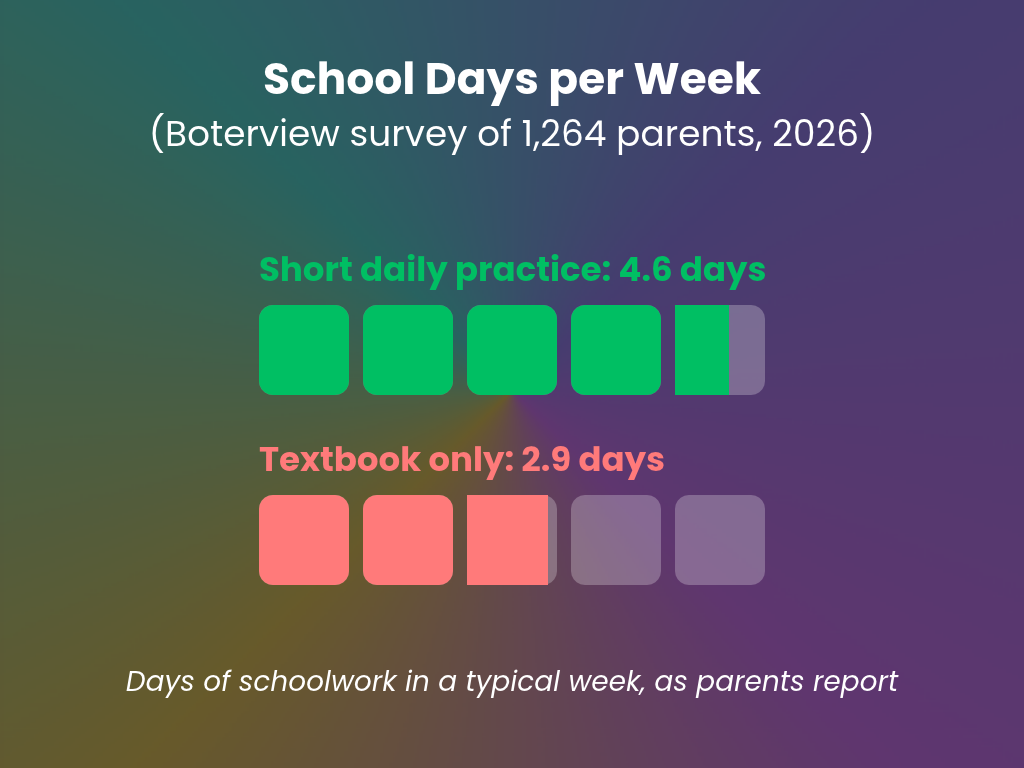
Parents who use a short daily practice report 4.6 school days a week, vs 2.9 for textbook-only families (Boterview)
We asked how many days a week the child does schoolwork, and whether the family uses a short daily quiz or flashcard session.
Parents who use that daily practice said 4.6 days. Parents who rely on a textbook, and no daily practice, said 2.9 days.
This is what parents report about the week, not a score on a test.
83% of homeschooling parents worry about the school environment (Pew Research Center)
According to an analysis of 2023 NCES data published by Pew Research Center, 83% of parents of homeschooled children cite the environment of other schools, such as safety, drugs or peer pressure.
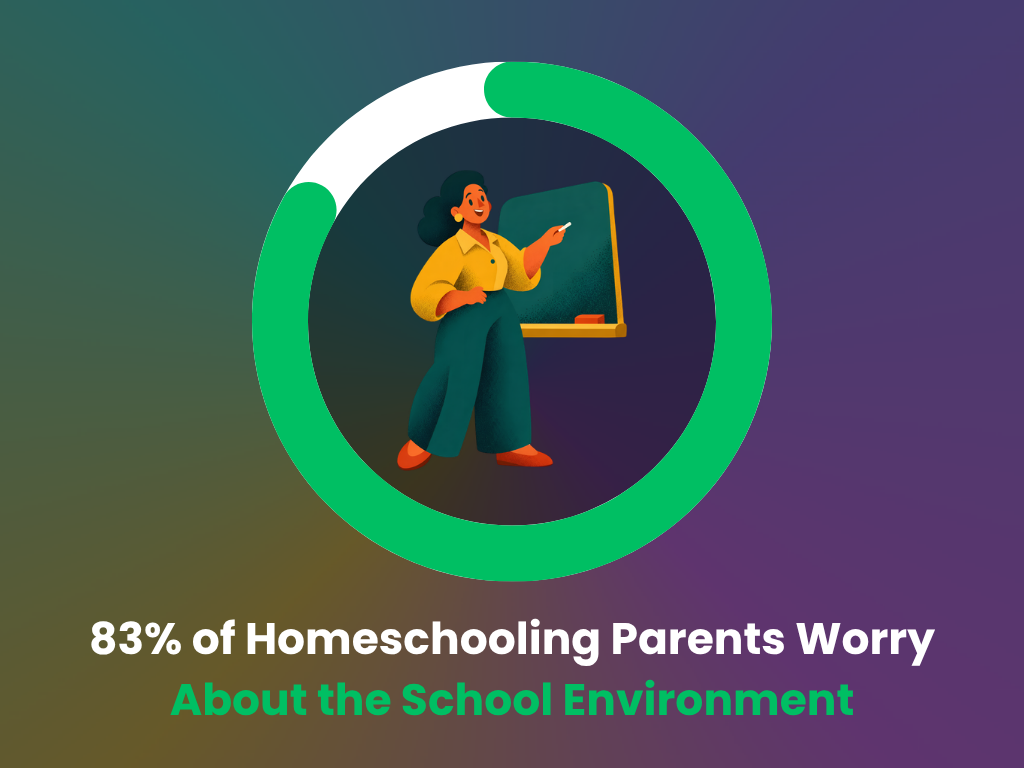
Moral instruction (75%), family life (72%) and dissatisfaction with academic instruction (72%) come next.
Academics are not why most families leave. They are what the families still have to deliver once they have left.
64% worry their child is behind in writing, and 22% worry about science (Boterview)
We asked which subjects they worry their child is behind in for their age.
64% said writing. 47% said math. 22% said science.
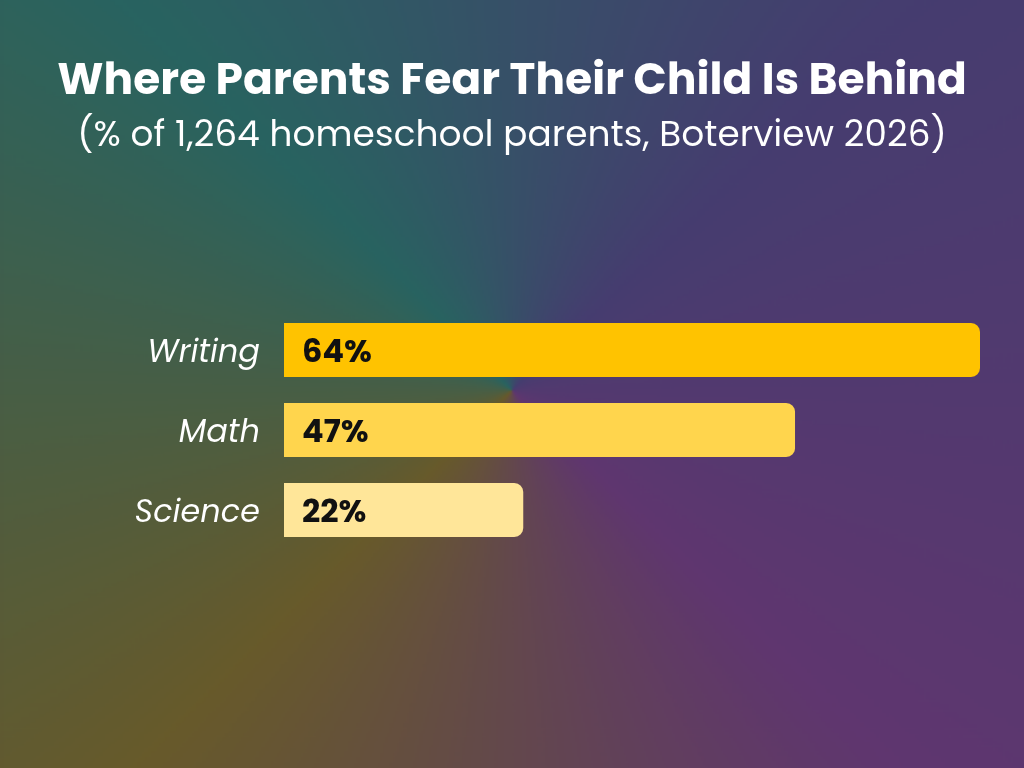
Math feels hardest to teach. Writing is what they fear is slipping.
Homeschool growth slowed from 6.3% to 1.5% in 2025-26 (Johns Hopkins University)
Across 22 states with published counts, the Johns Hopkins report found homeschool participation grew 1.5% in 2025-26, about 9,000 students, down from 6.3% the year before.
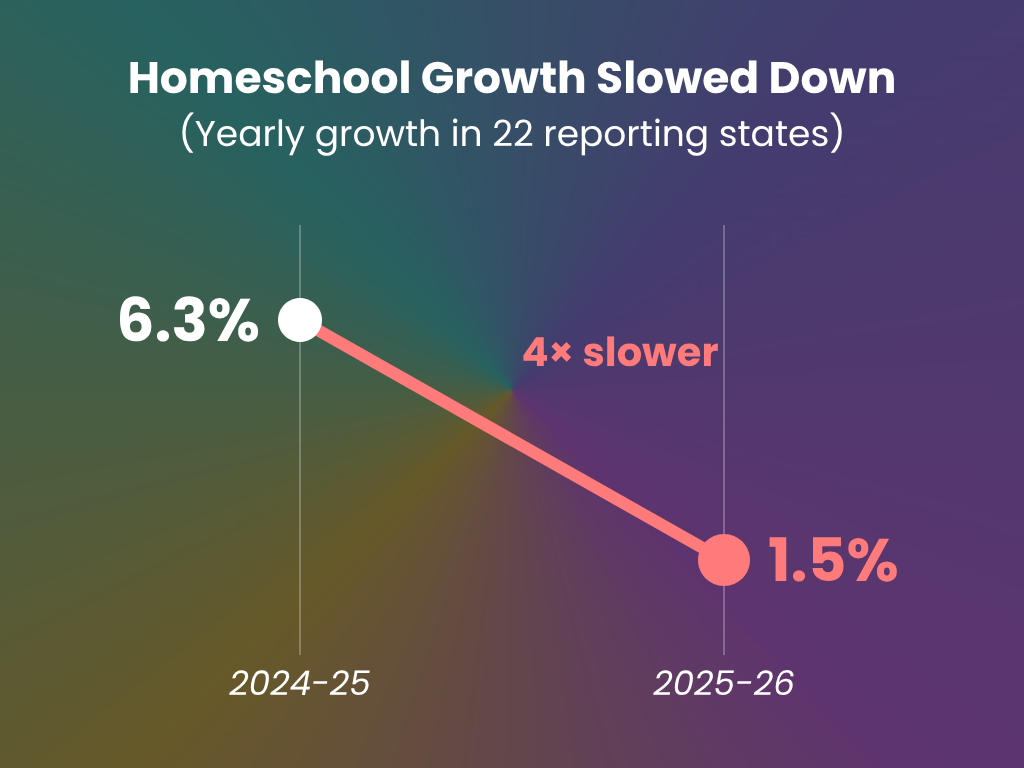
The number of children in the US is falling, and public and private enrollment are shrinking too.
Slower growth in a shrinking age group is still growth. The families who stay still have to cover the subjects they told us they cannot teach alone.
Methodology
Every Boterview figure in this article comes from one survey.
- Name: Boterview Homeschool Parent Survey.
- Sample: 1,264 parents in the United States who homeschool at least one child aged 5 to 18. One response per household. Incomplete questionnaires were removed.
- Recruitment: email from Boterview accounts and a parent newsletter.
- At least weekly means an AI explanation tool on four or more days in a typical month. School days are the number of days they said the child did schoolwork in a typical week. Behind in a subject is the parent's worry, not an external test.
Limitations
Parents on a learning-app list are more likely to use software than families who use only a boxed curriculum.
Days of study and worries about writing are what parents believe, not an assessment of the child.