How to Make a Study Plan: 6 Steps That Actually Work

Most study plans look perfect on day one and are abandoned by day five.
The problem is rarely discipline: it's that the plan was built on optimistic guesses and filled with the wrong kind of work.
Building Boterview made me read a lot of research on how people plan and learn, and a handful of findings changed how I organize my own studying.
Here are the 6 steps that actually work, each backed by research.
1. Work Backward From Your Deadline, Then Add a Buffer
Start from your exam date, list every topic you need to cover, and count the days you really have.
Then assume everything will take longer than you think, because it will.
In the study that named the planning fallacy, Buehler, Griffin and Ross (1994) asked students when they would finish their senior thesis. They predicted 33.9 days on average, and actually took 55.5 days:

My rule of thumb: leave the last 20% of your calendar empty, as a buffer and for final reviews.
2. Break Each Subject Into Small Units
"Study chemistry" is not a task you can start. "Do the 3 lessons on chemical bonds" is.
Split each subject into units small enough to finish in one session, and give each session one of them.
In a classic experiment, Bandura and Schunk (1981) found that children working toward small, close goals in math progressed faster and developed more interest in the subject than children given one distant goal.
This is exactly what Boterview does when it creates a course: it splits your topic or your PDF into units and short lessons, so your plan is already broken down for you:

If you want your study plan built for you, here's the app I created:
3. Decide Exactly When and Where You'll Study
"I'll study chemistry this week" is a wish. "On Monday at 6 pm, at my desk, I'll do the chemical bonds lessons" is a plan.
Psychologists call these if-then plans implementation intentions.
In a meta-analysis of 94 independent tests, Gollwitzer and Sheeran (2006) found that they have a medium-to-large effect on actually reaching your goals.
Put each session in your calendar like a meeting, with a time, a place and the exact unit you'll work on.
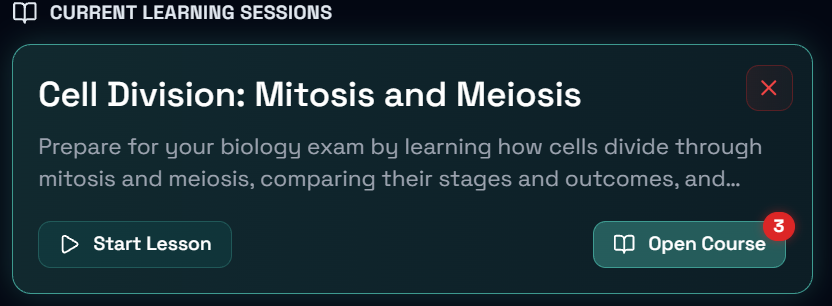
When that time comes, don't decide what to do: in Boterview, your current course is waiting on the home screen with a Start Lesson button:
4. Spread Your Reviews Across the Weeks
Don't plan a topic once and move on: plan when you'll come back to it.
A good default is to review a topic the day after you learn it, then a few days later, then about a week later.
In a study of more than 1,350 people, Cepeda and colleagues (2008) showed that the best gap between reviews grows with how long you need to remember the material.
If that sounds like a lot of scheduling, spaced repetition apps do it for you. Boterview's flashcards show each card again right before you're likely to forget it:

5. Plan Practice, Not Reading
Look at your plan: if most sessions say "read" or "review notes", change them.
In a 2013 review of ten study techniques, Dunlosky and colleagues gave only two a high utility rating: practice testing and distributed practice. Rereading was rated low.
So each session should end with you answering questions, not just going over material.
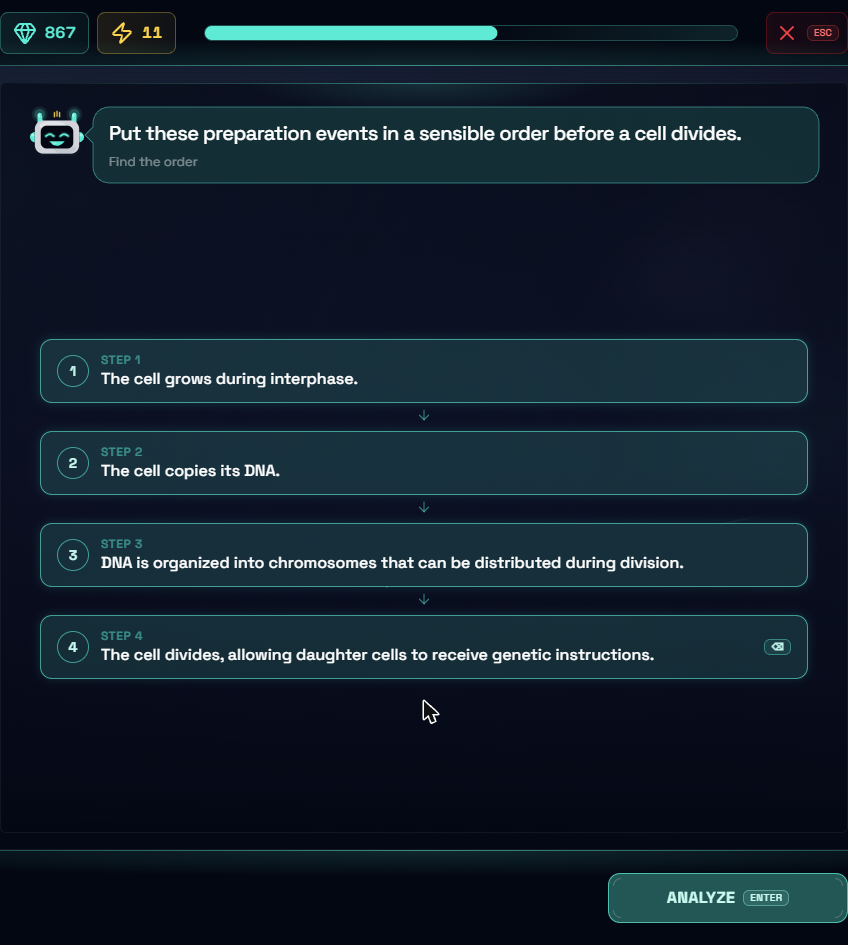
In Boterview, every lesson is a set of challenges you answer from memory, like this ordering exercise in a biology course:
6. Track Your Progress Every Week
Once a week, write down what you finished, what you skipped, and adjust the plan for the next week.
In a meta-analysis of 138 studies with 19,951 participants, Harkin and colleagues (2016) found that monitoring your progress helps you reach your goals, and that it works even better when you physically record it.
In my experience, the weekly check is what keeps a plan alive: a plan you never adjust is a plan you'll abandon.
Boterview's Quests page counts the lessons and courses you've finished, next to your daily streak, so you can see at a glance where you stand: