My 5 Favorite AI Flashcard Makers

I've spent the last few years developing an AI-powered learning platform.
That’s why I’ve tested nearly every flashcard tool on the market, not as a casual user, but to understand what truly makes flashcards help you learn and memorize faster.
I’ll share the best flashcard makers, but first, it’s important to understand what make a great flashcard maker.
What Makes a Great AI Flashcard Maker
A great flashcard maker has three key features.
First, it generates accurate information.
Second, it uses effective algorithms to bring the flashcards back just before you forget them, at the most effective time for review.
Third, and most importantly, it provides genuine feedback. Instead of simply showing the correct answer, great flashcard tools explain your mistake and reinforce the concept so it actually sticks.
1. Boterview: The Best AI Flashcard Maker for Active Learning
I built boterview after realizing that every flashcard tools test whether you recognize information, not whether you understand it.
After months of watching students use flashcards and still underperform on exams, I became convinced that the flashcard model itself needed to change.
With boterview's flashcards, you upload a PDF or a prompt and the AI generates a complete, spaced repetition deck in seconds:
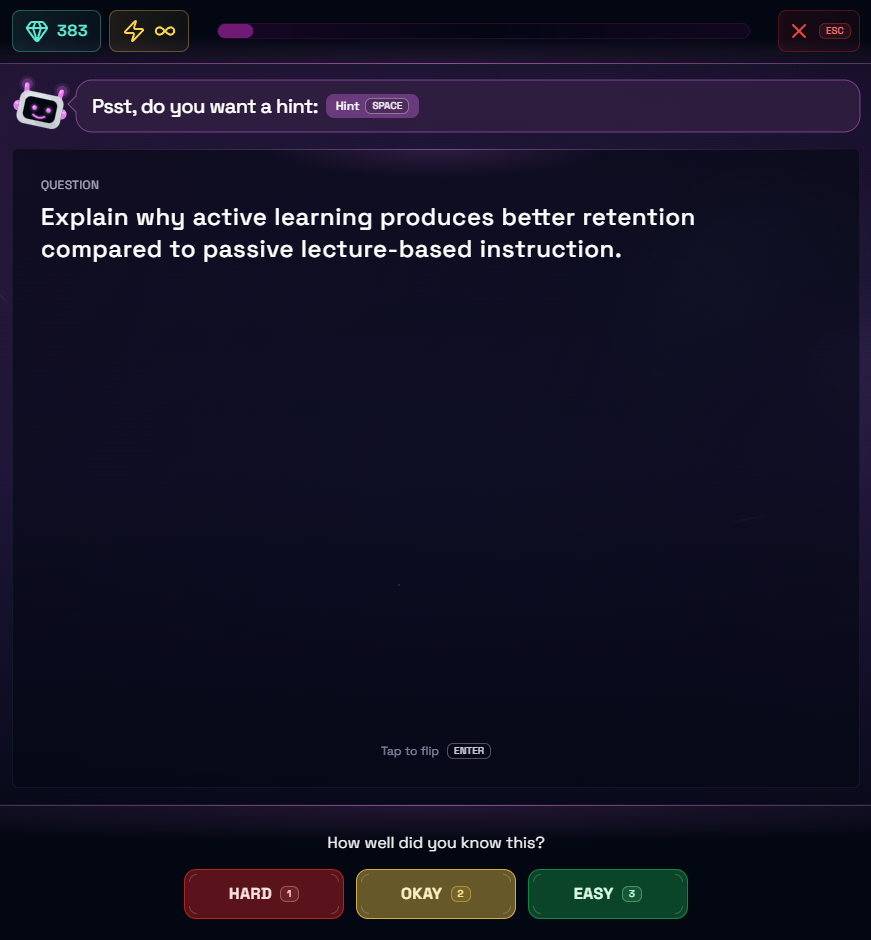
If you struggle with the answer of the flashcard, boterview can give you a few hints to help you:
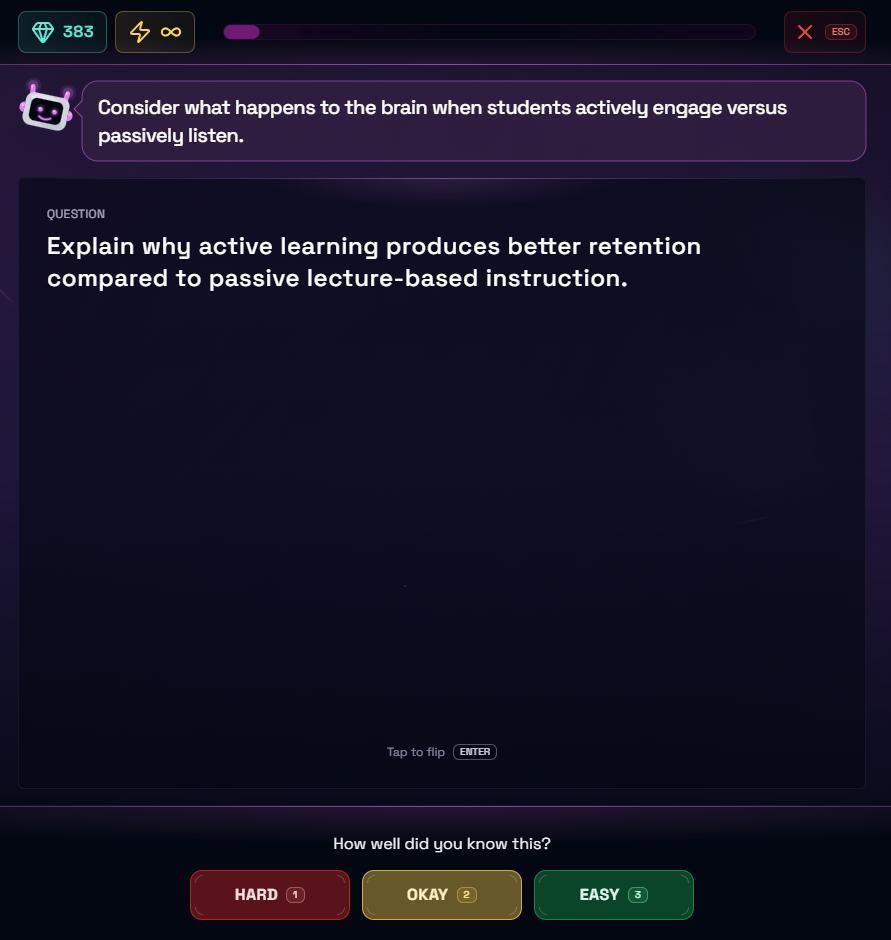
Once the card is flipped over, you can rate it.
Based on your rating, our spaced-repetition algorithm presents the cards at optimal intervals, and the cards themselves are designed to require genuine memorization effort.
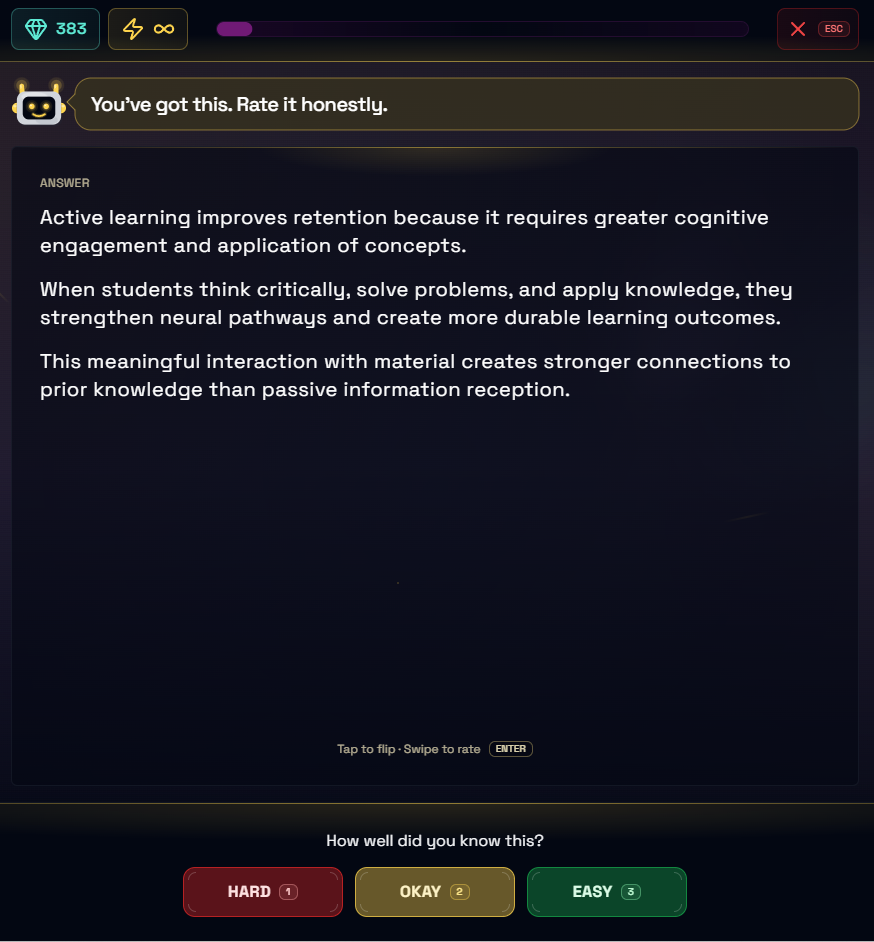
You can also add cards or remove memory cards from your deck at any time.
From the same imports and flashcard deck, you can also generate a full interactive course with structured units, targeted lessons, and a variety of challenges that require active engagement:
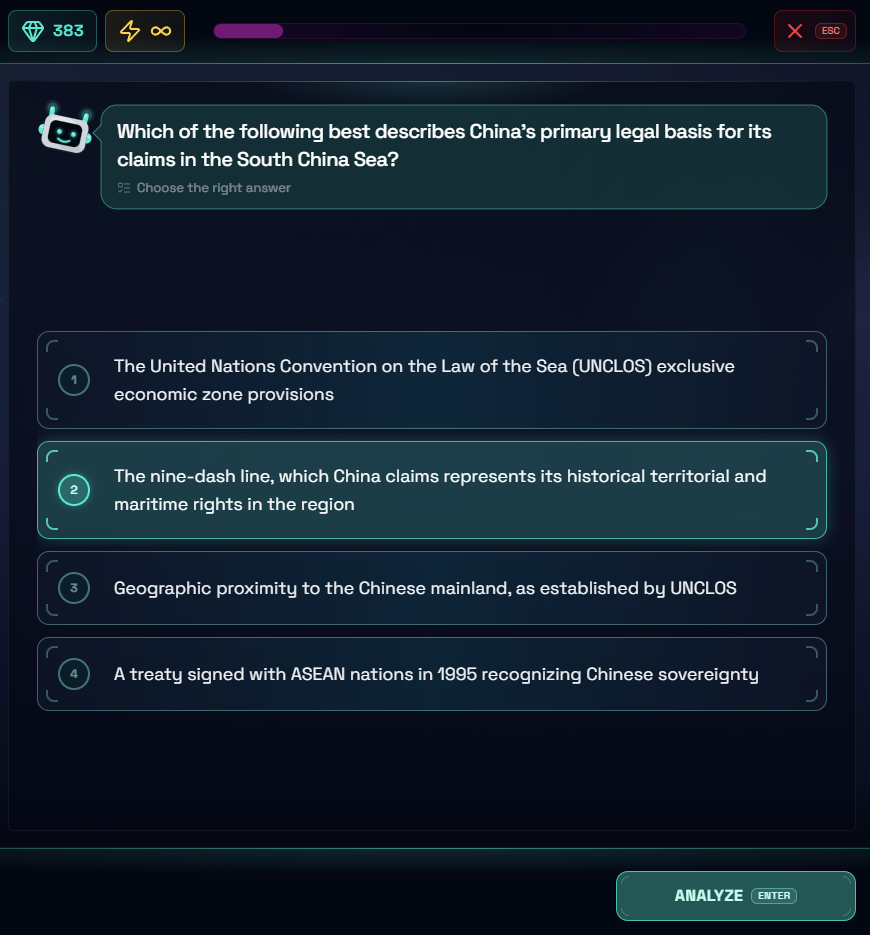
Start using boterview's flashcards today to study smarter:
2. Anki: A Great Flashcard Maker With Local Storage and a Great Algorithm
Anki is the gold standard for all the other flashcard tools on this list.
It invented the spaced repetition model that all modern AI-based flashcard creators have adopted, and its core algorithm remains more rigorous than most of its successors.
The SM-2 algorithm tracks each card individually with an accuracy that most newer tools have yet to match, and the community-built flashcard library.
There are, however, significant trade-offs.
Anki's interface looks like it's from 2005, and to a large extent, it is.
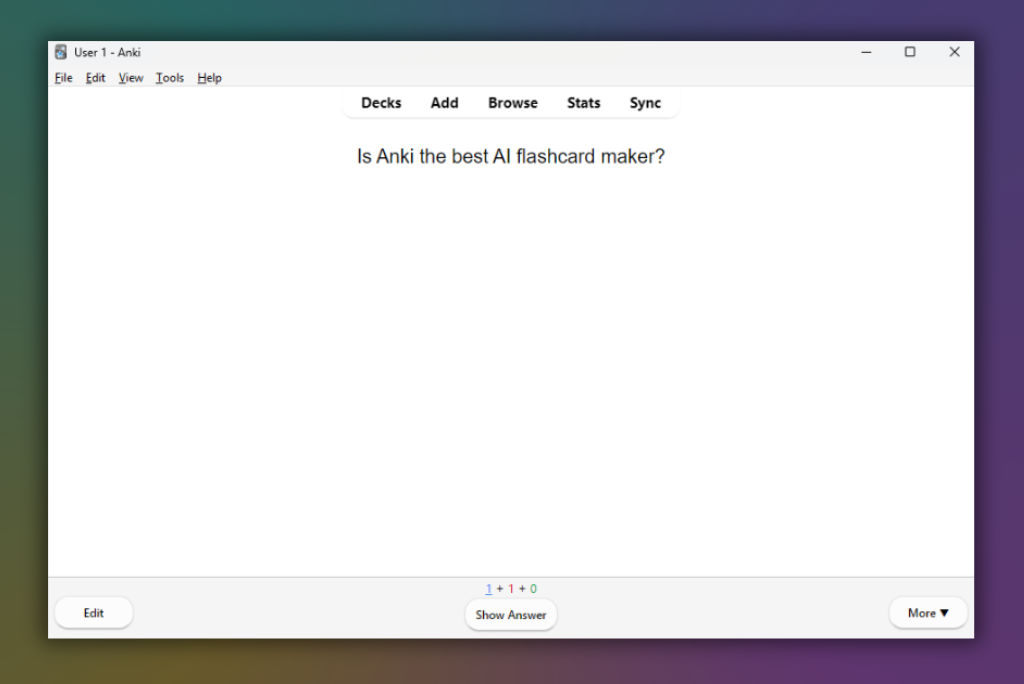
AI generation requires third-party add-ons of varying quality. The complexity of the setup can discourage many users before they even realize its benefits.
The good news is that the flashcards are stored on your device and Anki is free on desktop and Android.
3. Quizlet: Another Great Flashcard Maker
Quizlet’s AI flashcard features aren’t the most sophisticated on this list.
Spaced repetition is functional and feedback on errors is limited to displaying the correct answer and moving on to the next question.
From a pure learning perspective, it doesn’t compete with Anki or boterview.
Quizlet stands out for its accessibility and large community.
The app lets you type or paste text, import documents, or photograph handwritten notes.
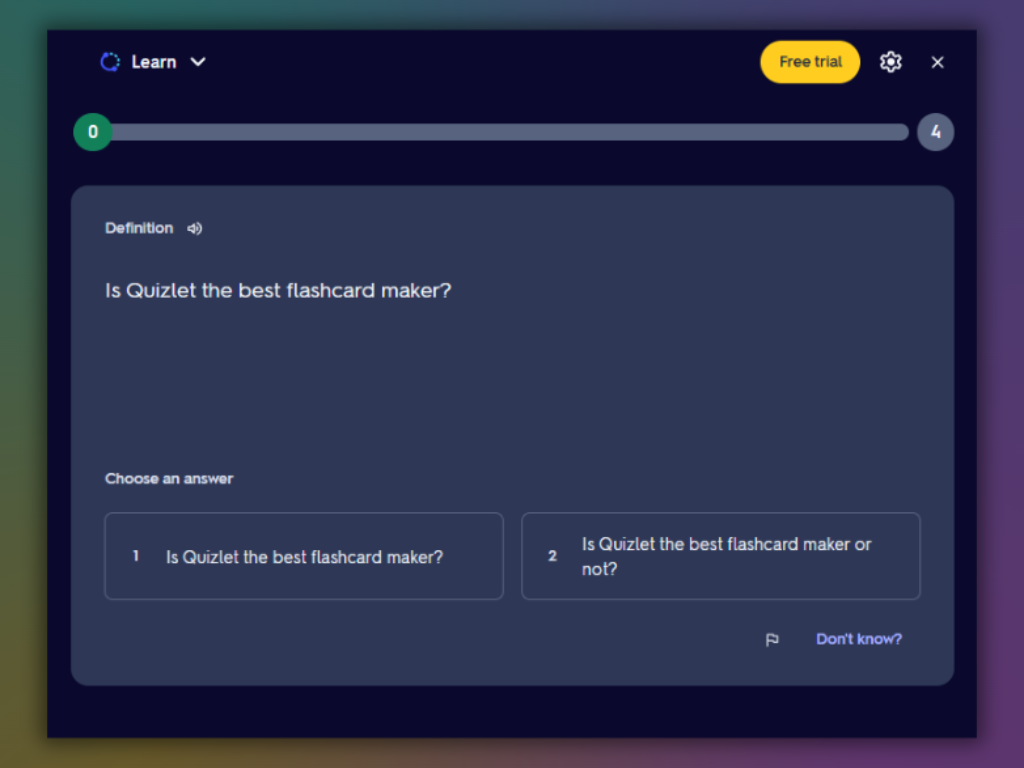
The AI instantly converts these into flashcards, which you can then edit, rearrange, and expand upon as you see fit.
For many students, the flashcard set they need already exists in Quizlet's library and can be accessed within minutes of opening the app.
4. RemNote: The Best AI Flashcard Maker for Note-Takers
RemNote combines note-taking, PDF annotation, and flashcard creation in a single application.
I like RemNote because there is no more juggling between different tools: you can take notes and instantly generate flashcards, then study them using a built-in spaced repetition algorithm.
When you take notes, you mark key concepts using simple syntax, and RemNote automatically converts them into spaced repetition flashcards.
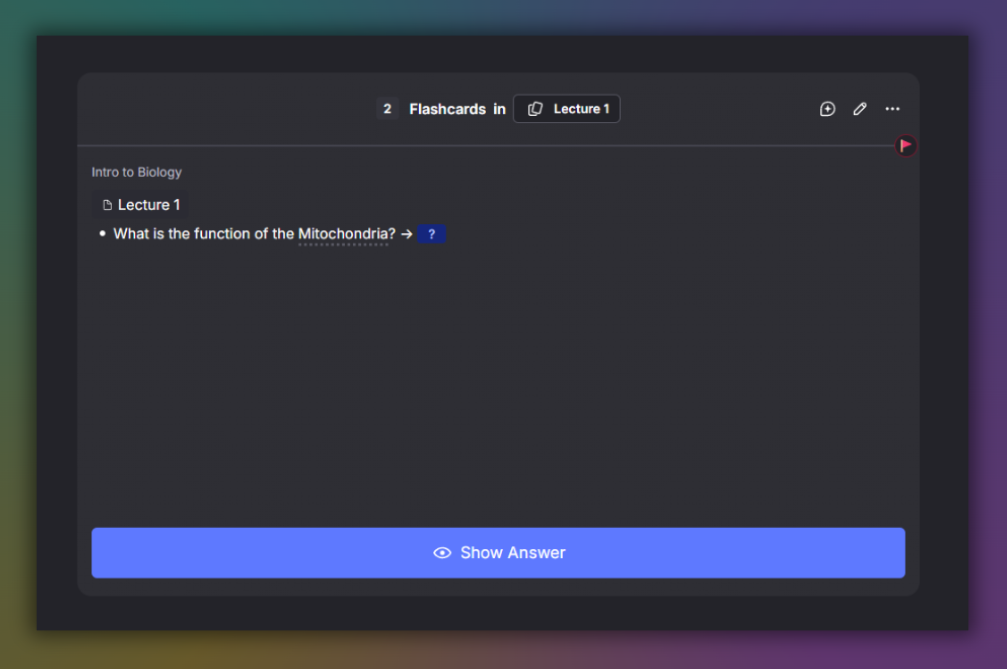
Each card includes an AI-powered explanation to enhance understanding, and RemNote's exam prep mode tells you precisely what to study each day based on a target date you set.
However, in my experience, RemNote is more complex to master than most of the tools featured here, the mobile experience is less polished than the desktop version, and the free version has become more restrictive over time.
5. Gizmo AI: Another Great Way to Learn With AI-Generated Flashcards and Quizzes
Gizmo AI's interface is the most polished of all the spaced repetition tools on this list: clean, contemporary, and far more user-friendly than Anki's aging design.
For students who have heard Anki is the gold standard but were put off by its interface, Gizmo represents the most compelling visual evolution.
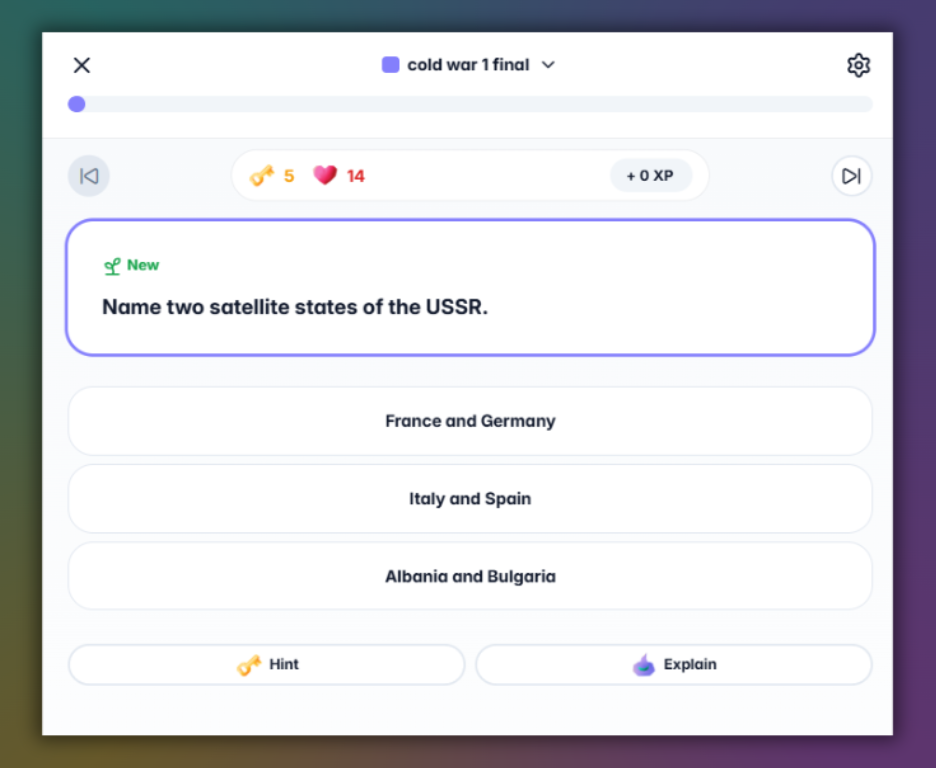
In my experience, Gizmo's AI generation works great on well-defined academic topics.
Gizmo is ideal for students seeking Anki's spaced repetition in a modern interface, learners who need quick and automatic generation of packs from lecture slides, and anyone who has tried Anki and been put off by its design rather than its algorithm.