3 Best Apps for Active Learning

Most learning apps are passive, but have been labeled as active learning tools.
You scroll through notes, flip through a few flashcards, get a vague sense of productivity without actually learning anything.
After years of testing study tools, I've developed a short list of criteria that allows me to distinguish apps that truly promote active learning:
- You must recall, not recognize. The app makes you answer from memory instead of picking from choices.
- Mistakes are explained. When you get something wrong, the app gives you the appropriate feedback.
- Difficulty adjusts itself. The app adapts based on how you perform, not how confident you feel.
- Spaced repetitions. The app brings important concepts back at the right time, so knowledge is reinforced instead of forgotten.
Let's explore the best active learning apps that satisfy all of these criteria.
1. Boterview: The Best Active Learning App to Learn With AI-Generated Courses
I built boterview specifically to solve the problem of active learning.
All the existing tools I tested measured the wrong thing.
They measured whether you had reviewed your material.
None of them measured whether you had understood it.
This is why boterview's approach begins by generating a complete learning experience from the subject you want to study.
Prompt a topic or import a file, and the application creates a structured course from scratch:
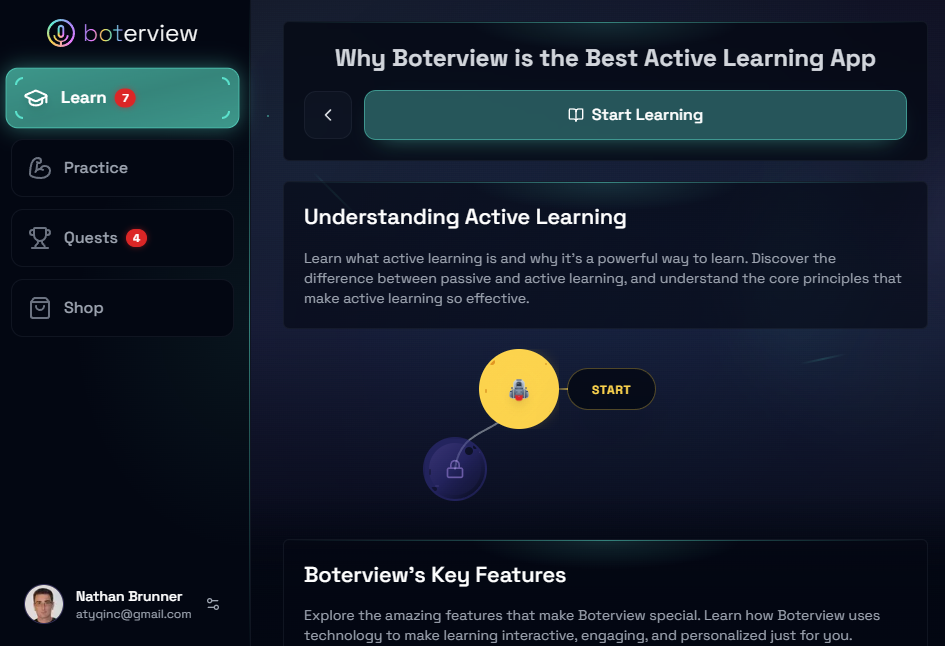
Courses have different types of challenges to engage different cognitive processes: true/false, MCQs, reading comprehension tests, Socratic conversations, etc.
For example, here is a socratic conversation challenge for a Google PM interview course:
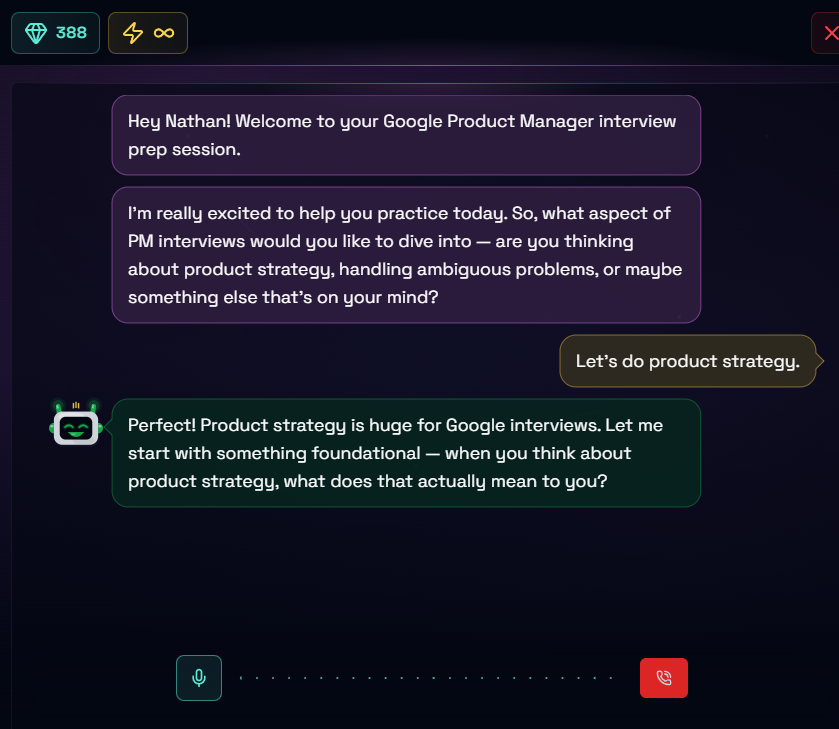
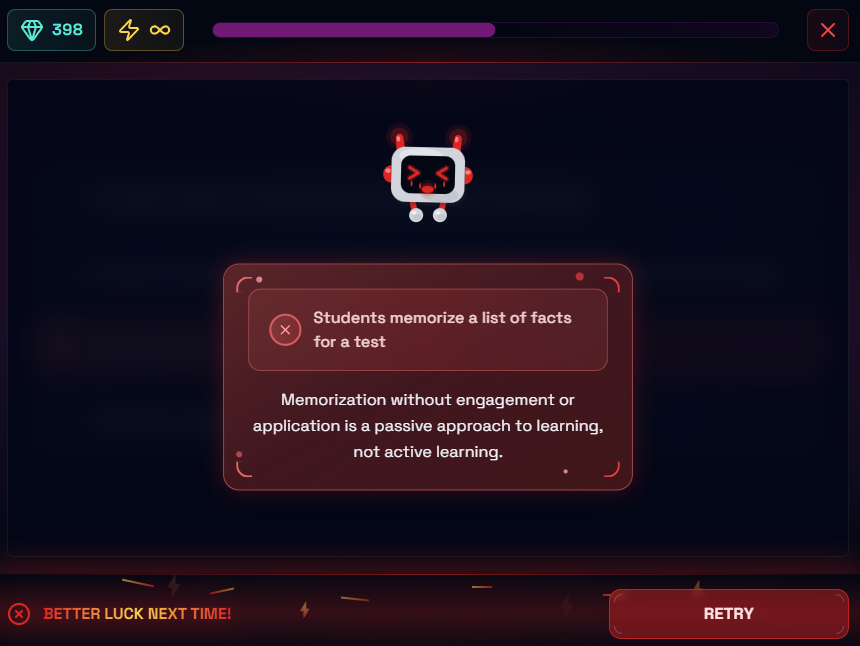
The feedback system perfectly illustrates Boterview's philosophy of active learning.
Each incorrect answer triggers an explanation:
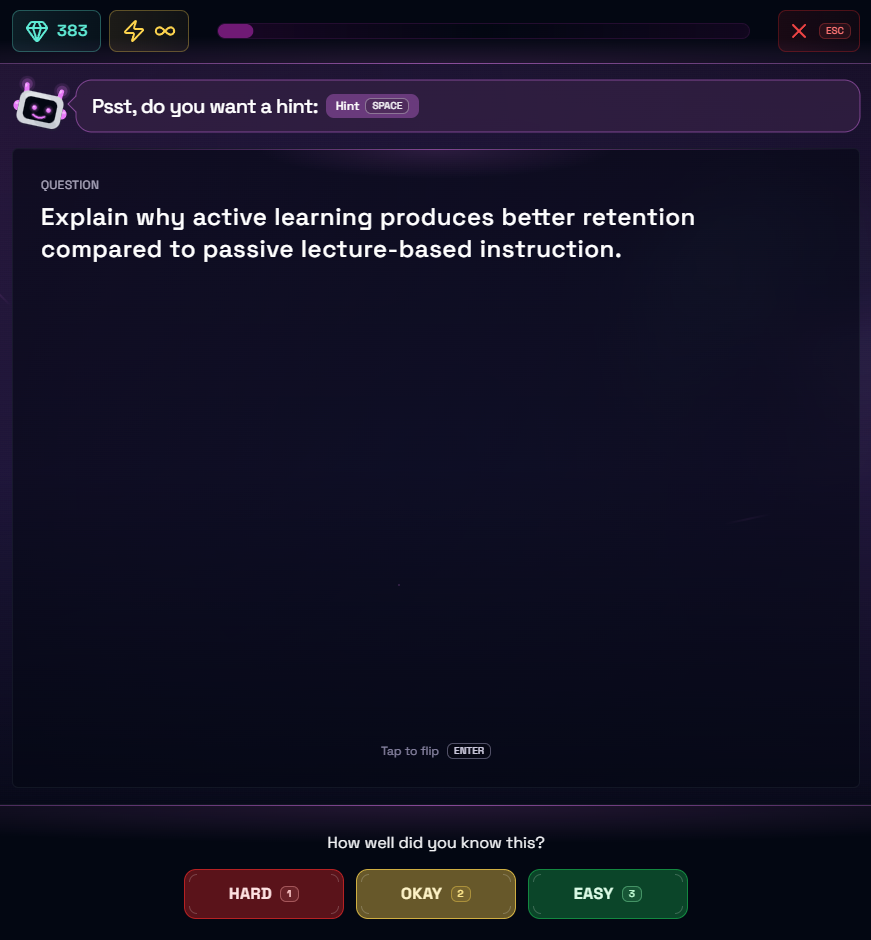
The spaced repetition flashcard system reinforces the same concepts through a different cognitive channel, promoting pure retrieval between learning sessions:
Want to give boterview's active learning app a try? Check it out here:
2. Brilliant: The Best Active Learning App for STEM
Instead of lengthy lectures, Brilliant offers short, interactive lessons where users solve problems step by step and receive immediate feedback.
I like how Brilliant's feedback helps them understand the reasoning and identify their mistakes.
The lessons are structured like small challenges: problems to solve rather than content to absorb.
These interactive and visually guided lessons help learners internalize complex concepts instead of simply recognizing the correct answers.
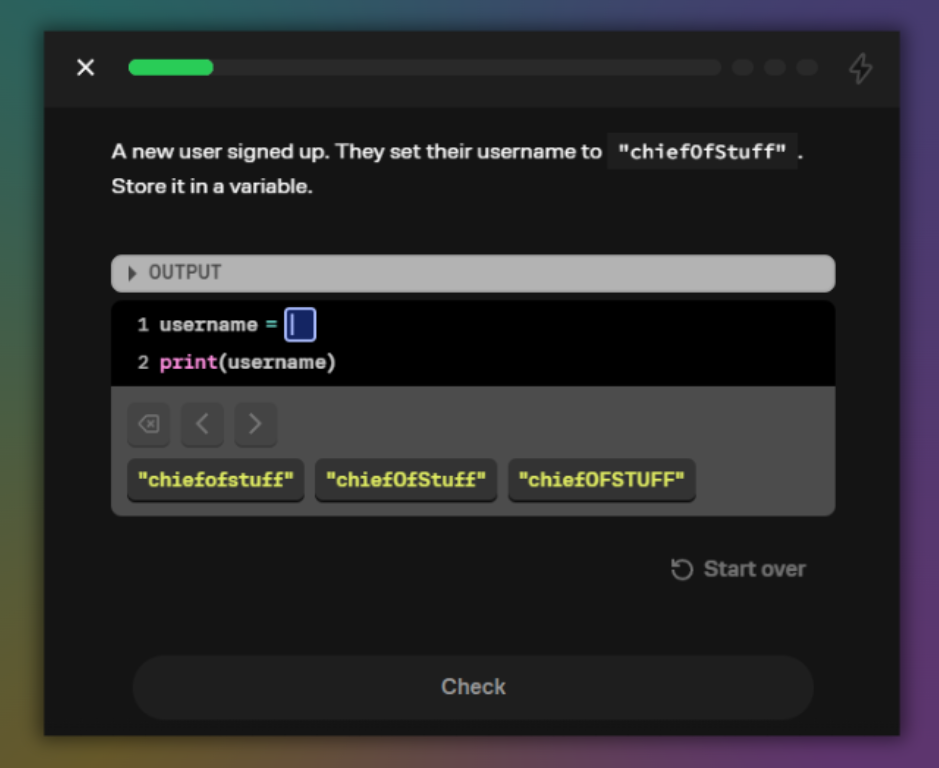
What strikes me most about Brilliant's pedagogy is the progression of learning.
Brilliant doesn't explain how to do something before asking questions.
Instead, the platform lets learners search for a solution on their own before learning the procedure.
I find their try first, learn later approach very interesting.
3. Quizlet: The Best Active Learning With Flashcards and Quizzes
Quizlet is the most misunderstood tool on this list.
Most users use it passively: they browse flashcards created by others, glance at the answer, and assume they know it.
Used this way, it's no more effective than simply reviewing your notes.
Used correctly (especially with their new Learn Mode feature) it's a truly powerful active memorization tool.
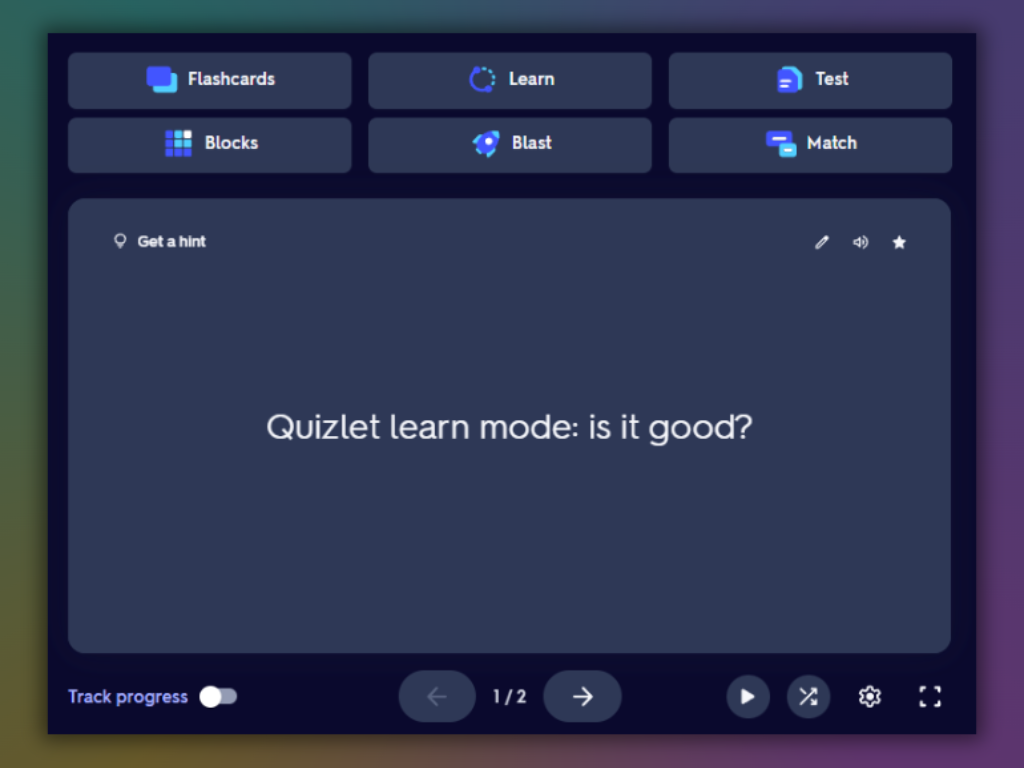
Quizlet's Learn Mode requires you to recite the answer in writing before telling you if it's correct.
The main drawback lies in the depth of the feedback.
In Learning mode, if you make a mistake, Quizlet displays the correct answer and moves on to the next question.
No explanation is provided, no Socratic follow-up is offered, and no attempt is made to fill in the gaps in understanding.