3 Modern Flashcards Alternatives to Anki

I have a lot of respect for Anki, I consider it to be one of the best flashcard makers
Its spaced repetition algorithm is truly one of the best tools ever devised for long-term memorization.
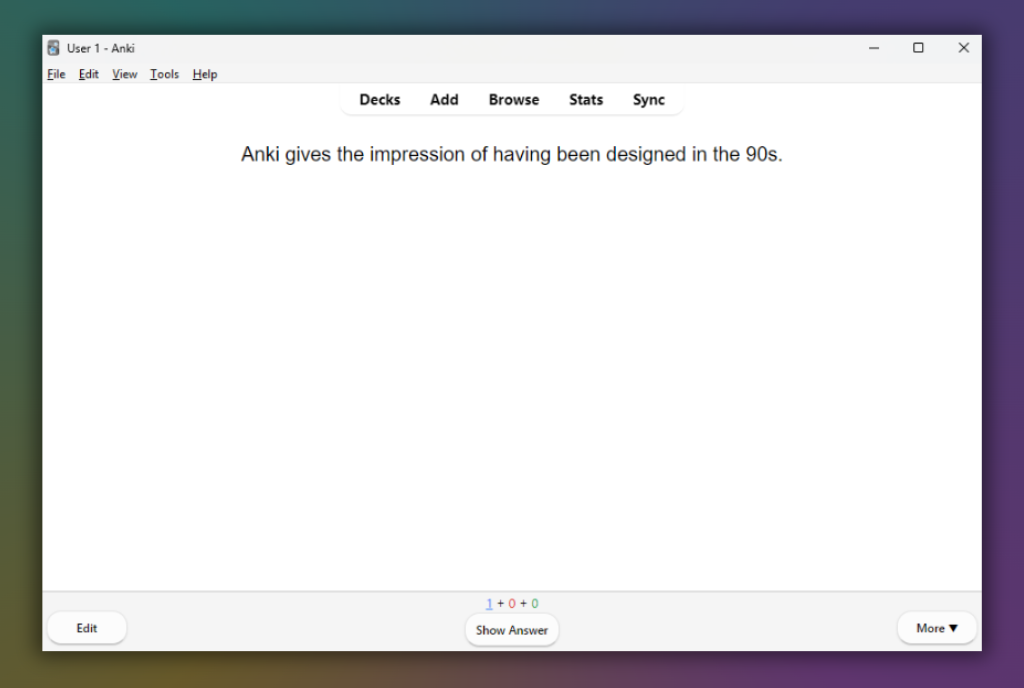
If you're looking for more modern alternatives to Anki, here are my favorite alternatives, starting with the app I created myself.
1. Boterview: The Best Modern Alternative to Anki for Active Learning
I created Boterview because I believe that memorizing and understanding are two different things.
Boterview's flashcard system works like Anki in the essential ways.
It also has an AI that generates the cards from a simple instruction or a PDF.
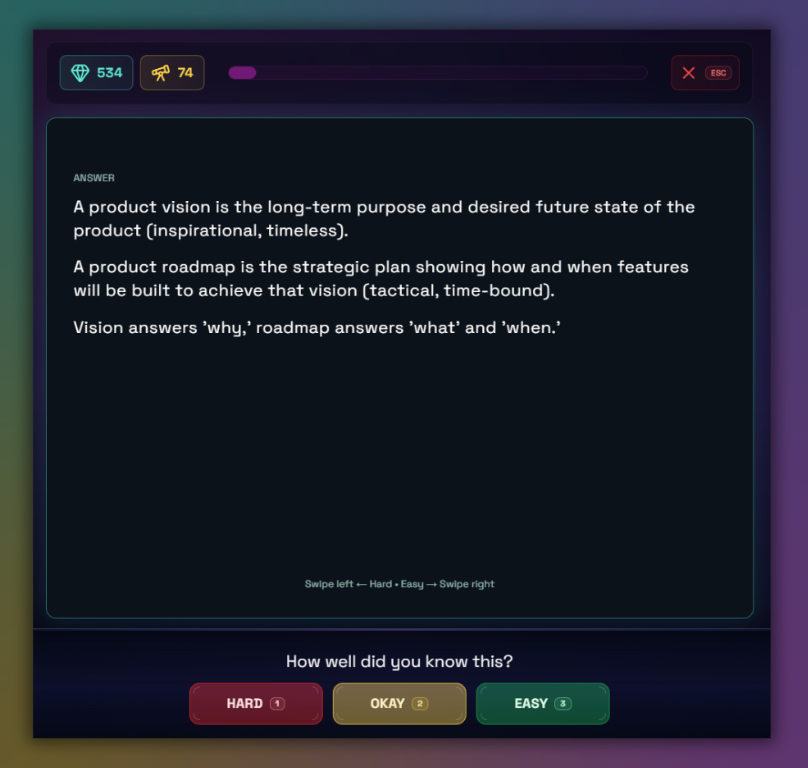
Boterview flashcards have a much cleaner user interface than Anki's:
Where Boterview truly surpasses Anki is in what happens after your flashcard session.
IThe courses are generated from anything you want to learn:
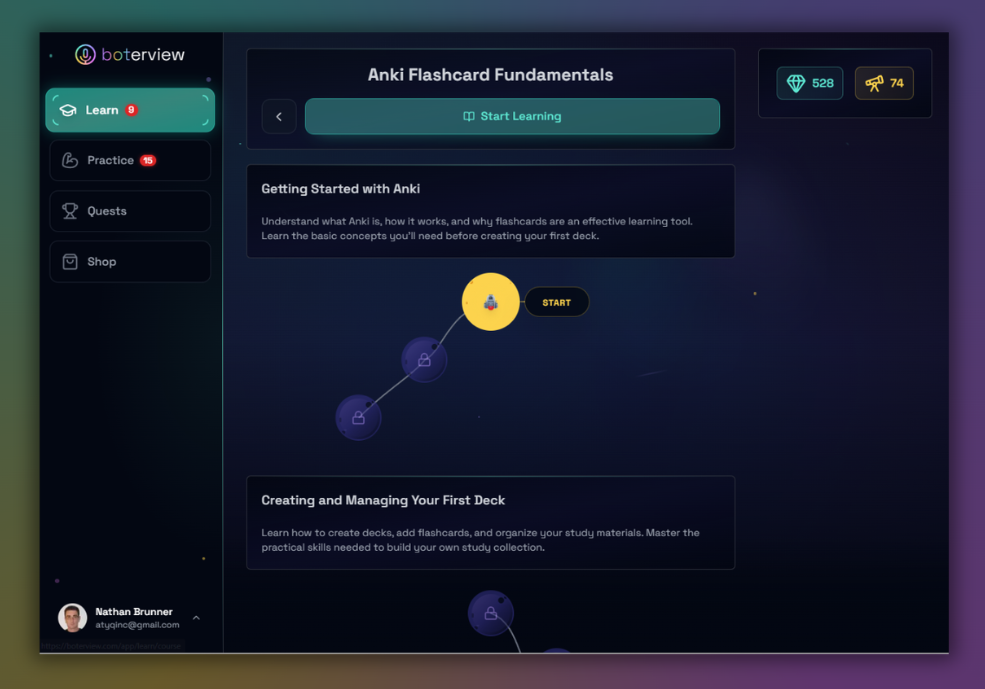
Boterview builds a complete learning path with structured units, targeted lessons, and interactive quizzes.
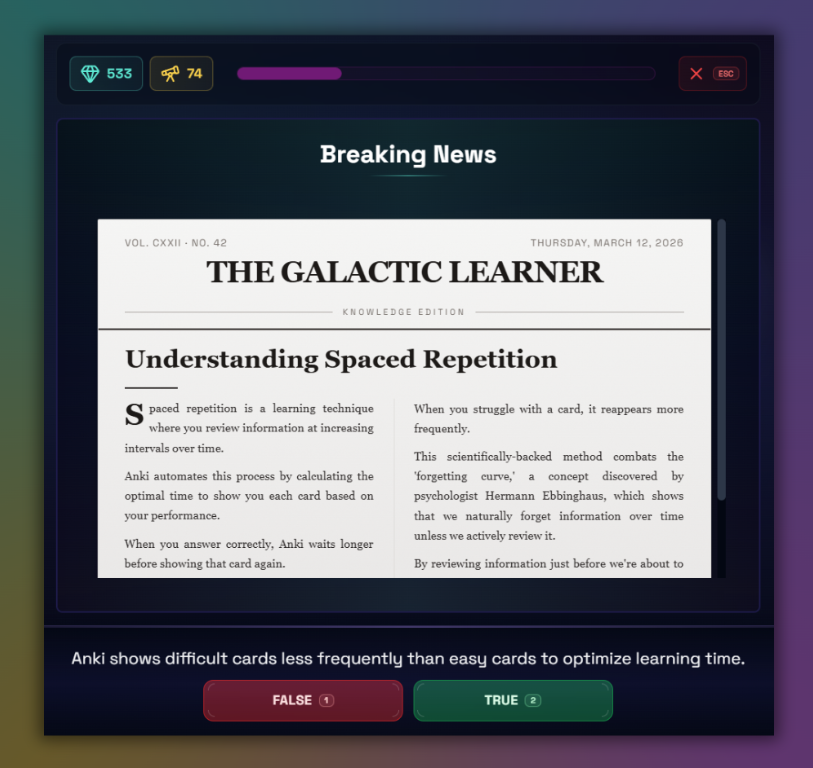
Each time I submit an answer, the AI tutor tells me exactly where I went wrong and where I went right:
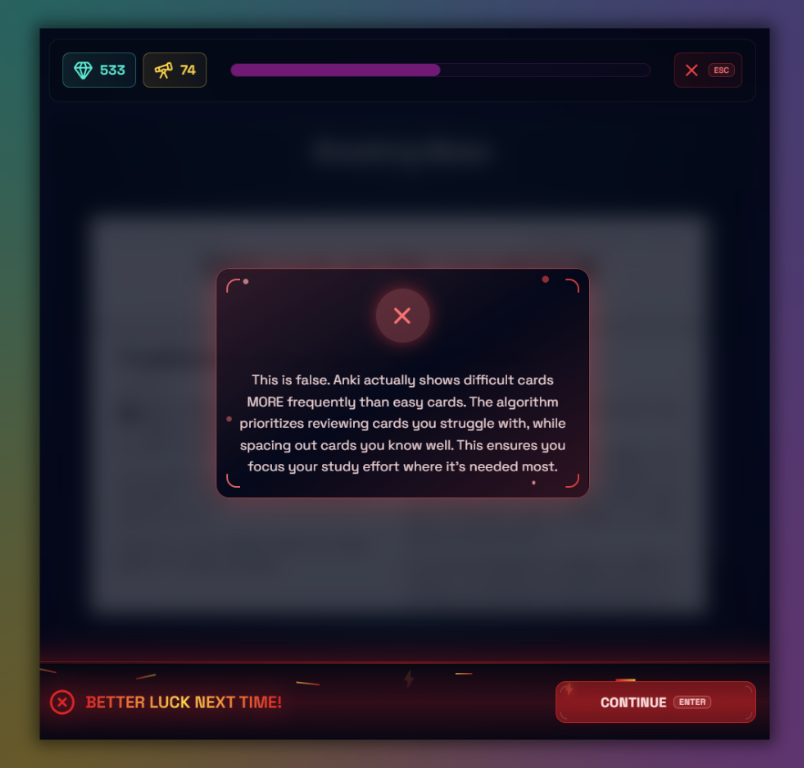
Boterview tells you whether you understood.
2. Quizlet: The Best Alternative to Anki for Shared Packs
Quizlet is a great alternative to Anki, I find it more accessible and for most learners, that's what really matters.
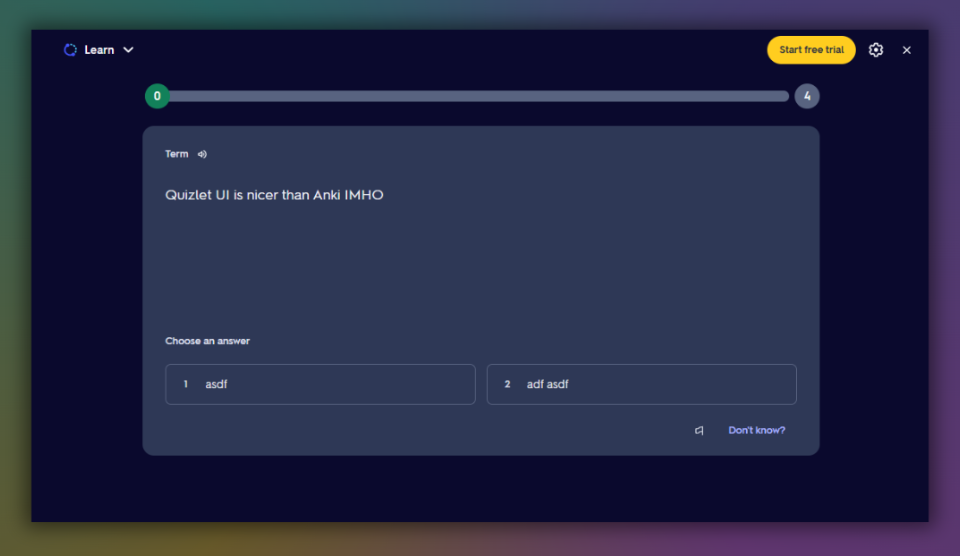
Creating a decks on Quizlet takes only a few minutes, the interface is clean and modern, and millions of community-created packs are available on virtually every subject imaginable.
I also like Quizlet's study modes that go beyond classic flashcards like matching games, fill-in-the-blank exercises, and practice tests.
However, Quizlet's spaced repetition is less sophisticated than Anki's and boterview's active learning features are nowhere near as comprehensive.
But for learners who abandoned Anki because it felt like too much work, Quizlet is a genuinely good middle ground.
3. Obsidian: The Best Alternative to Anki for Note-Takers
Obsidian isn't a flashcard app per say.
Obsidian is primarily a Markdown note-taking app designed to structure your ideas.
But with the right plugin, it becomes one of the most powerful spaced repetition tools on the market, even better than Anki.
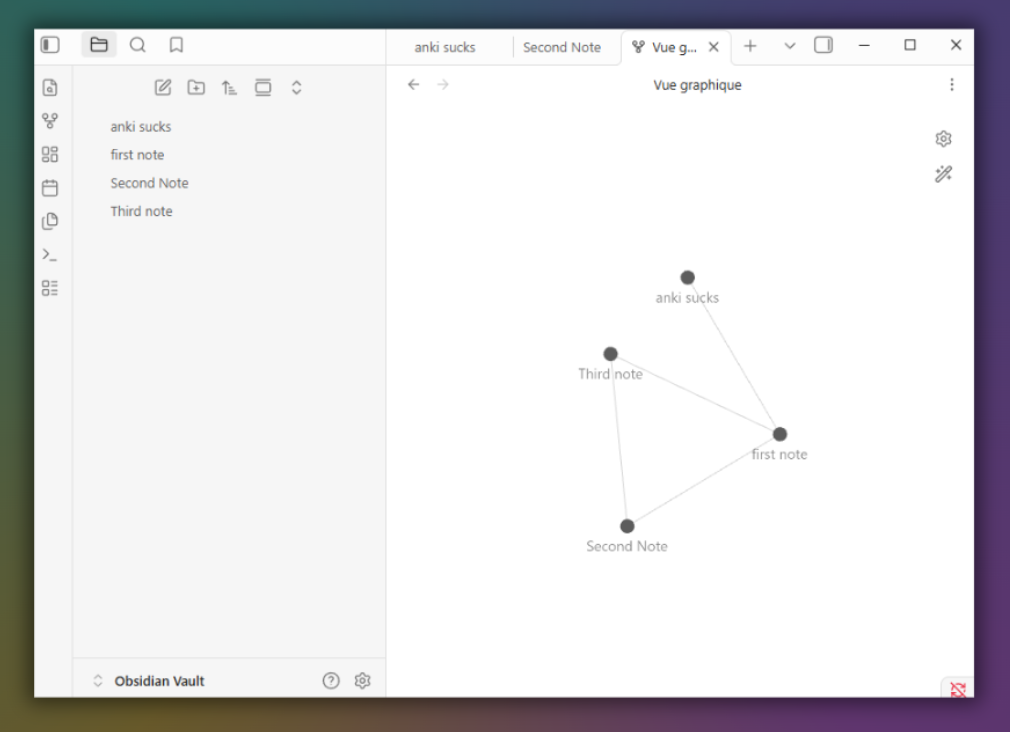
Its main strength lies in the community-developed spaced repetition plugins, which allows you to transform any line or block of your notes into a flashcard without leaving the app.
Instead of juggling two separate systems (notes in one app, flashcards in another), everything is centralized on Obsidian.
Your notes and revision cards are all one, and my flashcards evolve at the same pace as my notes.
In my opinion, the real drawback is that Obsidian requires some setup and a certain level of tech know-how.
You have to install the plugin, configure it, and be prepared to work with plain text.