3 Best AI Alternatives to Duolingo

Duolingo deserves praise for getting hundreds of millions of people to open a learning app every day.
It's a great way to learn new languages and even other things like chess!
But, if you're looking for an AI-first alternative to Duolingo, here are my favorites (starting with the app I created myself).
1. Boterview: The Best Duolingo Alternative for AI-Powered Courses
Duolingo courses are primarily focused on language learning.
This is why I created boterview, it is a great way to create courses with AI:
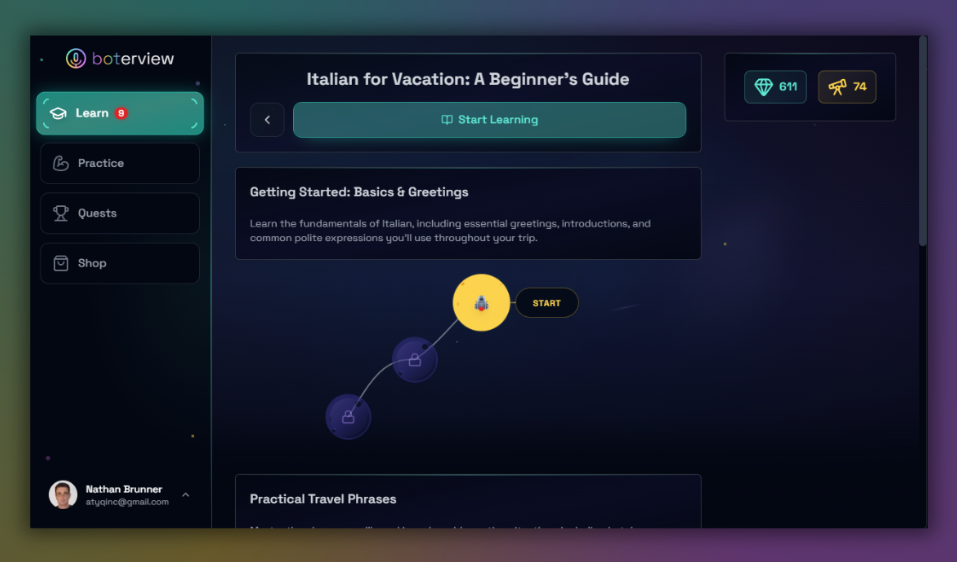
I prompt what I want to learn like "Italian Grammar for Beginners" or "History of the Cold War" and boterview builds a complete learning path with structured units, targeted lessons, and a progression that the level of difficulty I selected.
The course material is personalized and tailored to my goals.
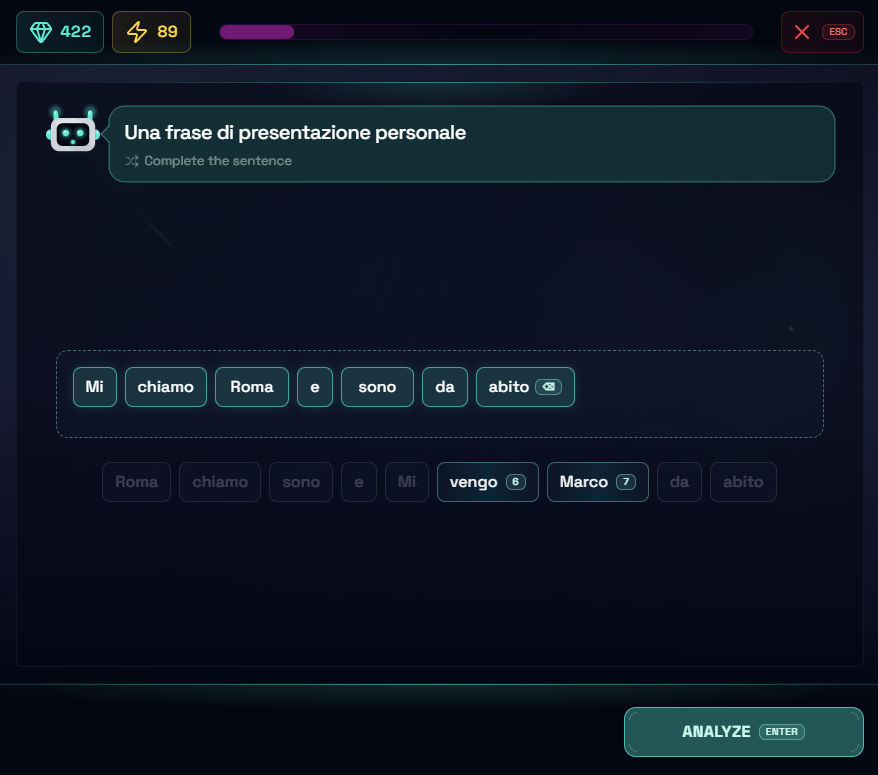
The challenge system will feel instantly familiar to anyone who has used Duolingo before.
For example, here is a "complete the sentence" challenge for an Italian language course:
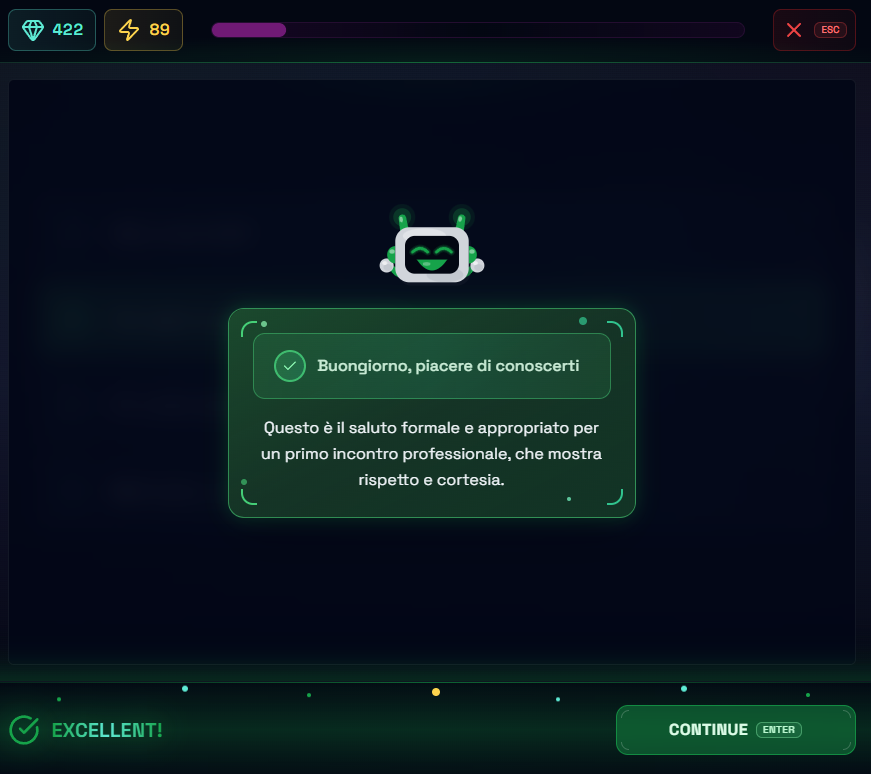
On boterview, however, the AI tutor explains precisely what I misunderstood and why:
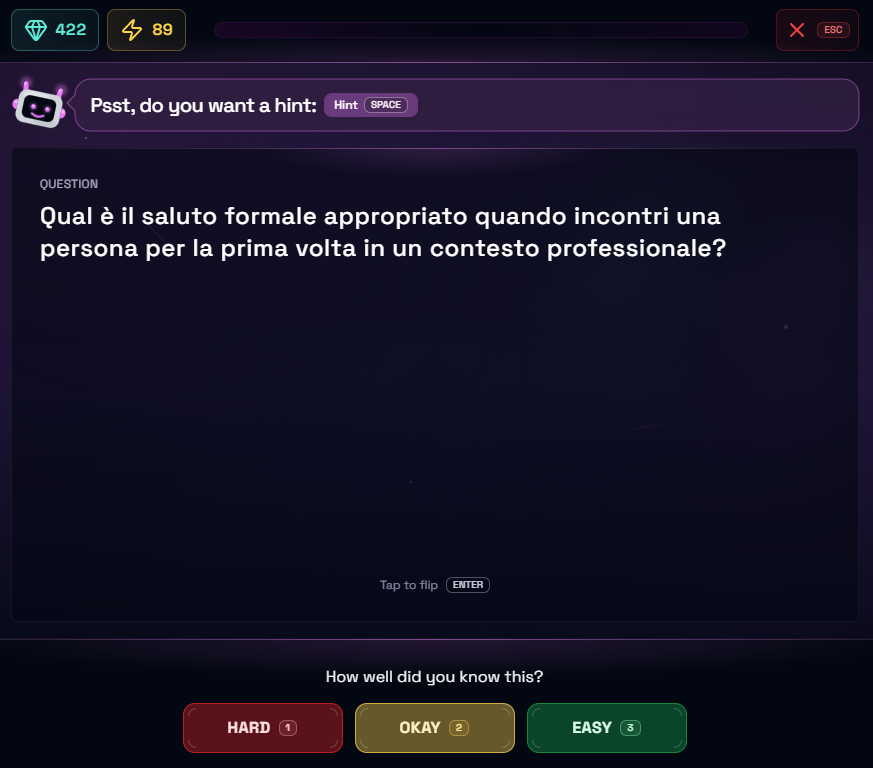
Like Duolingo's vocabulary reviews, boterview's flashcards are based on spaced repetition.
They are automatically generated from my course content: no manual creation, no need to browse a flashcard library:
It is also possible to practice your speaking skills with boterview's AI tutor:
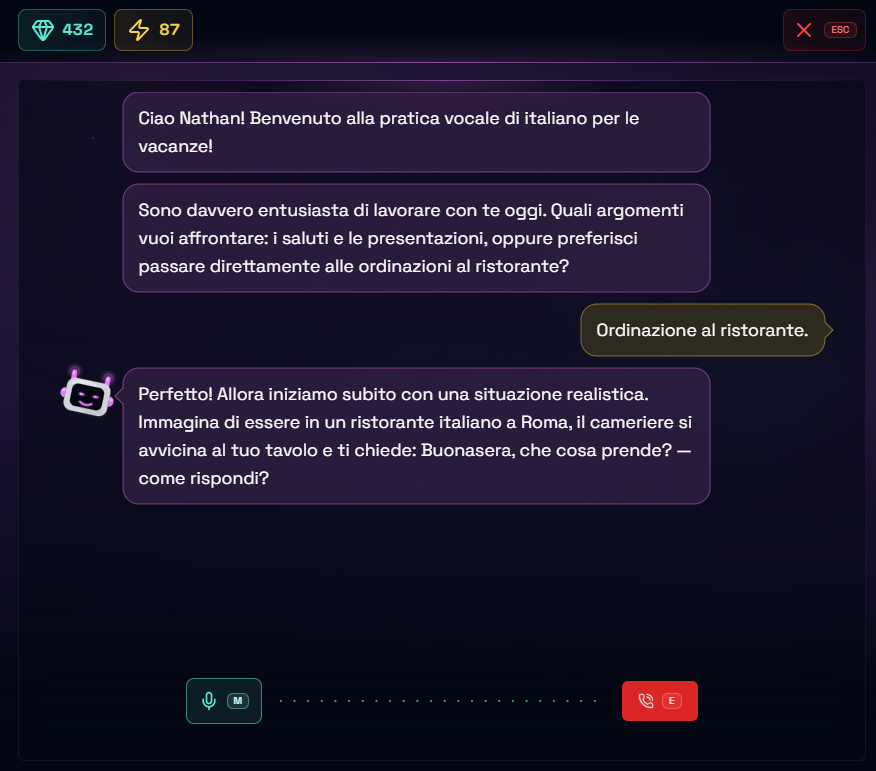
If you want to learn a language or start learning other topics, check out boterview here:
2. Speak: The Best Alternative to Duolingo for Practicing Authentic Conversation With AI
Duolingo is a great way to learn grammar rules and vocabulary.
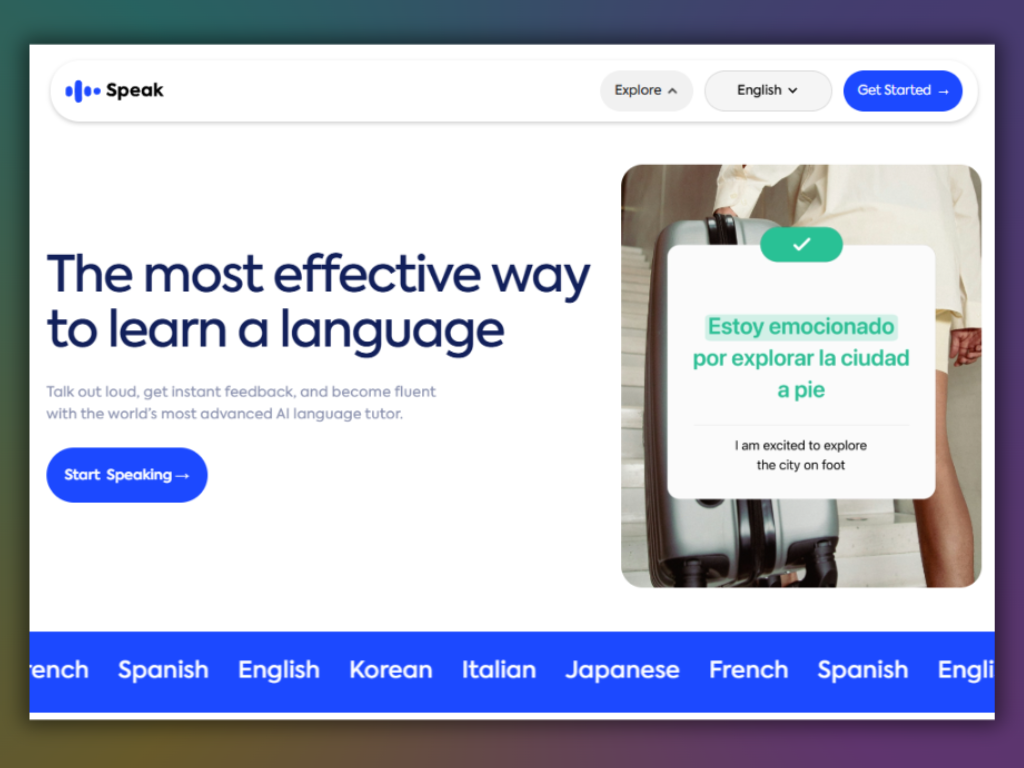
Speak was designed to help you speak better in other languages.
Speak invites you to speak from the very first lesson.
What I like is that Speak's AI listens, corrects your pronunciation, points out grammar mistakes, and explains them, all without interrupting the natural flow of the conversation.
Duolingo Max is also a great way to practice conversations.
But the whole Speak app is designed entirely around the conversational experience.
I also like Speak because the AI tutor personalizes your program based on your level, goals, and the topics you want to cover. So, you won't learn how to order a meal if you need to prepare for a business meeting.
The only problem I have is that Speak currently focuses on a limited number of languages.
But for learners of these languages who truly want to improve their speaking skills, and not just complete lessons, it's a viable alternative to Duolingo.
3. Talkpal: Another Great AI-Powered Alternative to Duolingo to Practice Conversations
Just like Speak, Talkpal is entirely designed around conversations.
I really like the TalkPal's variety of training modes.
Besides the classic chat, Talkpal offers training modes for basic vocabulary or grammar, dialogue mode for common expressions, and call mode for audio-only speaking practice.
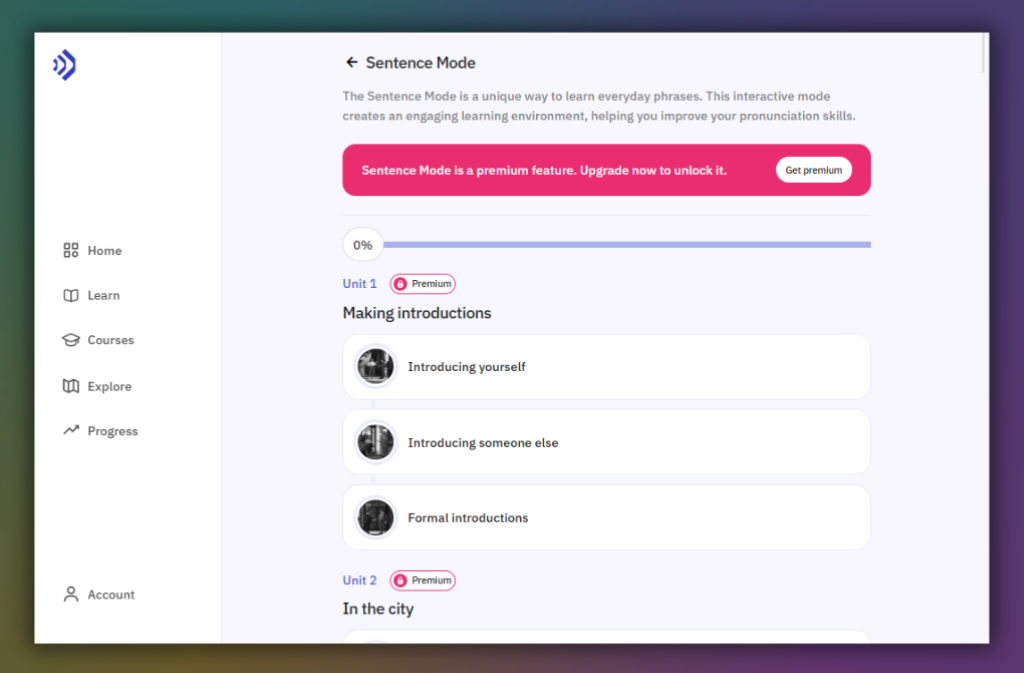
What I find most interesting about Talkpal, compared to Duolingo, is that there's no traditional points or badge system like in Duolingo, where you progress by gaining levels.
Instead, the app adapts to your level: if you're doing well, it offers challenging exercises; if you're struggling, it simplifies things and offers more fundamental exercises before moving you to the next level.
The free version is limited to ten minutes of daily practice, which is quite restrictive for serious learners.
But the premium subscription is offered at a competitive price, and a 14-day free trial gives you access to all features before committing.