3 Best RemNote Alternatives & Competitors

RemNote is one of the most feature-rich apps I've ever seen.
Bidirectional links, knowledge graphs, spaced repetition, PDF annotation, custom templates...
It is great, but takes time to master.
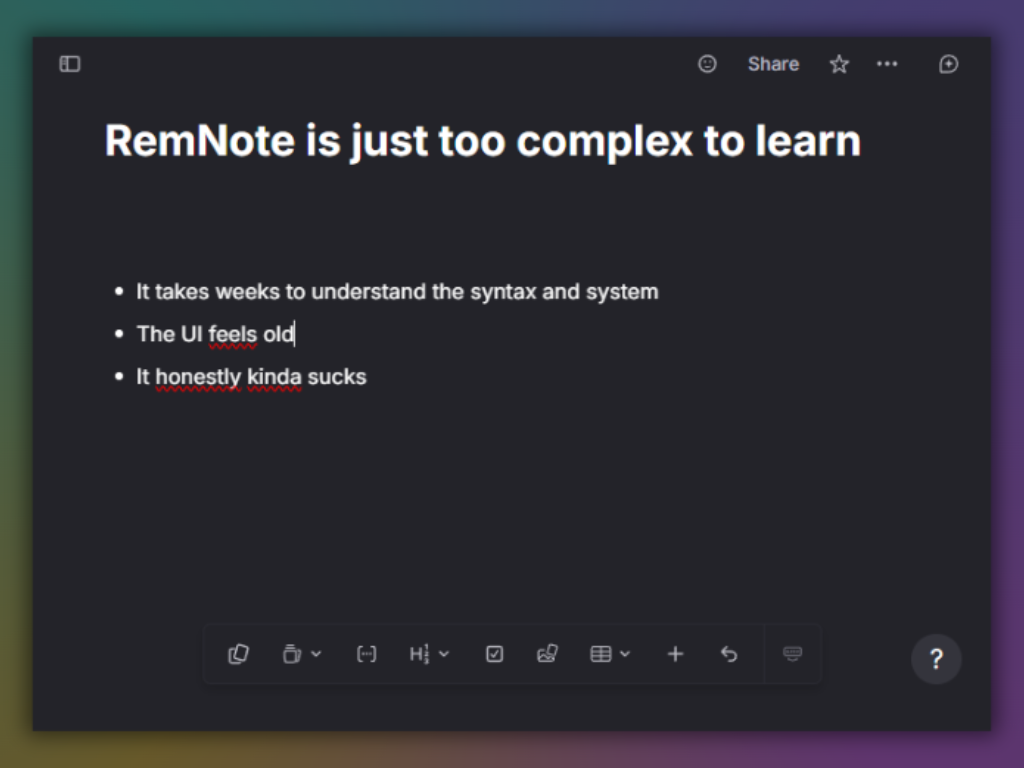
If, for one reason or another, you are looking for an alternative to RemNote, here are my favorites, starting with the application I created myself.
1. Boterview: The Best RemNote Alternative for Active Learning
In my experience, the students who spent the most time preparing their notes and flashcards were not necessarily the ones with great grades; they were simply the ones who had great decks.
I created Boterview based on a simple idea: we learn by practicing our courses, not by organizing them.
In fact, reviewing and understanding your courses are two different cognitive activities.
With boterview, you can start learning any topic with a simple prompt or by importing a PDF, and the AI generates a complete set of spaced revision cards without you having to create a single one manually:
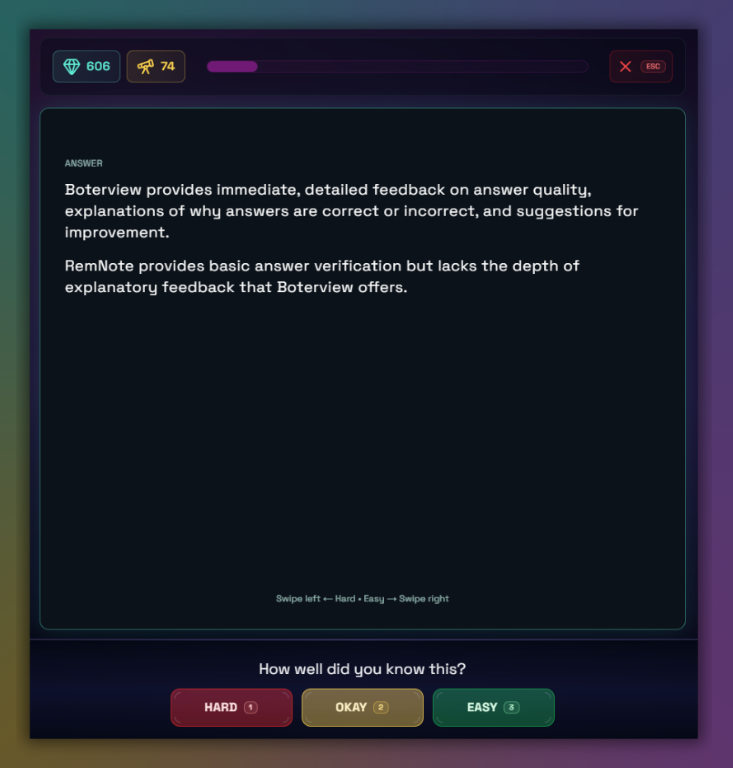
No syntax to learn, no formatting to configure, no computer required.
The app works exactly the same way on mobile as on a laptop.
But flashcards are just the starting point.
Boterview's real strength lies in the interactive course it creates simultaneously.
Each course is generated from the topic or document you provide:
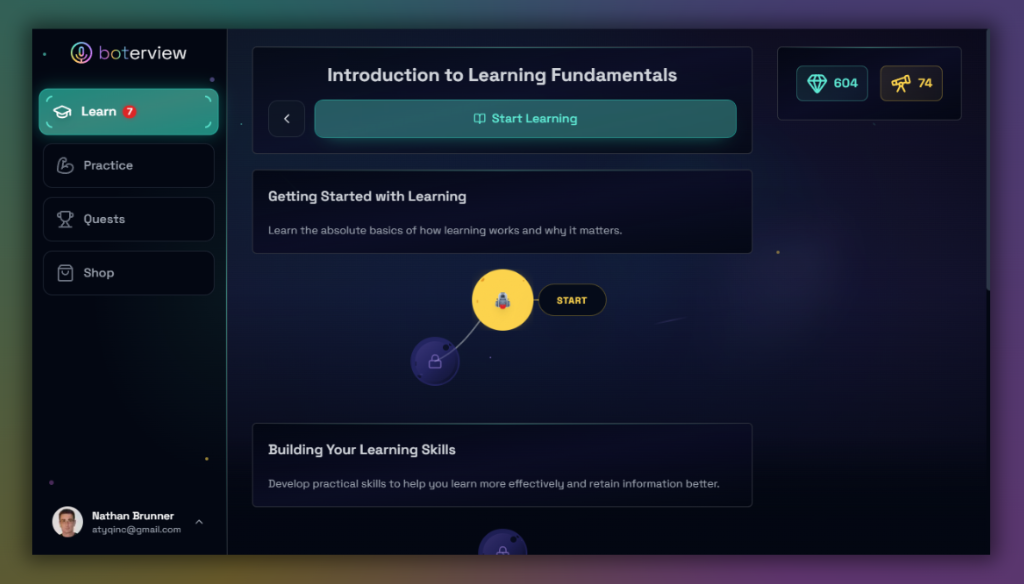
The course breaks down your topic into units and lessons, and each lesson is built around challenges that require active participation: true/false questions, multiple-choice quizzes, reading comprehension tests, and Socratic conversations.
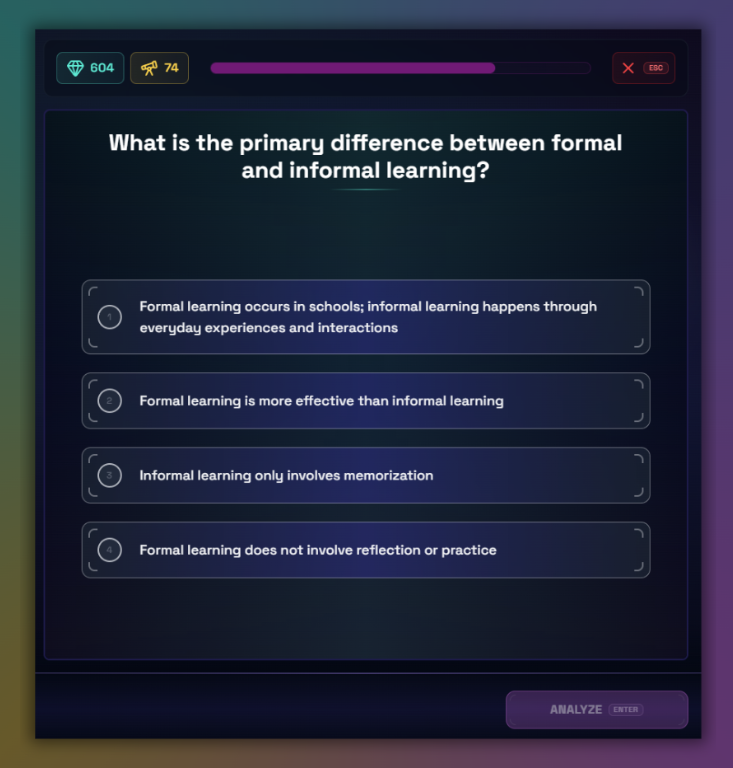
Similar to RemNote, with boterview, a wrong answer triggers an explanation.
The AI tutor explains precisely what you misunderstood, the correct reasoning, and the points to review:
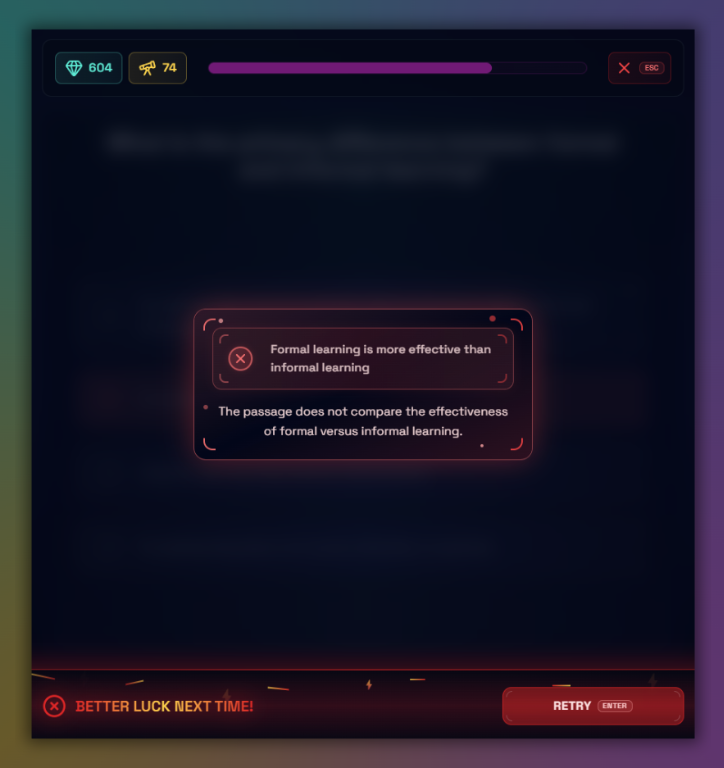
It is thanks to these explanations that learning becomes a reality.
They transform a study session into an enriching experience, much more than simple repetition.
2. Turbo AI: The Best RemNote Alternative for Note-Taking
Turbo AI is very similar to RemNote.
If your learning comes from lectures, recorded videos, or audio recordings, you should try Turbo AI.
Turbo AI converts lectures, PDFs, videos, audio files, and YouTube links into fully editable notes, interactive flashcards, quizzes, and even podcast-style audio tutorials, all on a single platform
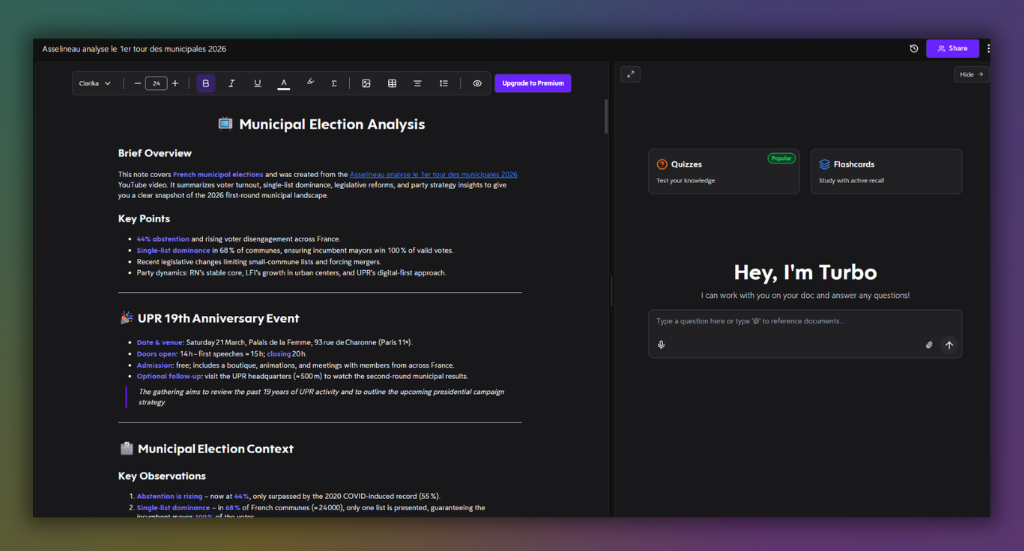
It's easy to use: import a lecture recording or paste a YouTube link, and in minutes, you have structured study materials ready to go.
What I particularly appreciate about Turbo AI compared to RemNote is the wide variety of input formats it supports.
The podcast generation feature is especially useful for reviewing during commutes or workouts.
The main drawback of Turbo AI, like RemNote, is that it's limited to generating and reviewing study materials. It offers neither interactive challenge systems, nor AI tutors to explain your mistakes, nor structured learning paths.
Turbo AI offers a free version and a paid version with unlimited features.
3. Anki: The Best RemNote Alternative for Memorization
Anki is a software that focuses on one thing: flashcards.
RemNote has a great spaced repetition feature.
Similarly, Anki relies entirely on scheduling logic that tracks each card individually and makes it appear at the precise moment you're likely to forget it.
Your RemNote content can sometimes be hosted on their servers, subject to their pricing decisions and availability.
With Anki, your flashcards are stored locally on your device as simple files.
You can save, export, and move them freely, without a subscription to access your work.
I also like the community-driven card pack library.
Decades of users have shared pre-built packs covering virtually every university course, professional exam, and language.
The only problem I have with Anki is that the interface is somewhat dated.