7 Alarming Skill Gap Statistics and Trends (2026)

Employers say they cannot find people. Workers say the job changed and nobody trained them.
In April 2026 we surveyed 2,873 employed adults about how their work has changed.
Our data indicates that AI has already changed most of these jobs, and that training has not followed. Let's explore the latest skill gap statistics!
Key Skill Gap Statistics and Trends
- 66% of workers say AI changed their job in the past year, and 23% got training from their employer
- 47% have listed a skill on a job application they could not have demonstrated that week
- 72% of employers struggle to find skilled talent in 2026
Also read: Statistics on AI Replacing Jobs and Online Learning Statistics.
66% of workers say AI changed their job in the past year, and 23% got training from their employer (Boterview)
In that survey, we asked whether AI had changed their tasks in the past 12 months, and whether their employer had trained them for the change.
66% said the tasks had changed. 23% said they had been trained.
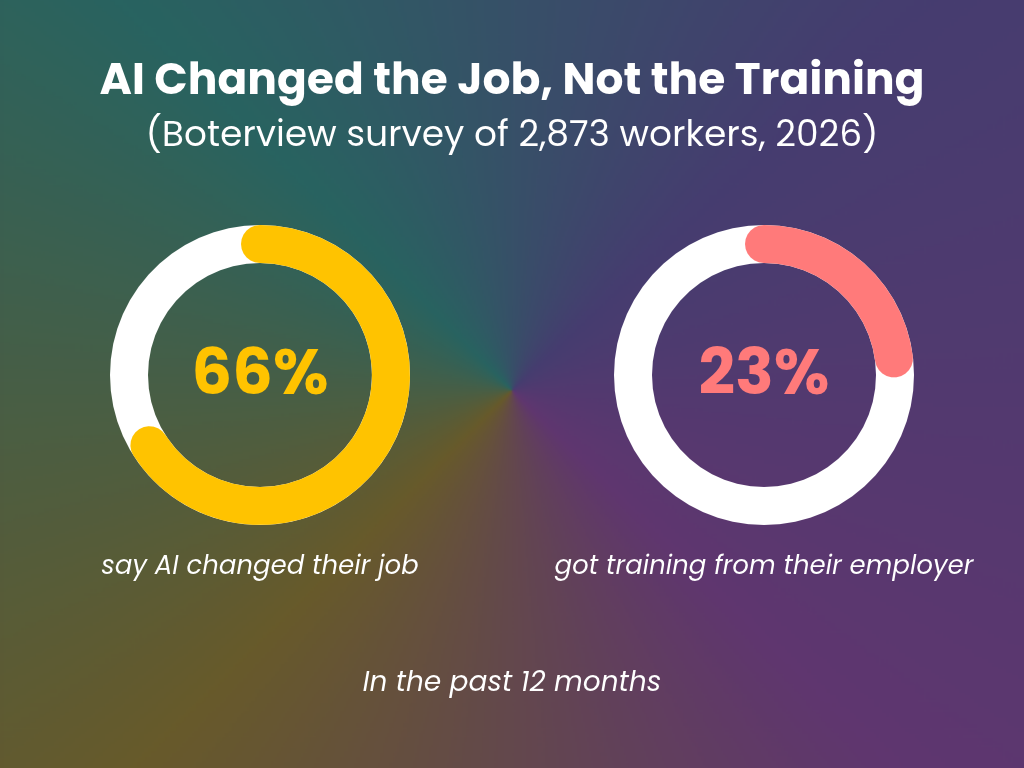
The rest were expected to pick it up. That is a gap the employer opened.
47% have listed a skill on a job application they could not have demonstrated that week (Boterview)
We asked whether, in the past year, they had put a skill on an application that they could not have shown in a short task that same week.
47% said yes.
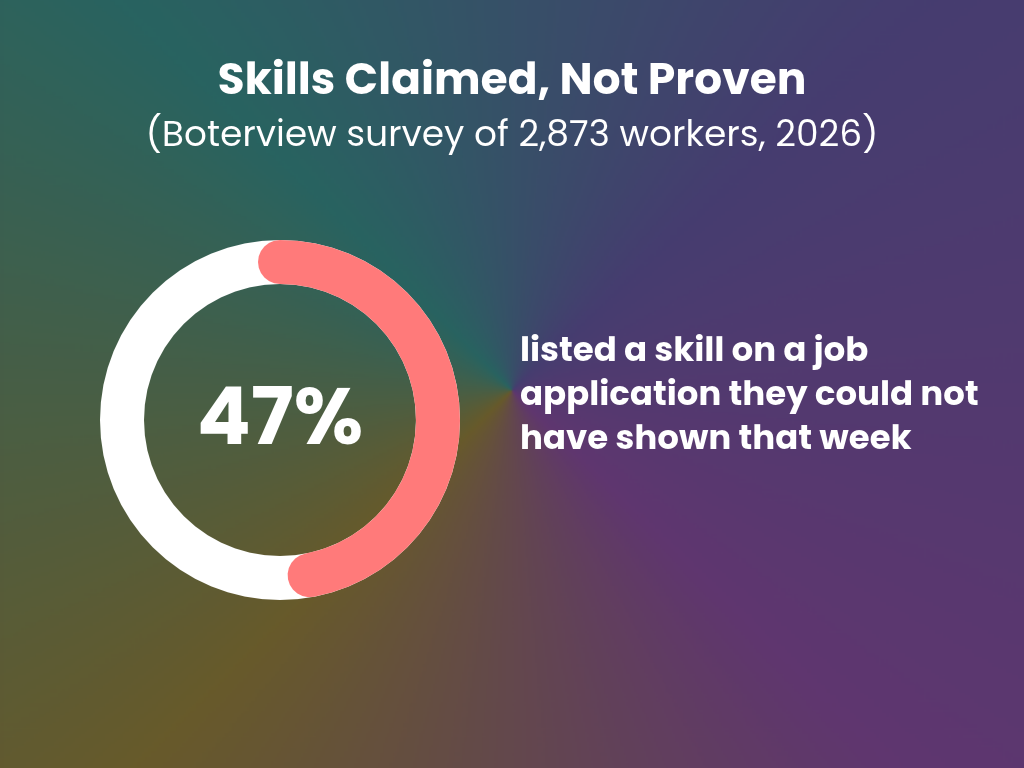
A skills line is a claim. Nearly half of these workers say the claim would not have survived a demonstration.
72% say they are expected to learn new tools on their own time (Boterview)
We asked whether they are expected to learn new tools outside working hours.
72% said yes.
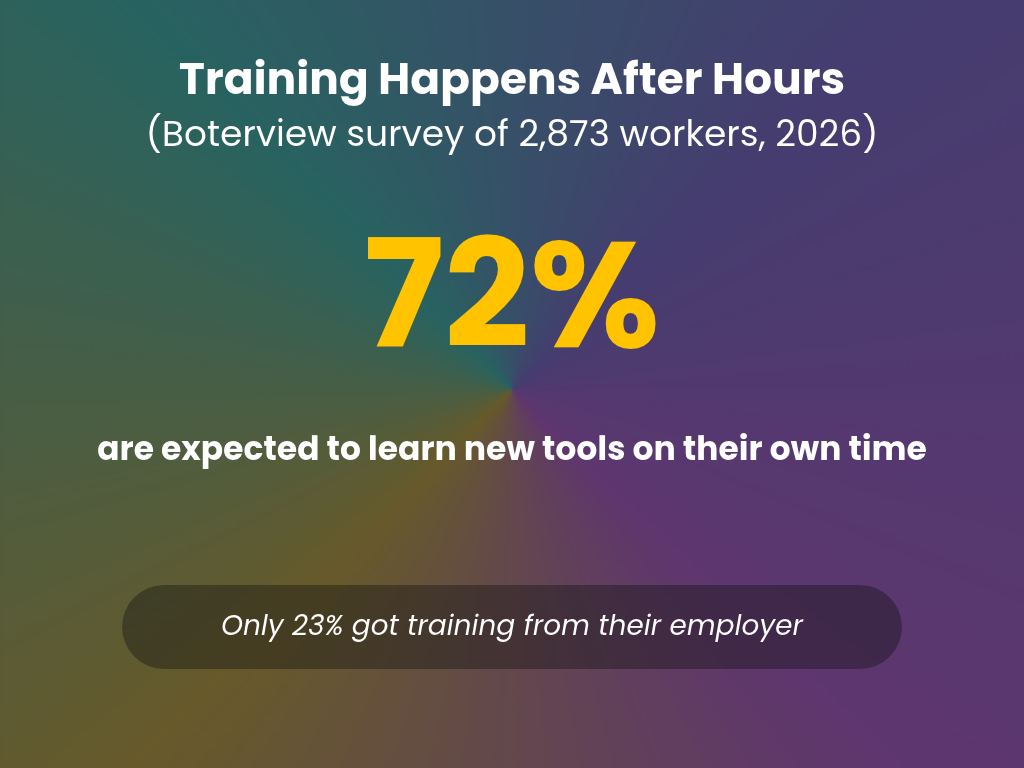
The missing training is not only a course that was never offered. It is time they are supposed to find at night.
38% feel overqualified for their current tasks and underqualified for the ones coming next (Boterview)
We asked about the job they do now, and the job their manager has described for the next year.
38% said they are overqualified for the first and underqualified for the second.
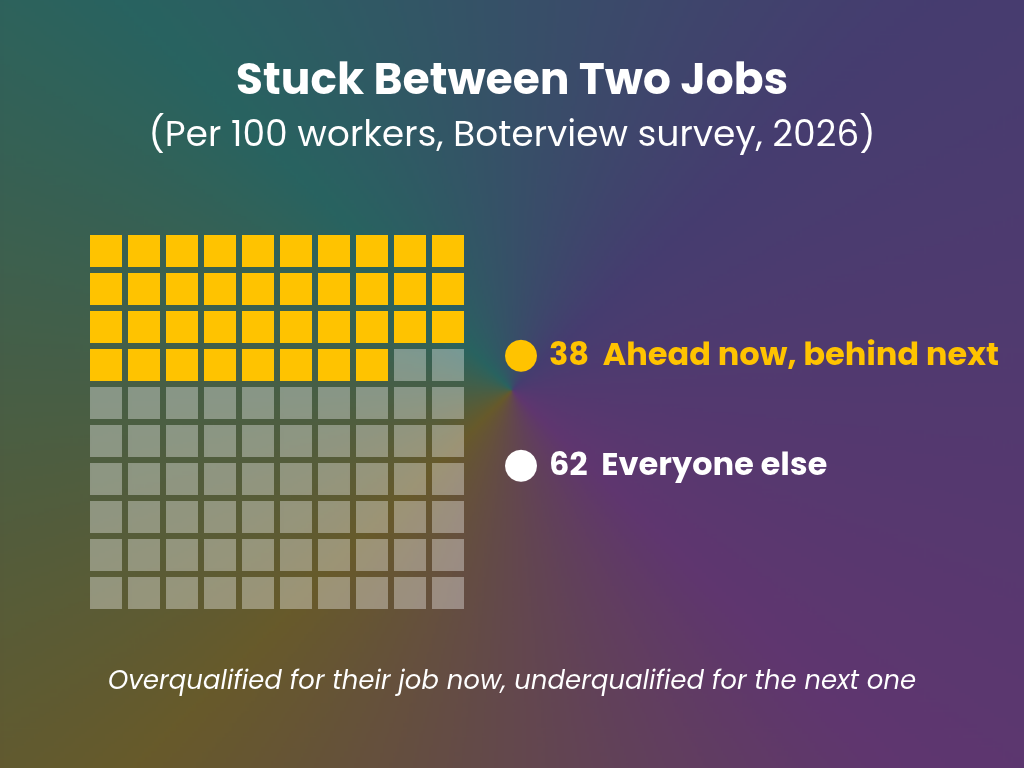
The gap is not that they cannot do today's work. It is that today's work is not the one coming.
The skill workers say they most need is explaining their thinking, not coding: 44% (Boterview)
We asked which single skill they most need to improve in the next two years.
44% said writing and explaining their thinking. 31% said working with data. 18% said using AI tools well. 7% named something else.
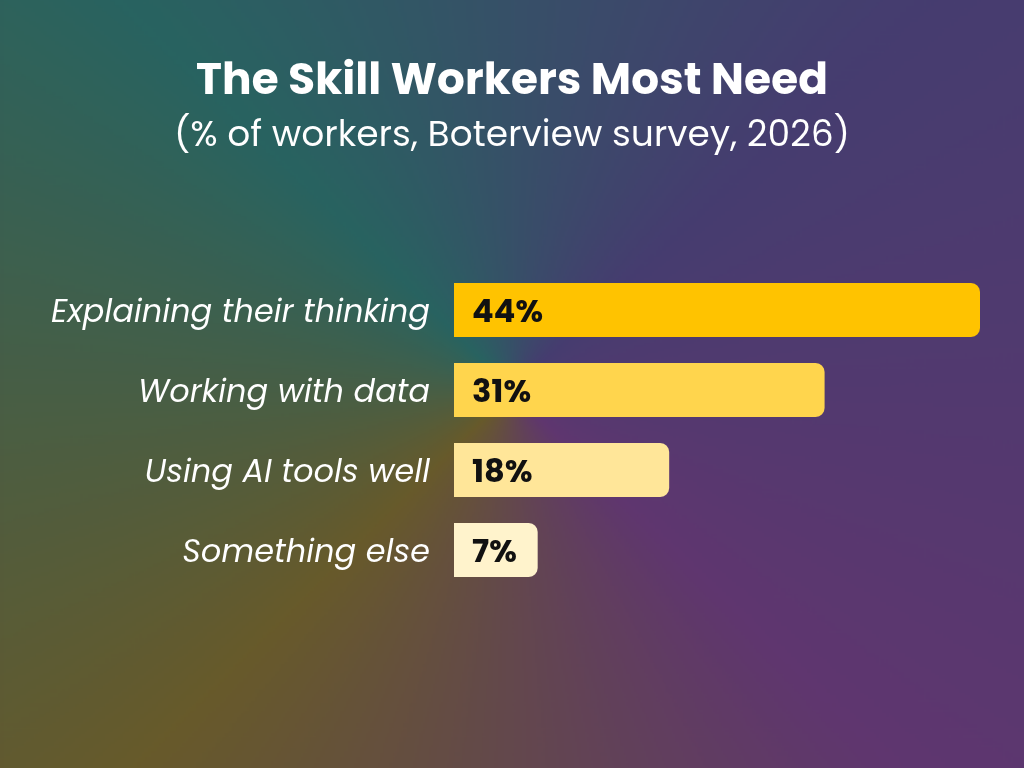
The scarce skill, in their own words, is making a judgment clear.
72% of employers struggle to find skilled talent in 2026 (ManpowerGroup)
According to a survey of 39,063 employers in 41 countries published in February 2026 by ManpowerGroup, 72% report difficulty finding the skilled talent they need, barely down from 74% a year earlier.
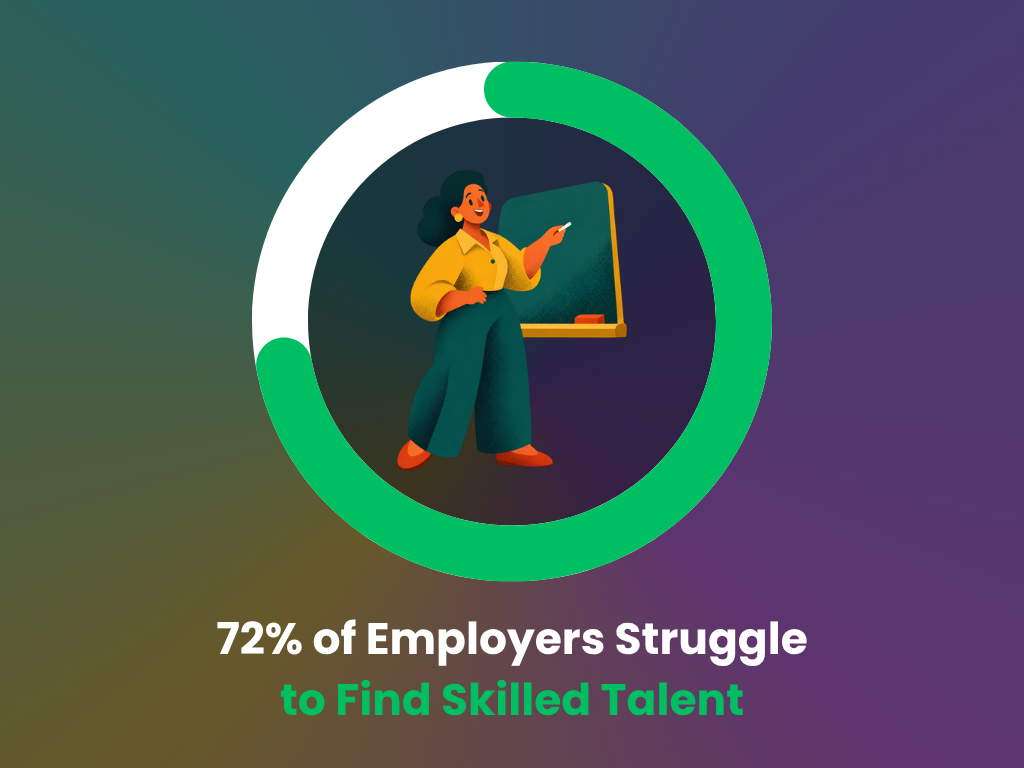
Firms with 1,000 to 4,999 employees feel it most, at 75%, against 64% of businesses with fewer than 10 employees.
Seven in ten is the normal state of hiring. It sits next to our finding that nearly half of workers have claimed a skill they could not show.
59 in 100 workers will need training by 2030 (World Economic Forum)
According to the Future of Jobs Report 2025 from the World Economic Forum, 59 in every 100 workers will need training by 2030, and 11 of them are unlikely to receive it.
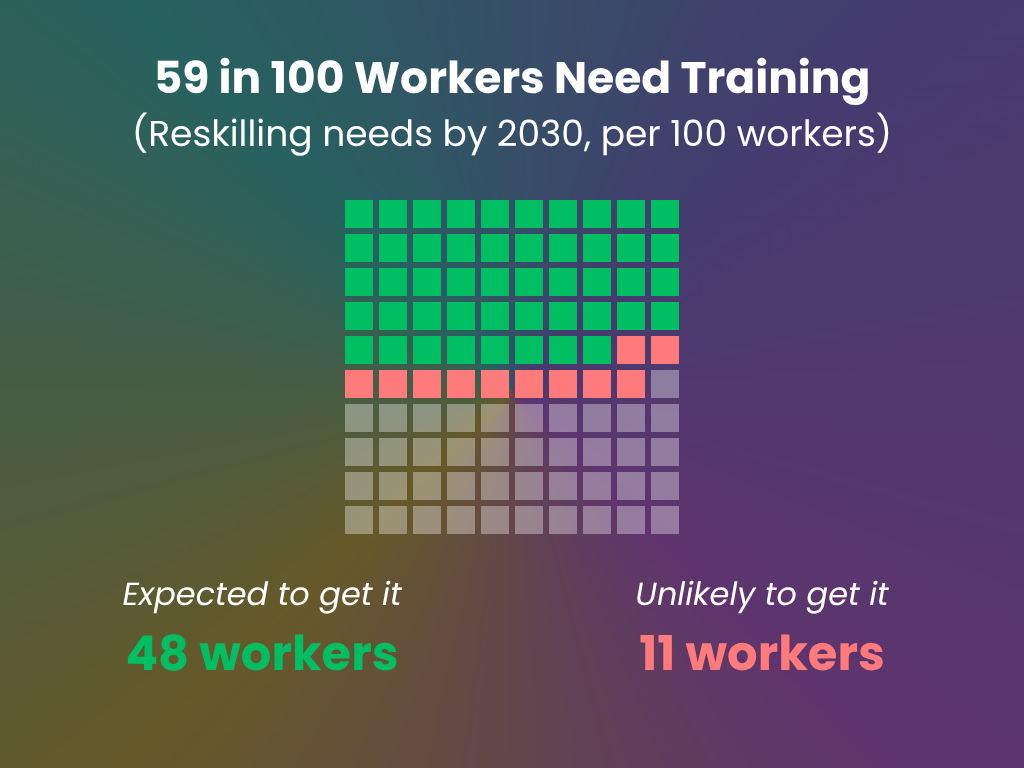
Employers expect nearly 40% of work skills to change by 2030. The report forecasts 170 million new jobs and 92 million displaced ones.
Our finding that only 23% got training this year is the present-tense version of that 11 in 100 who never will.
Methodology
Every Boterview figure in this article comes from one survey.
- Name: Boterview Skills Survey.
- Fieldwork: April 7 to 21, 2026.
- Sample: 2,873 employed adults aged 18 to 64. One response each. Incomplete responses were removed.
- Recruitment: email to Boterview's mailing list.
- Changed by AI means they said their tasks had changed in the past 12 months. Could not demonstrate means they said they could not have performed the listed skill in a short task that same week. The skill ranking was a single choice.
Limitations
Workers who are already trying to learn will be overrepresented.
Training, applications, and the skill they most need are what they told us, not a test we scored.