5 Steps to Stop Procrastinating While Studying

You sit down to study, open your notes, and twenty minutes later you're still on your phone.
You're far from alone: a 2007 review by Piers Steel reports estimates that 80% to 95% of college students procrastinate.
Building an active learning app taught me that the hardest part of studying is rarely understanding the material. It's starting.
Here are the 5 steps that actually work, each backed by research.
1. Make the First Task Ridiculously Small
Don't plan to "study biology for three hours".
Plan to answer five questions, read one page, or do a single exercise.
A small first task works because procrastination is mostly about mood, not time management.
A 2013 review by Fuschia Sirois and Timothy Pychyl describes procrastination as giving priority to feeling better right now over the task you intended to do.
When the first task is tiny, there is almost no bad feeling to escape, and finishing it usually pulls you into the next one.
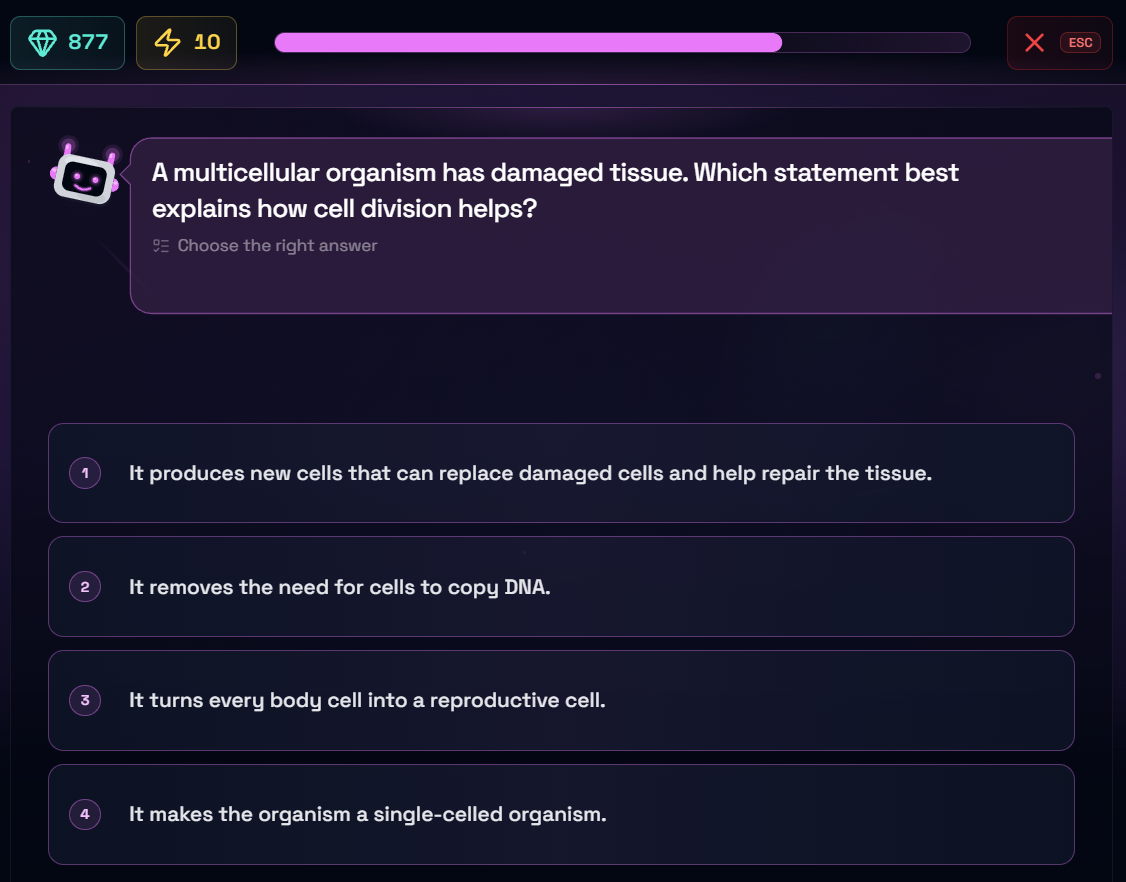
In boterview, a lesson is a series of short challenges: one question takes about a minute, and you know right away whether you got it right:
If you want to try this with your own course material, here's the app I built:
2. Decide Exactly When and Where You'll Study
Write each study session as an if-then plan: "When I finish lunch on Tuesday, I'll sit at the library desk and do one chapter."
Vague intentions like "I'll study this week" leave the decision for later, and later is exactly when you procrastinate.
A meta-analysis by Peter Gollwitzer and Paschal Sheeran (2006) pooled 94 independent tests of these if-then plans, called implementation intentions.
It found a medium-to-large effect on reaching goals: the situation triggers the action, so you no longer have to decide in the moment.
Put the plan in your calendar with the place written in the event, and treat it like a class you can't skip. If you don't have one yet, here's how to make a study plan.
In my experience, the "where" matters as much as the "when": the same desk at the same time quickly becomes a cue to start.
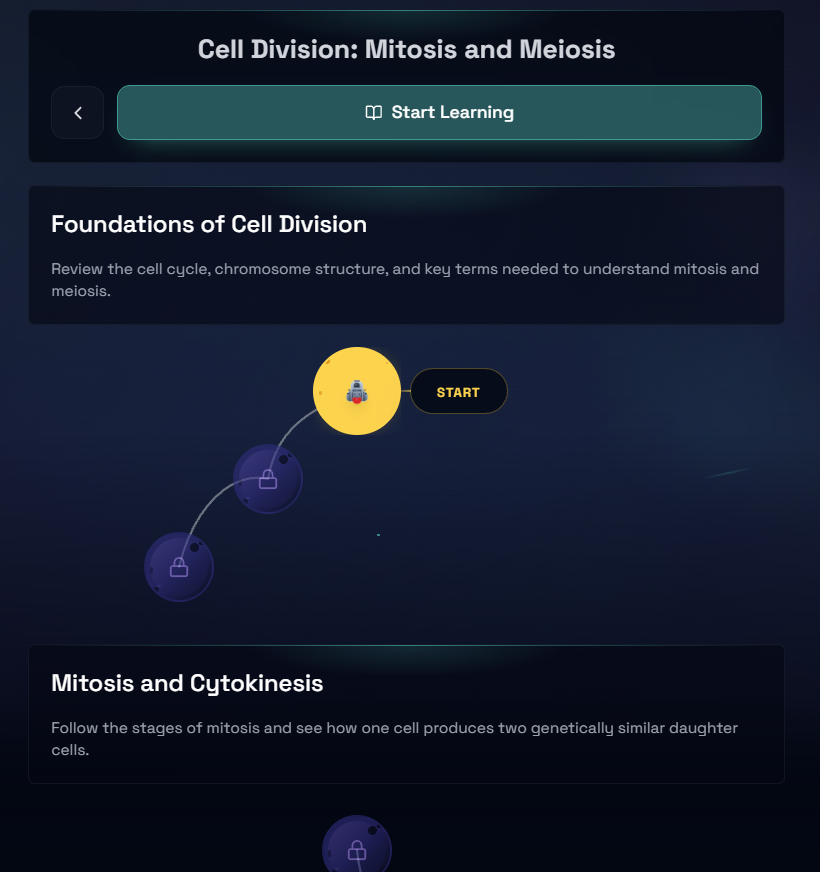
Make the "what" just as concrete: not "biology", but the next lesson of a specific chapter, like the first one in this course:
3. Track Your Progress Where You Can See It
Every time you finish a session, record it somewhere visible: a tick on a paper calendar, a line in a notebook, or a streak in an app.
A 2016 meta-analysis by Benjamin Harkin and colleagues reviewed 138 experiments with 19,951 participants.
Monitoring progress improved goal attainment, and the effect was larger when progress was physically recorded or shared with others.
A visible count of finished sessions also makes the next one feel smaller: you only have to keep it going.
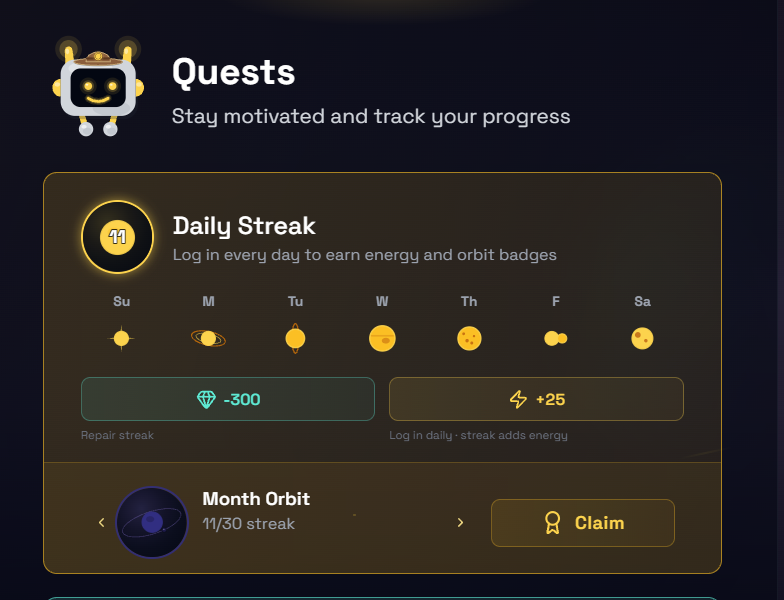
In boterview, every lesson you finish is counted in your Quests, next to badges for the milestones you reach:

4. Replace Rereading With Questions
Rereading your notes is the most comfortable way to procrastinate while looking busy.
It feels like work, but nothing tells you whether you actually know the material.
In a 2009 survey by Jeffrey Karpicke, Andrew Butler and Henry Roediger, rereading was the strategy students reported most often, while very few made self-testing their main strategy, even though active learning works far better.
Questions do the opposite: each one has a clear end, gives you a small win, and shows you exactly what to study next.
Close your notes after each section and write down three questions, then answer them from memory.
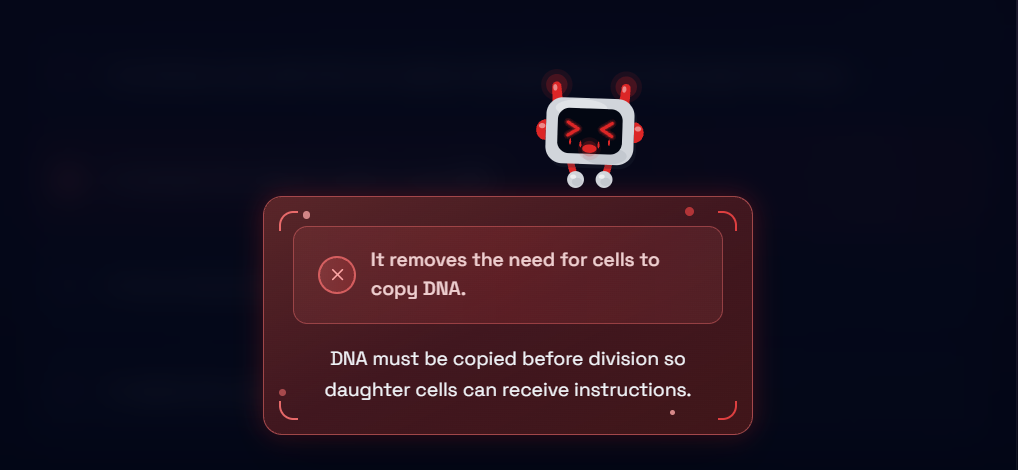
Boterview turns your material into a quiz, and when you get a question wrong, it explains why instead of just moving on:
5. Forgive Yourself After a Bad Day
When you do procrastinate, don't punish yourself: acknowledge it, forgive yourself, and plan the next session.
A 2010 study by Michael Wohl, Timothy Pychyl and Shannon Bennett followed first-year students across two midterms.
Students who forgave themselves for procrastinating before the first exam procrastinated less before the second one.
Guilt makes studying feel even worse, and as we saw in step 1, a bad feeling is exactly what drives procrastination.
Delaying doesn't make the stress go away either: in a 1997 study by Dianne Tice and Roy Baumeister, procrastinators felt less stressed early in the semester but ended it with lower grades and more stress and illness.
One missed day is a data point, not a verdict.
In boterview, a broken Daily Streak can be repaired, so one bad day doesn't wipe out weeks of progress: