How to Study When You Don't Know Where to Start

A huge syllabus, a pile of PDFs, and no idea which page to open first.
When everything feels equally urgent, the easiest option is to do nothing at all.
Since building an active learning app, I've seen that this is where most people get stuck: the material is there, but the path through it isn't.
Here are the 5 steps that work when you don't know where to start, each backed by research.
1. Get Everything Out of Your Head
Take ten minutes and list every chapter, topic and deadline on a single page.
Next to each item, write the very first action it needs and when you'll do it.
In a 2011 series of experiments, E. J. Masicampo and Roy Baumeister showed that unfinished goals keep intruding on your thoughts and hurt performance on other tasks.
Making a specific plan for those goals eliminated the effect, even before any of the work was done.
The list isn't the work, but it frees the attention you need to do the work.
In boterview, you can paste that list or import your syllabus, and it becomes a structured course with lessons in a logical order:
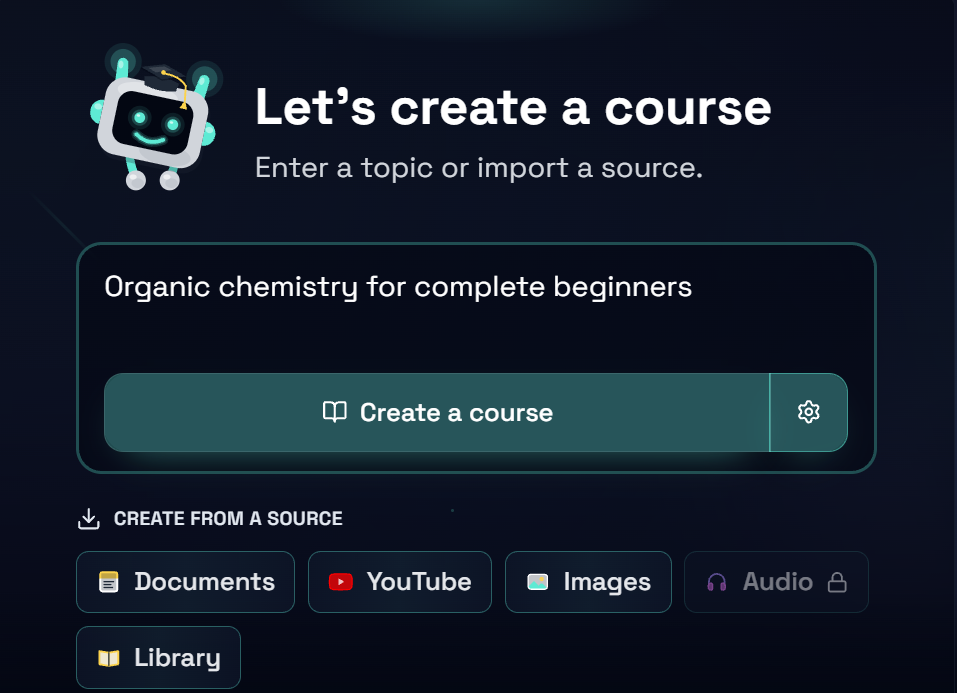
If you want a starting point generated from your own material, here's the app I built:
2. Pick One Specific Goal for Today
Don't start with "study chemistry". Start with "finish the first two lessons on atomic structure before 6 p.m."
Choose the item that unlocks the others (usually the first chapter) or the one with the closest deadline. If the whole subject is new to you, here's how to learn a subject from zero.
A 1981 review of goal-setting research by Edwin Locke and colleagues found that specific, challenging goals consistently led to higher performance than vague "do your best" goals.
A specific goal also tells you when you're done, which makes it much easier to start.
3. Take a Pretest Before You Read Anything
Before reading a chapter, try to answer its questions: end-of-chapter exercises, a past exam, or questions generated from the material.
You'll get most of them wrong, and that's the point.
In a 2009 study by Lindsey Richland, Nate Kornell and Liche Kao, students who took a pretest before reading a text learned more than students who spent the same time studying it, even on the questions they had failed.
A pretest shows you what you already know, so you can skip it, and primes your attention for the answers you don't.
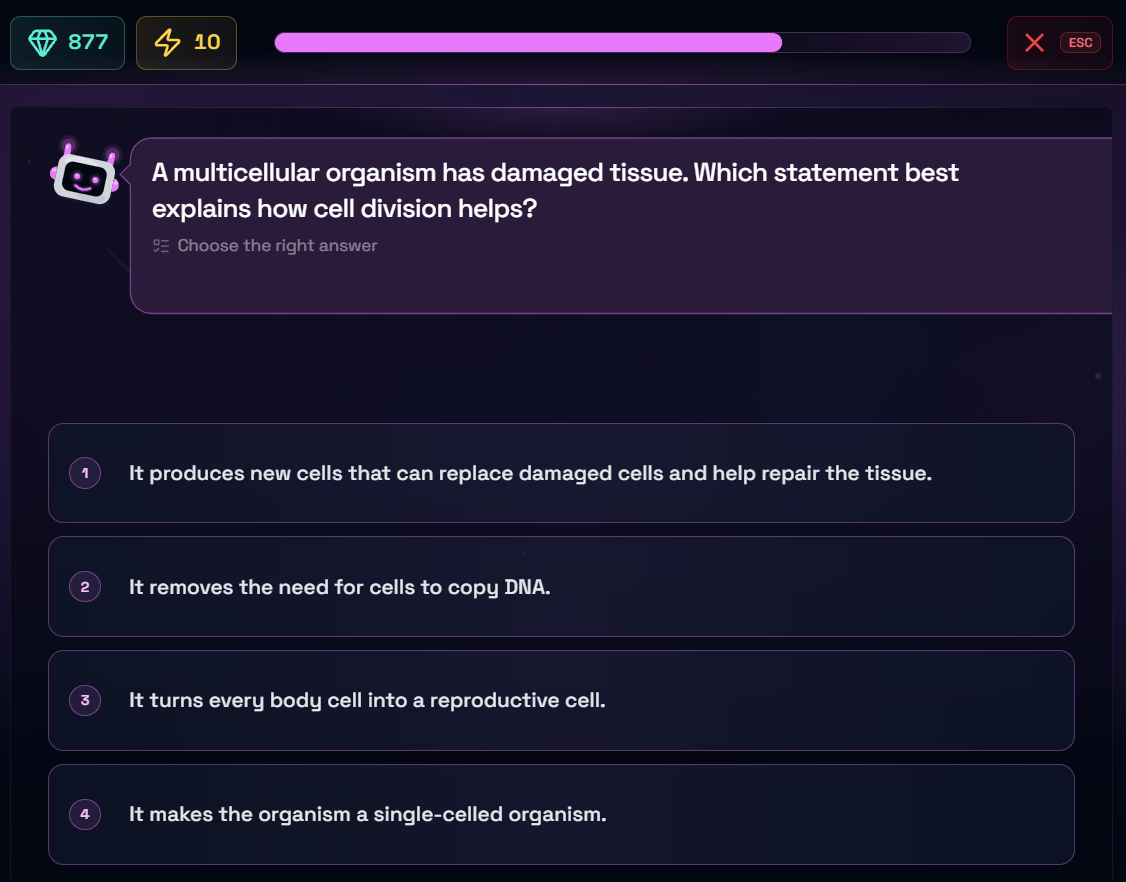
A good pretest question checks understanding, not just vocabulary, like this one from our free ai-powered biology course creator:
4. Ask for Help as Soon as You're Stuck
Give yourself ten minutes on a hard point, and if you're still stuck, ask a classmate, a teacher, or a tutor.
Staying stuck for an hour is how a study session quietly turns into procrastination.
In his famous 1984 paper, Benjamin Bloom reported that the average student taught one-to-one by a tutor performed above 98% of students in a conventional class.
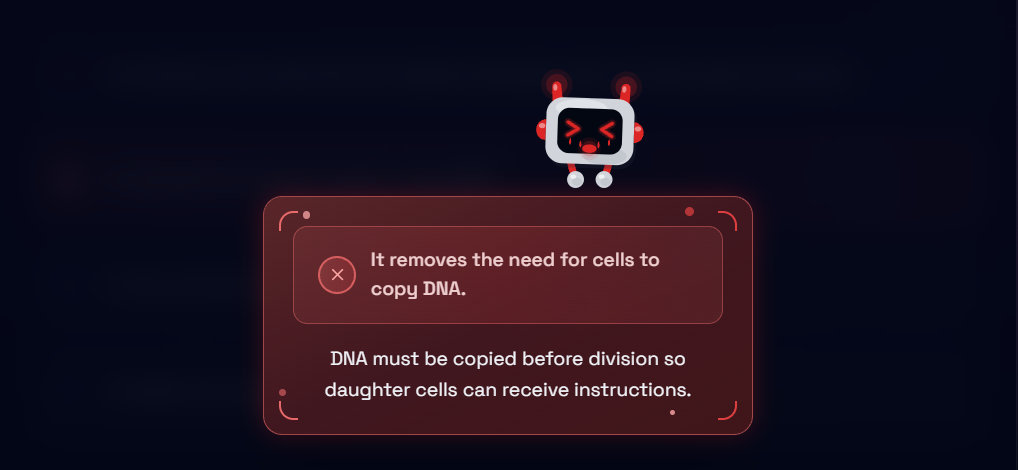
A human tutor isn't always available, so at least make sure every mistake gets explained: in boterview, each wrong answer comes with a short explanation, the way an AI tutor would answer:
5. Review It Again Tomorrow
At the end of your first session, schedule a 10-minute review for the next day.
In a 2015 replication of Ebbinghaus's forgetting curve, Jaap Murre and Joeri Dros confirmed that much of what we learn is lost within the first day.
A short review before that happens is far cheaper than relearning everything a week later.
It also solves tomorrow's "where do I start" problem: you start with the review.
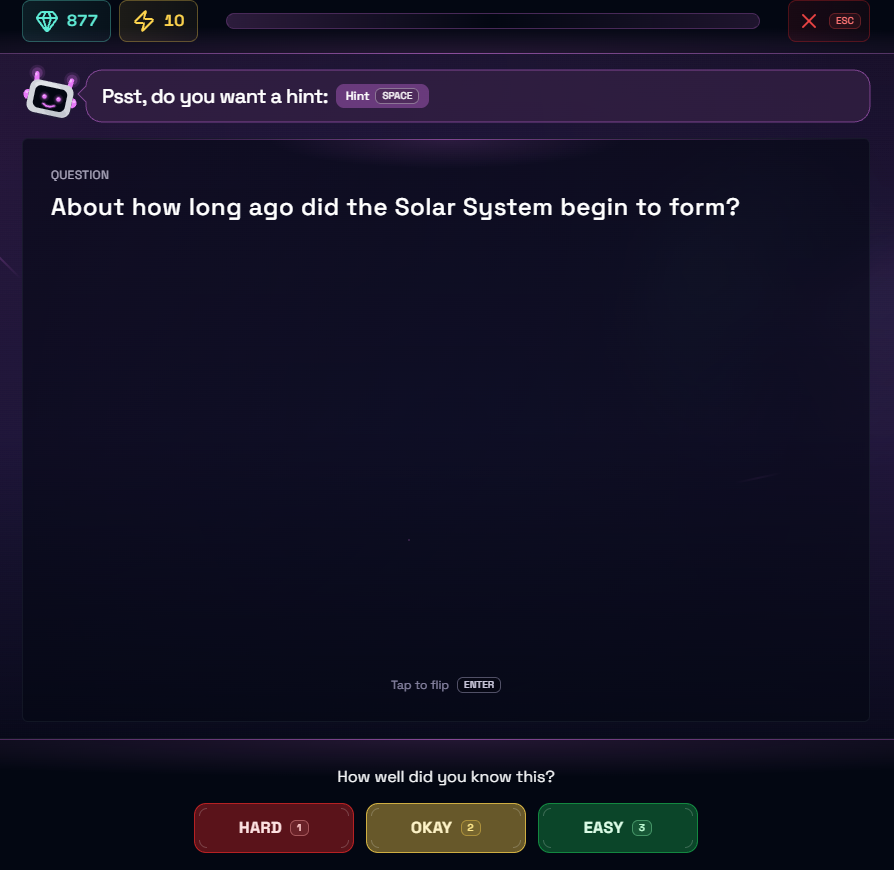
In boterview, you can turn the same topic or document into flashcards scheduled with spaced repetition, so tomorrow's review is ready for you: