6 Body Language Statistics That Reveal How We Really Communicate

Every gesture tells a story.
Whether you're pitching to investors or interviewing for your dream job, your body is constantly sending messages—some helpful, others harmful.
Recent studies reveal the extent to which nonverbal communication influences perception and decision-making.
Let's take a look at the latest body language statistics that prove actions speak louder than words.
Key Body Language Statistics
- 55% of effective communication is non-verbal
- Talking with direct eye contact boosts perceived trustworthiness by 13%
- On average, only 3.5% of conversation time is spent making mutual eye contact
More Statistics: First Impression Statistics and Networking Statistics.
At Least 55% of Effective Communication Is Non-Verbal (Multiple Sources)
According to research by Albert Mehrabian, nonverbal signals such as body language account for approximately 55% of communication.
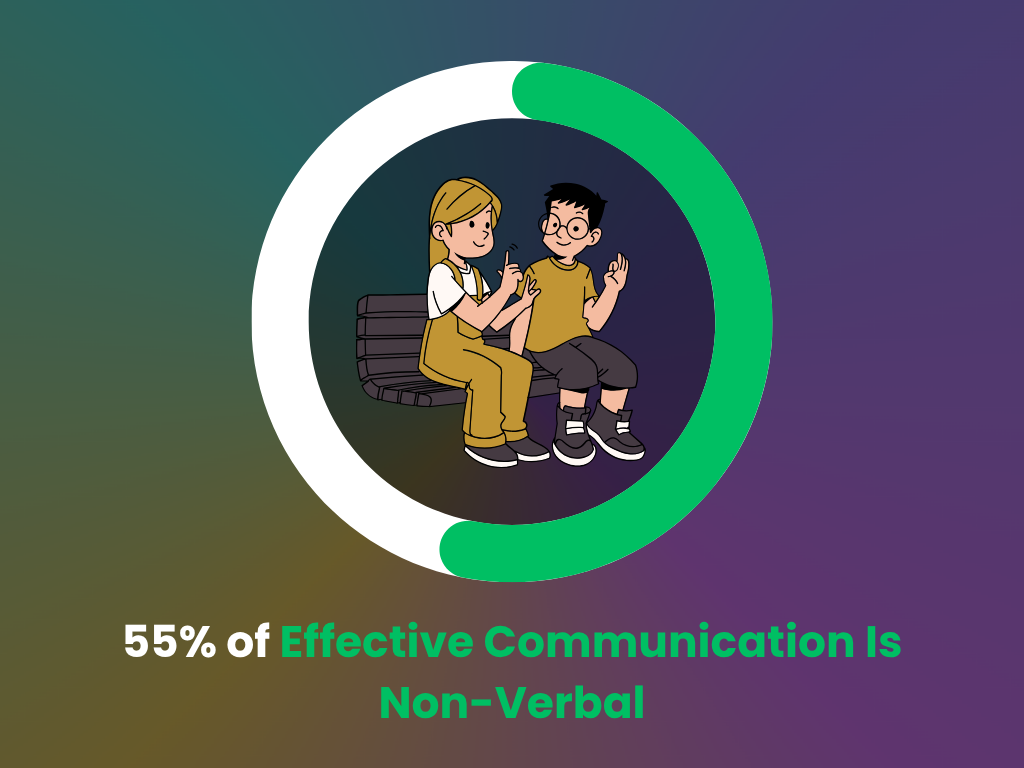
Other scholars estimate that 70% or more of effective communication is nonverbal, particularly in contexts of attitude and emotion rather than purely factual transmission.
Either way, this means that if you're looking to influence how you're perceived, your posture, eye contact, and facial expression may matter more than the exact words you use.
Talking With Direct Eye Contact Boosts Perceived Trustworthiness by 13% (PLOS One)
According to a study published in PLOS One, speakers who looked directly were 13% more likely to be believed when they made ambiguous statements compared to speakers who looked away.
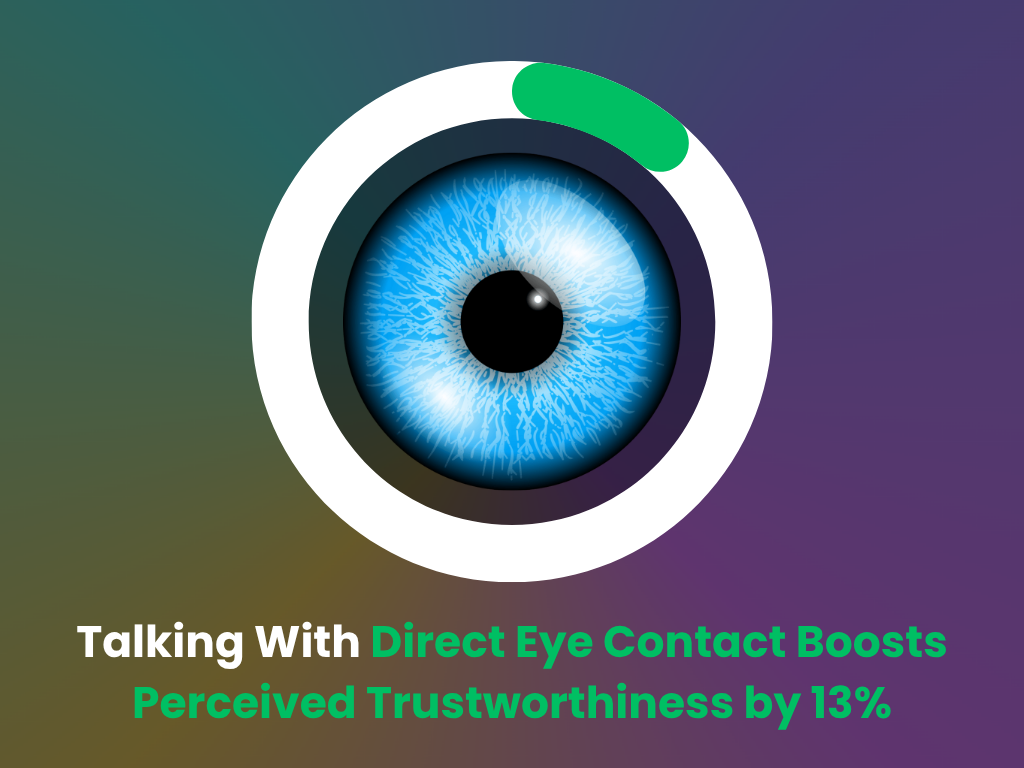
This study that making eye contact during a conversation not only feels more natural: it actually enhances listeners' perceived credibility and trustworthiness.
Gesture-Based Learning Can Increase How Much People Remember by 172% (Science Daily)
According to a University of Rochester study published in ScienceDaily, children who learned math through gesture-based learning were 172% more likely to retain the material.
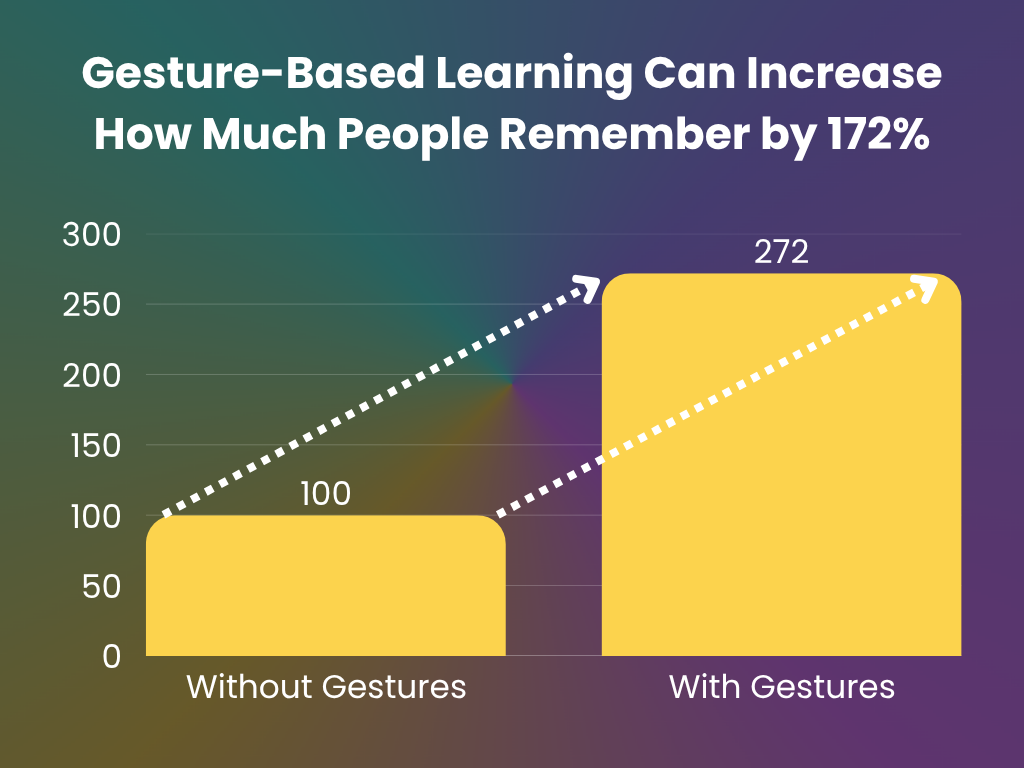
Using your hands to physically illustrate a concept helps people understand and remember you more effectively.
Only 7% of Emotional Communication Relies on Words (National Library of Medicine)
According to research summarised in a National Library of Medicine article, only about 7 % of how we communicate our feelings and attitudes comes from the words we use.
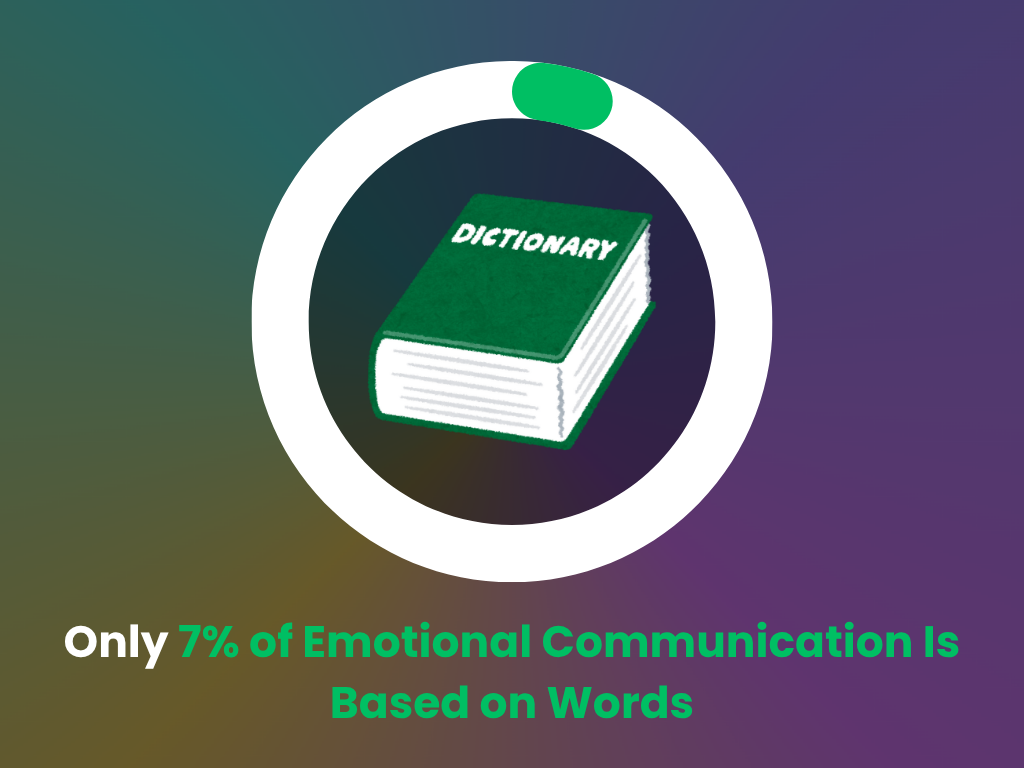
In many face-to-face interactions, our tone of voice and our body language/facial expressions often carry more weight than the literal content of our speech.
Up to 32% of Interaction Satisfaction Can Be Predicted by Nonverbal Communication (Journal of General Internal Medicine)
According to a study published in the Journal of General Internal Medicine, nonverbal communication predicts up to 32% of the variance in patient satisfaction during clinical encounters.
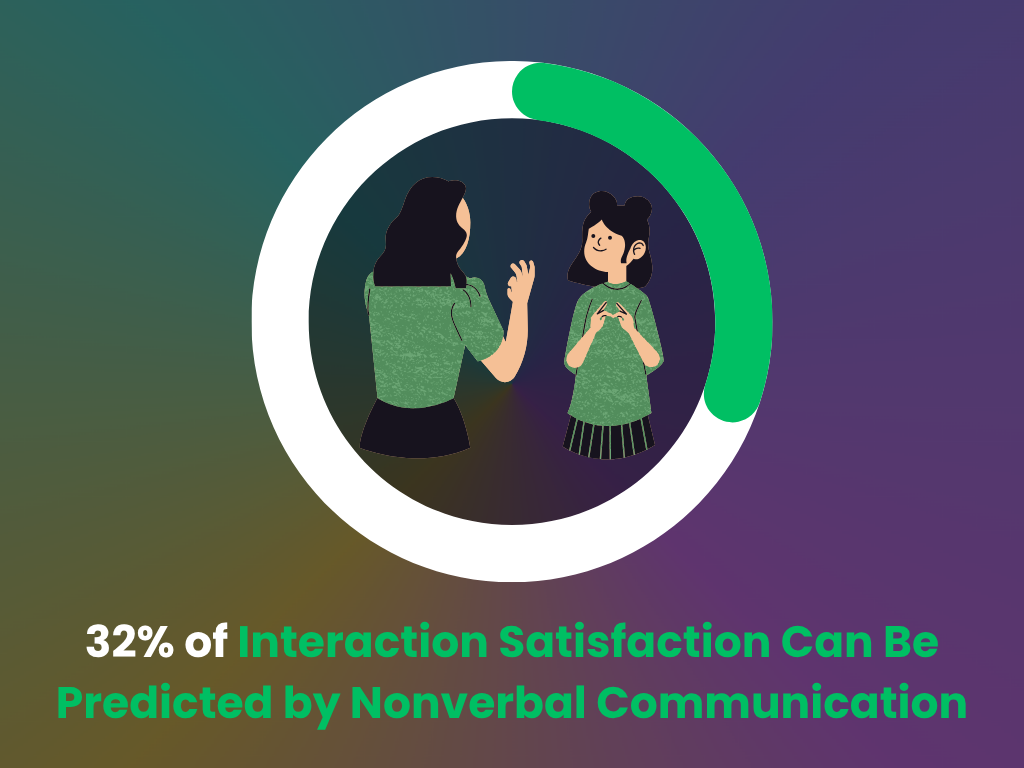
This suggests that the way we send nonverbal signals can significantly affect how satisfied a person is with an interaction, whether it's a job interview, a client meeting, or everyday conversation, making nonverbal skills a key component of effective communication.
On Average, Only 3.5% of Conversation Time Is Spent Making Mutual Eye Contact (Nature)
According to a study published in Nature, during live interactions between two people, participants spent only about 3.5% of the time in direct eye contact, and about 12% of the time looking at the other person's face in general.
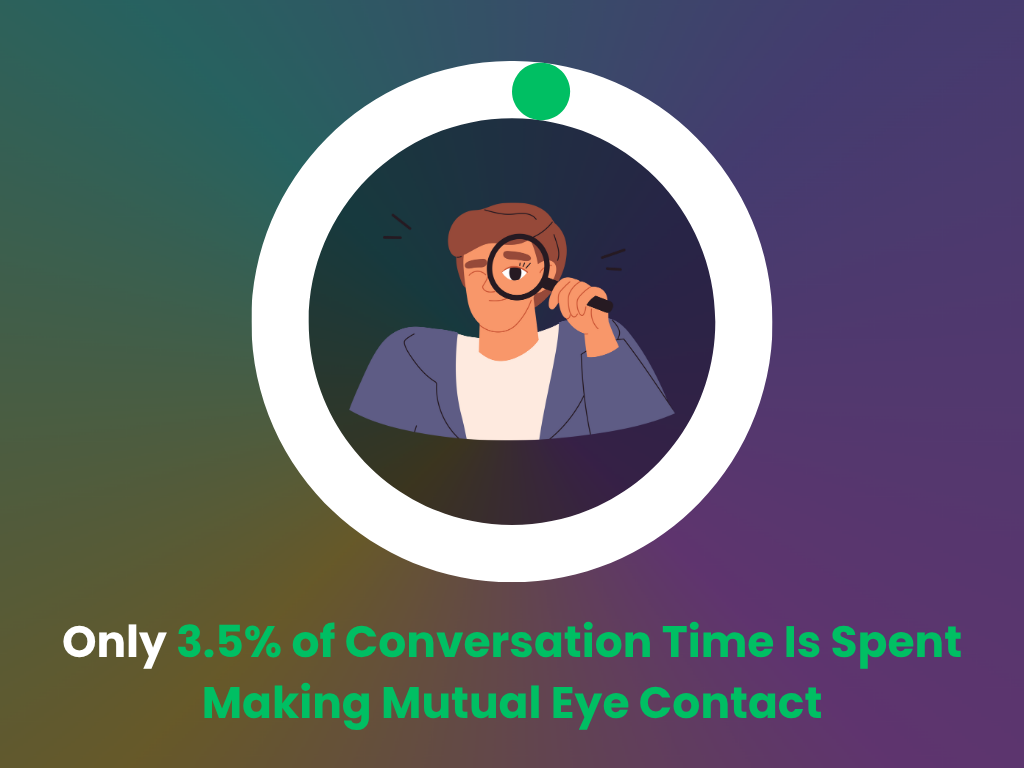
This suggests that although eye contact is often considered a hallmark of engagement, in real-world conversations it occurs much less frequently than one might assume.