7 First Impression Statistics to Know for 2026

First impressions are formed in seconds, sometimes even before a single word is spoken.
Your appearance, handshake, eye contact, and online profile all shape how others perceive you.
That's why anyone who cares about their professional image should know the following first impression statistics and practice the small changes that make a big difference!
Key First Impression Statistics
- 69% of people form a first impression of somebody before they even speak
- It takes a tenth of a second to decide if a person is attractive and trustworthy
- 83% of adults say confidence is key to making a good first impression
Read more: Body Language Statistics.
It Takes a Tenth of a Second to Decide if a Person Is Attractive and Trustworthy (Princeton University)
A Princeton University study published in Psychological Science reveals that humans decide whether a person is attractive and trustworthy in just 100 milliseconds.
The study suggests that our brains are wired to quickly assess others based on facial expressions, often without realizing it.
I believe that being aware of how the brain evaluates people so quickly could help us be more aware of our biases.
35% of People Say It’s Difficult to Change a First Impression (OnePoll Survey)
A OnePoll survey published in The Sun revealed that 35% of people find it difficult to change a first impression.
The study also highlights that these snap judgments are sticky, with 54% of respondents believing their first impressions of others are generally accurate.
These findings suggest that making a positive first impression is crucial, as it can influence how others perceive us in the long run.
69% of People Form a First Impression of Somebody Before They Even Speak (New York Post)
According to a survey published in the New York Post, 69% of people admit to forming an opinion about someone before even starting a conversation.
This statistic highlights how quickly we evaluate others.
I believe recognizing this tendency helps me be more thoughtful when meeting new people, allowing me to question my instinctive judgments and give others the benefit of the doubt.
83% of Adults Believe Confidence Is Key to Making a Good First Impression (OnePoll Survey)
A OnePoll survey published in The Sun reveals that 83% of adults believe confidence is essential to making a good first impression.
This highlights that beyond appearances or what is said, how we behave plays a major role in how others judge us.
Projecting a calm confidence, clear posture, and calm eye contact can make a significant difference.
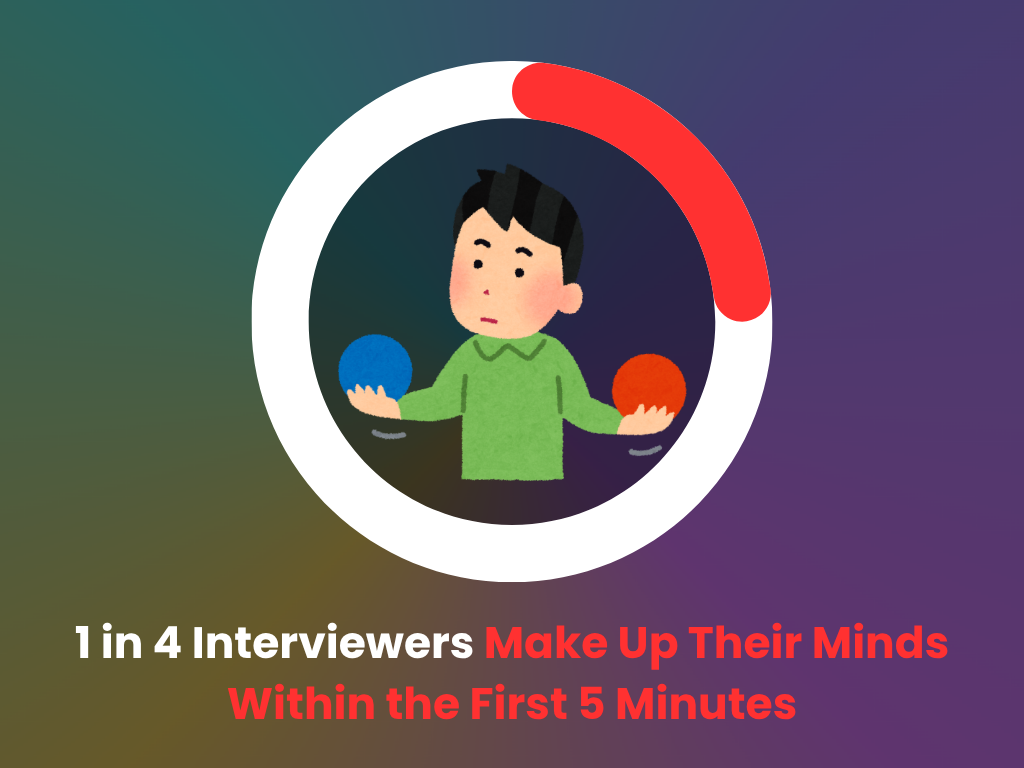
1 in 4 Interviewers Make Up Their Minds Within the First 5 Minutes (QZ)
According to a Quartz article, a study of over 600 job interviews found that 25% of recruiters make up their minds within the first five minutes.
Even more alarming, approximately 60% of hiring decisions are made within 15 minutes of a job interview.
Also Read: Job Interviews Statistics.
This is why I believe it is crucial to be exceptionally well prepared for the start of interviews.
80% of an Interviewer’s Opinion Is Determined by First Impressions (Hendrix College Career Services)
According to the Hendrix College Career Services Guide, many experts agree that 80% of an interviewer's impression of a candidate is based solely on the first moment of the interview: how they look and what they wear.

He emphasizes that even if the dress code is informal, presenting yourself in a neat and professional manner sends a strong message of respect and competence.
People Say a Friendly Smile (51%), Good Manners (43%) and Eye Contact (35%) Are the Best Ways to Make a Good First Impression (Onepoll Survey)
According to a OnePoll survey published in The Sun, the top three ways people think you make a good first impression are a friendly smile (51%), good manners (43%), and strong eye contact (35%).
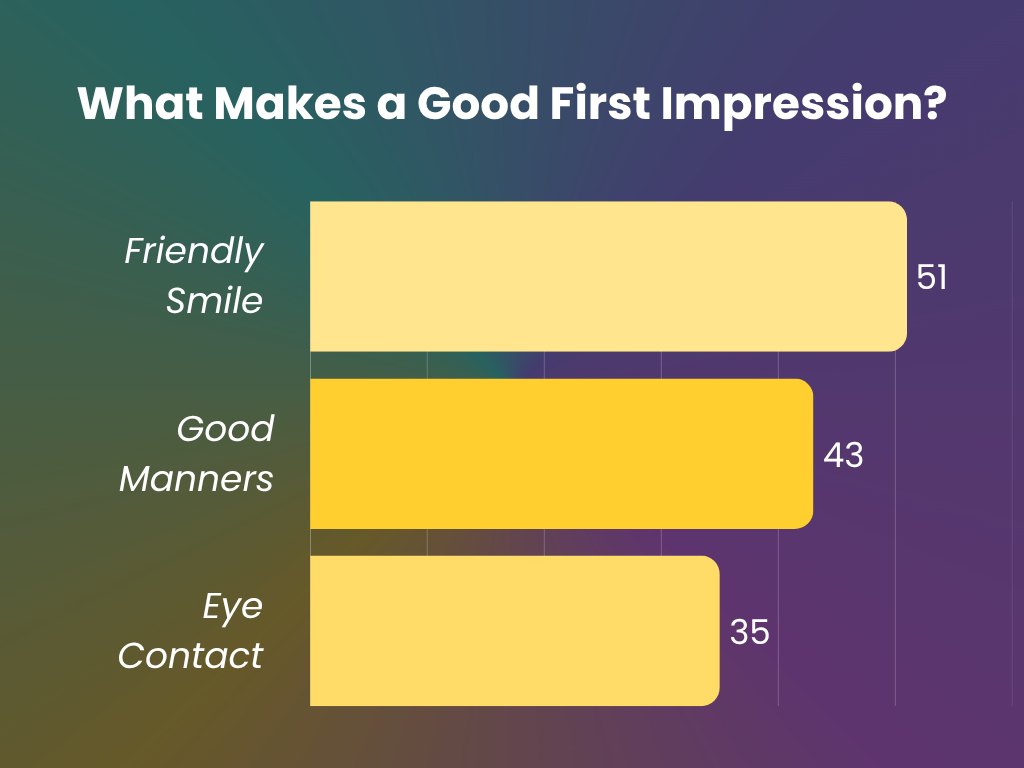
These findings suggest that beyond what we say, how we say it matters: a warm smile, a polite demeanor, and engaging eye contact immediately convey approachability and respect.
They underscore that first impressions are shaped less by words than by subtle nonverbal cues.