7 Gen Z Statistics Every Employer Should Know in 2026

The workplace is changing rapidly, and Gen Z is leading the way.
Generation Z is digitally conscious, socially aware, and unafraid to challenge outdated systems.
Employers who adapt to their mindset will have a distinct advantage in attracting and retaining young talent.
Let's explore the latest and most interesting statistics on Generation Z.
Key Gen Z Statistics for Employers
- Generation Z now makes up 26% of the global workforce
- 76% of zoomers prioritize work-life balance over pay
- 55% of recruiters believe genZers lack work ethic
Also read: Gen Z Interview Statistics and AI in the Workplace Statistics.
Generation Z Now Makes up 26% of the Global Workforce (McKinsey)
According to a report published by McKinsey, Generation Z now represents 26% of the global workforce.
This means that businesses can no longer rely on traditional management approaches and must adapt.
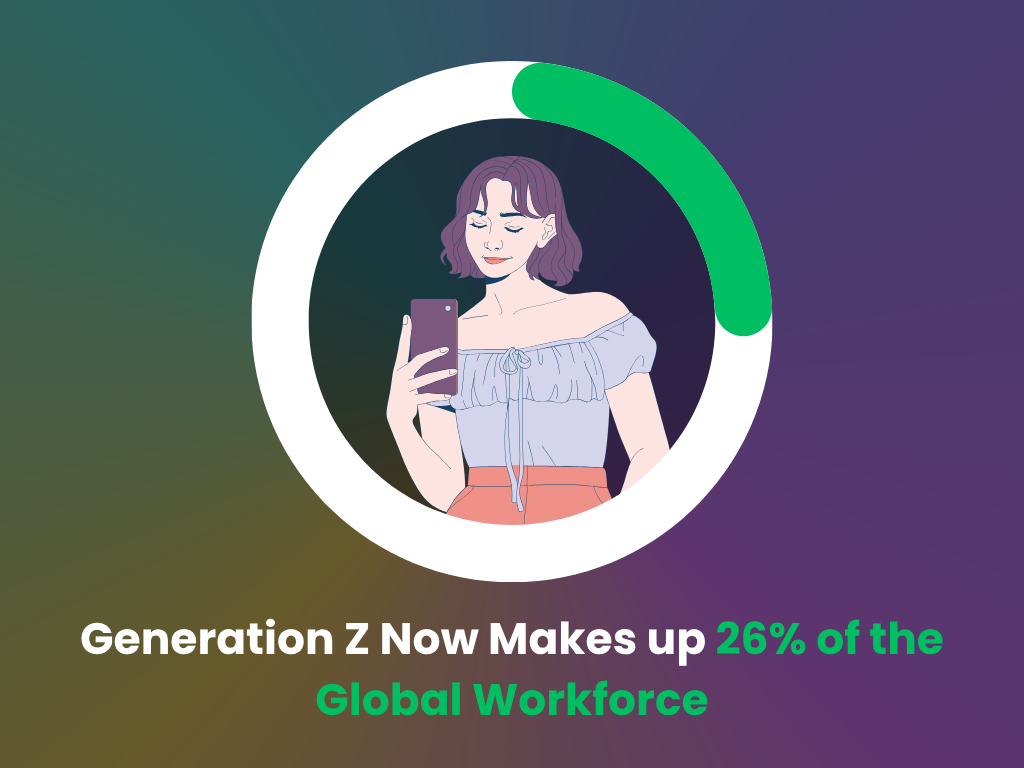
By identifying Generation Z's priorities and adapting their work strategies accordingly, I believe companies can create an environment that effectively motivates and retains young talent.
92% of Gen Z Graduates Want Open Discussions About Mental Health at Work (Monster)
According to Monster's State of the Graduate Report, 92% of recent graduates say it's important to feel comfortable discussing mental health at work.
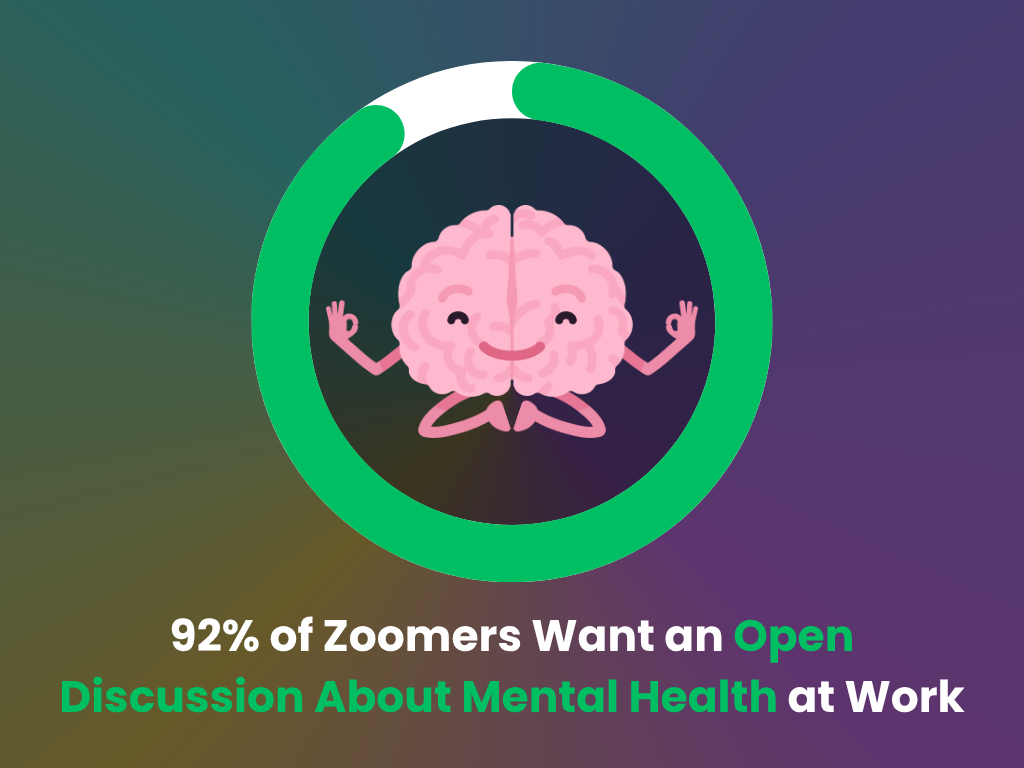
I think this is a powerful signal: Gen Z isn't just looking for a salary or benefits, but an environment where well-being is considered an integral part of the job.
Companies that integrate open communication, emotional support, and psychological safety into their culture will be much more attractive to young talent.
Employers who ignore this risk losing their money, as discussing mental health is no longer a nice-to-have, but an expectation.
55% of Recruiters Believe GenZers Lack Work Ethic (Intelligent)
A survey conducted by Intelligent revealed that 55% of hiring managers believe that Gen Z graduates lack a work ethic.
This finding is part of a broader trend: many employers also cite issues such as a lack of initiative, unprofessionalism, and difficulty handling feedback.
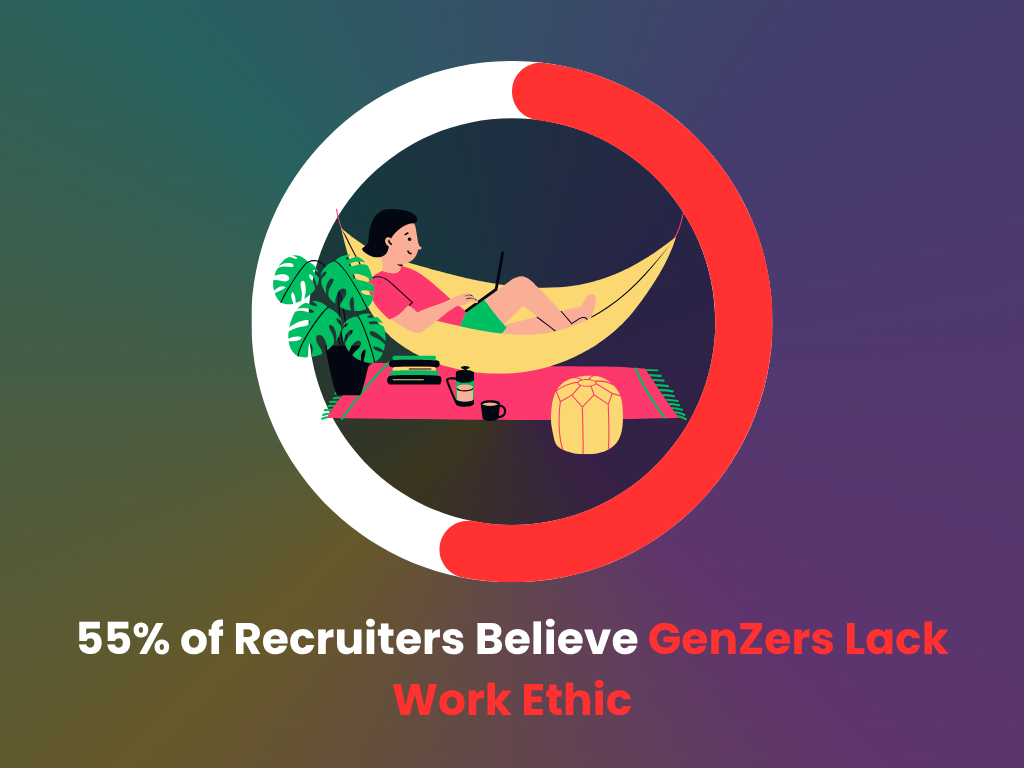
I think this statistic reveals both a real problem and a misunderstanding.
But part of the problem is that work ethic means different things to different generations.
What appears to one as a lack of effort may be just a new way of working for younger generations.
76% of Zoomers Prioritize Work-Life Balance Over Pay (Newsweek)
A recent Randstad survey published in Newsweek found that 76% of Gen Z workers prioritize work-life balance over salary, a significant shift from previous generations.
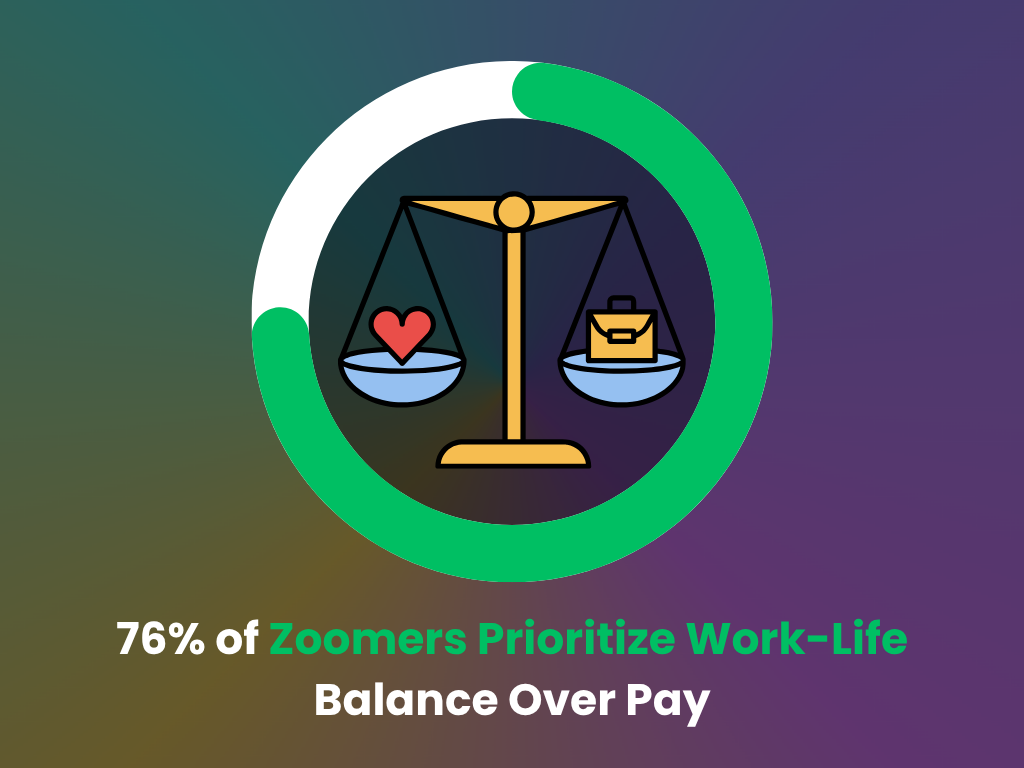
This trend shows that young workers now perceive success differently: they care more about well-being and flexibility.
Employers looking to attract and retain Gen Z talent should consider offering flexible work arrangements and mental health support to accommodate these new priorities.
75% of Gen Z Workers Are Actively Using AI Tools to Improve Their Skills (Randstad)
Randstad’s Gen Z Workplace Blueprint report finds that 75% of Gen Z workers are using AI tools to learn new skills, more than any older generation.
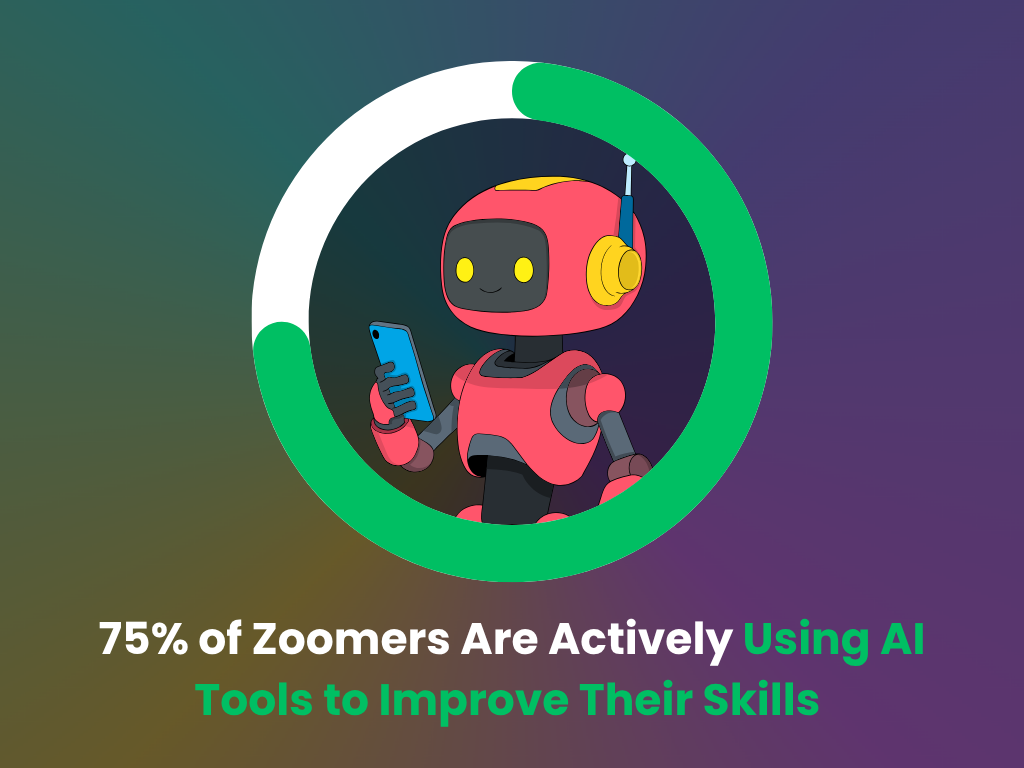
In my opinion, this shows how Gen Z is taking charge of its development.
Rather than waiting for employers to provide all the training, many are proactively using AI to upskill.
Also Read: Statistics About AI in the Workplace.
But it also means employers need to keep pace: offering occasional learning opportunities is no longer enough; to remain competitive, companies need to integrate AI-powered continuing education into their regular training programs.
86% of Generation Z Workers Consider a Sense of Purpose to Be Very Important to Their Job Satisfaction and Well-Being (Deloitte)
According to a Deloitte Gen Z Survey, 86% of Gen Z workers consider having a sense of purpose in their work life to be very or somewhat important to their satisfaction and well-being.
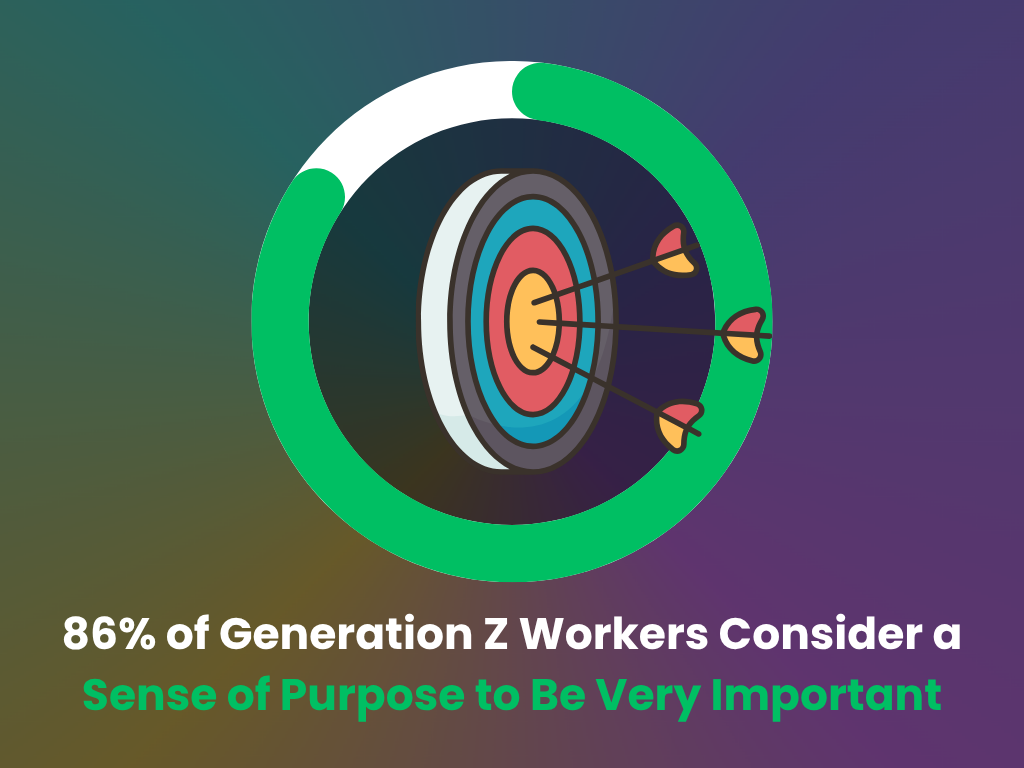
This statistic highlights a significant shift in how younger generations view work.
For many members of Gen Z, job satisfaction isn't just about compensation or benefits; it's about aligning their work with their personal values and contributing to a meaningful project.
This perspective is redefining workplace expectations and is essential for employers looking to attract and retain Gen Z talent.
75% of Zoomers Want to Be Recognized at Least a Few Times a Month From Their Supervisor (HRO Today)
According to a study published on HRO Today, 75% of Gen Z employees want to receive recognition from their managers at least a few times a month.
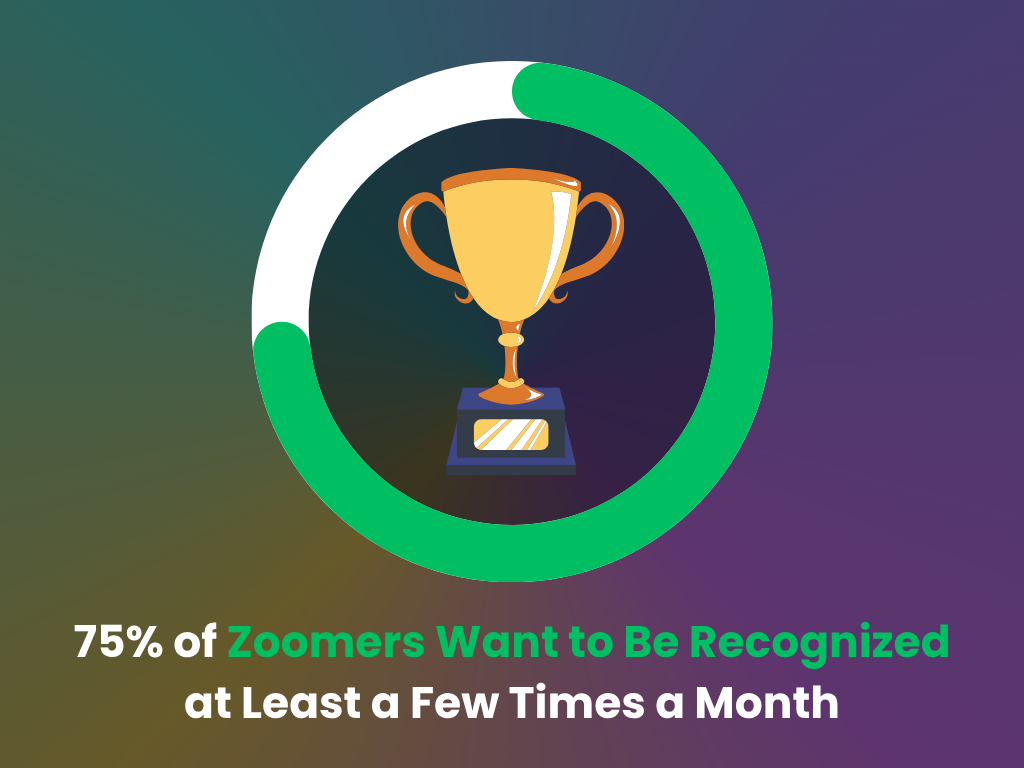
This statistic highlights a shift in workplace expectations: younger employees are seeking more regular and relevant feedback from their managers.
Employers looking to attract and retain Gen Z talent should consider implementing regular recognition practices to meet these expectations and foster a positive work environment.