6 Emotional Intelligence Statistics in the Workplace

What separates good professionals from excellent ones?
It's not IQ, qualifications, or even experience, but emotional intelligence.
From better collaboration to stronger leadership, emotional intelligence fuels the soft skills that every company is looking for today.
Here are the latest emotional intelligence statistics that prove that EQ beats IQ!
Key Workplace Emotional Intelligence Statistics
- 71% of employers say they value EQ over IQ
- High-EQ employees earn $5,600 more per year
- 9% of job performance can be attributed to emotional intelligence
Similar Articles: Gen Z Workplace Statistics and Workplace Conflict Statistics.
71% of Employers Say They Value EQ Over IQ (CareerBuilder)
According to a survey by CareerBuilder, 71% of employers place more importance on emotional quotient (EQ) than on intellectual quotient (IQ) when evaluating potential candidates.
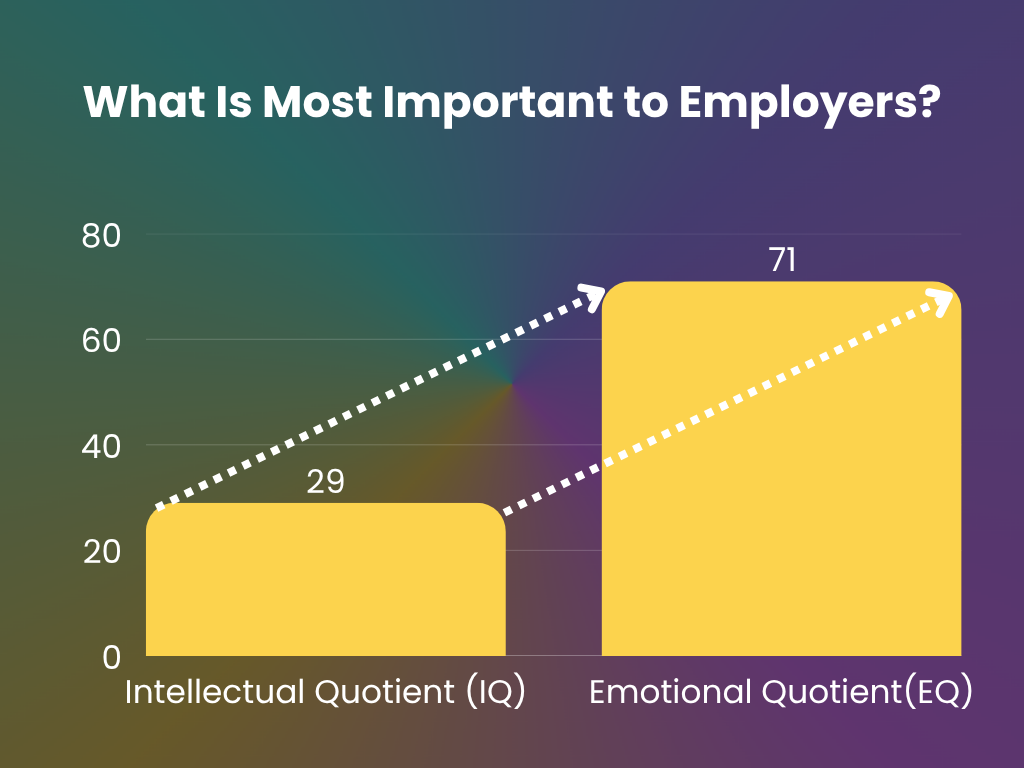
I think this trend highlights the need for professionals to develop their emotional intelligence and skills like public speaking alongside their technical skills, as this can significantly improve dynamics within the company.
High-EQ Employees Earn $5,600 More Per Year (IJERPH)
A study published in the International Journal of Environmental Research and Public Health (IJERPH) revealed that employees with a high emotional intelligence quotient earn an average of $5,600 more per year, representing a projected salary increase of 8%.
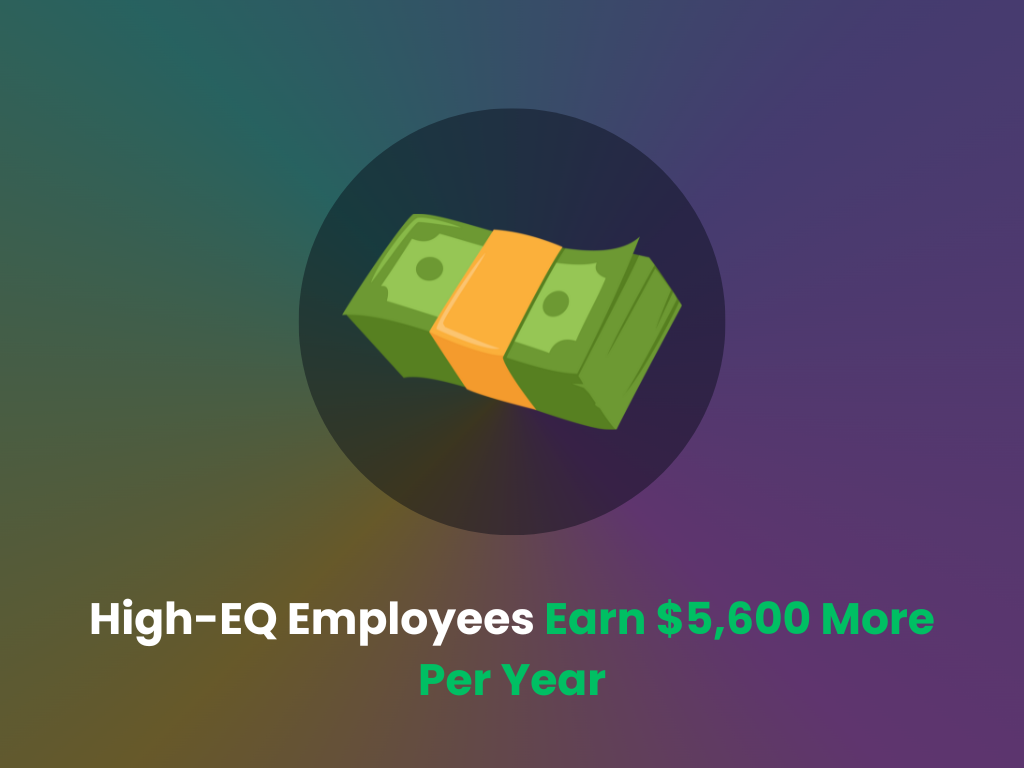
I am convinced that investing in soft skills, such as emotional intelligence, is strategically beneficial for career advancement, but this must be complemented by appropriate career development strategies.
57% of Managers Say High-Performing Team Members Have a Higher EQ (LHH)
A survey conducted by Lee Hecht Harrison Penna (LHH) revealed that 57% of managers believe that high-performing team members often demonstrate a high level of emotional intelligence.
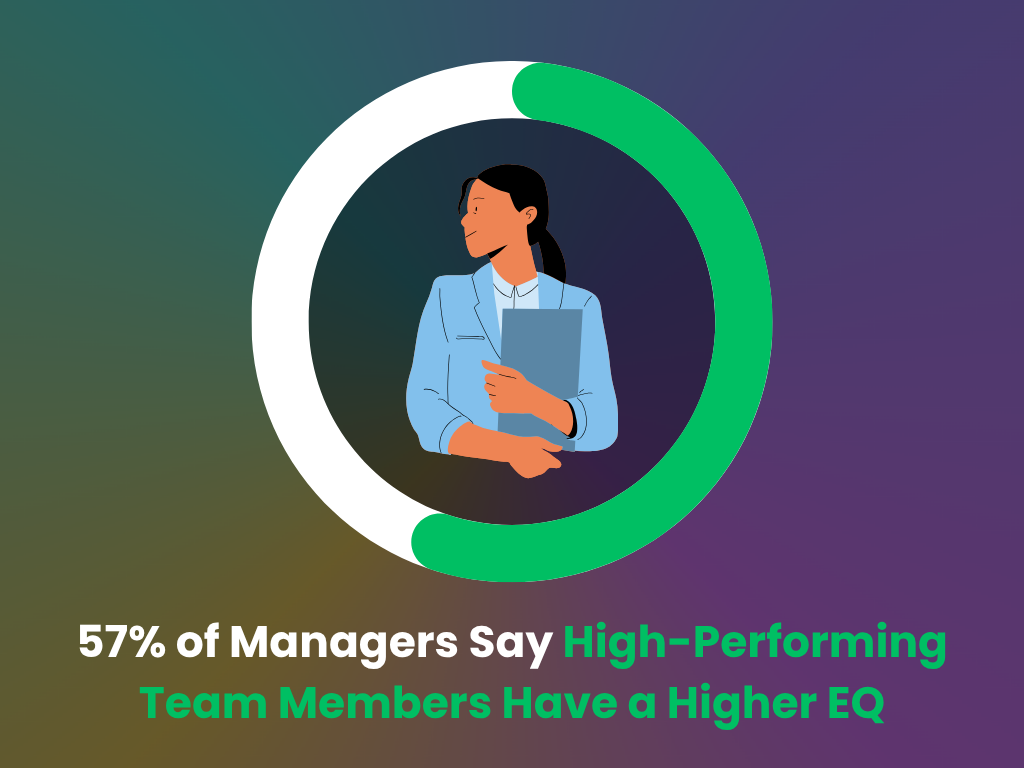
This statistic highlights the growing recognition of emotional intelligence as an essential element of team performance, encompassing qualities such as empathy, self-awareness, and resilience.
9% of Job Performance Can Be Attributed to Emotional Intelligence (Human Performance)
Research published in the Human Performance shows that self-reported emotional intelligence (EI) is linked to better job performance, with correlations ranging from approximately 0.28 to 0.30.
This means that EI explains about 9% of the differences in performance, so while it can be helpful, many other factors also influence professional success.
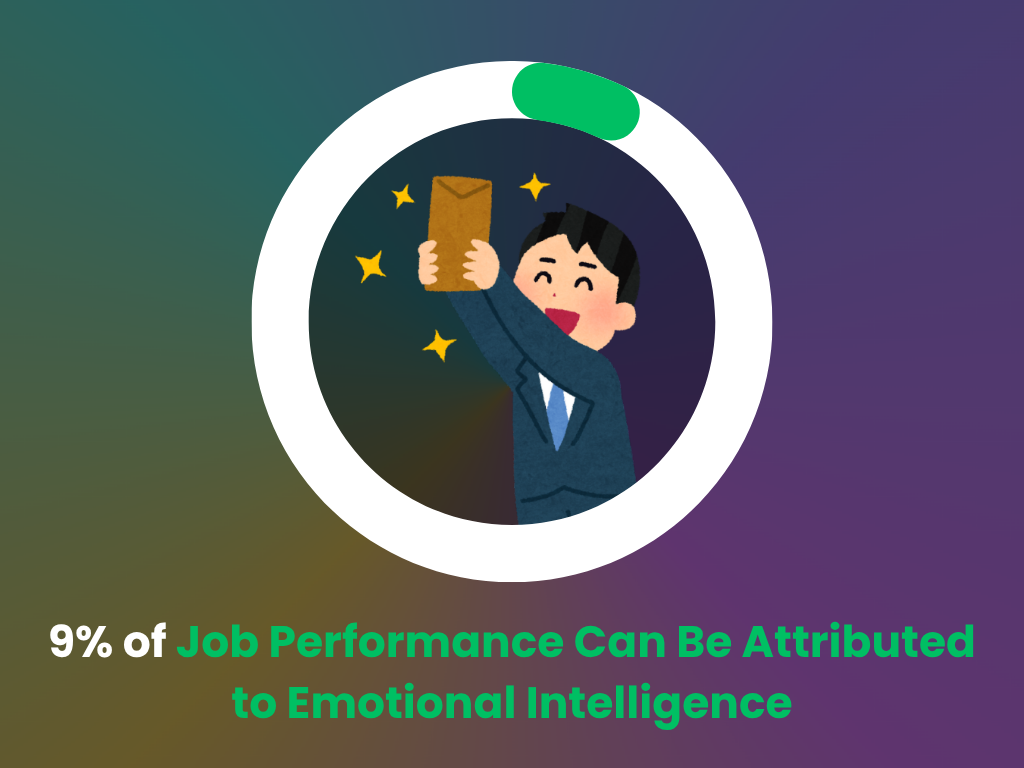
This data shows that soft skills and emotional intelligence have a measurable impact on professional outcomes, and not just on interpersonal harmony.
The Market for Emotional Intelligence Training Is Expected to Reach $17 Billion by 2035 (MRFR)
According to Market Research Future (MRFR), the global emotional intelligence training market is expected to reach $16.76 billion by 2035, representing a solid compound annual growth rate (CAGR) of 8.48%.
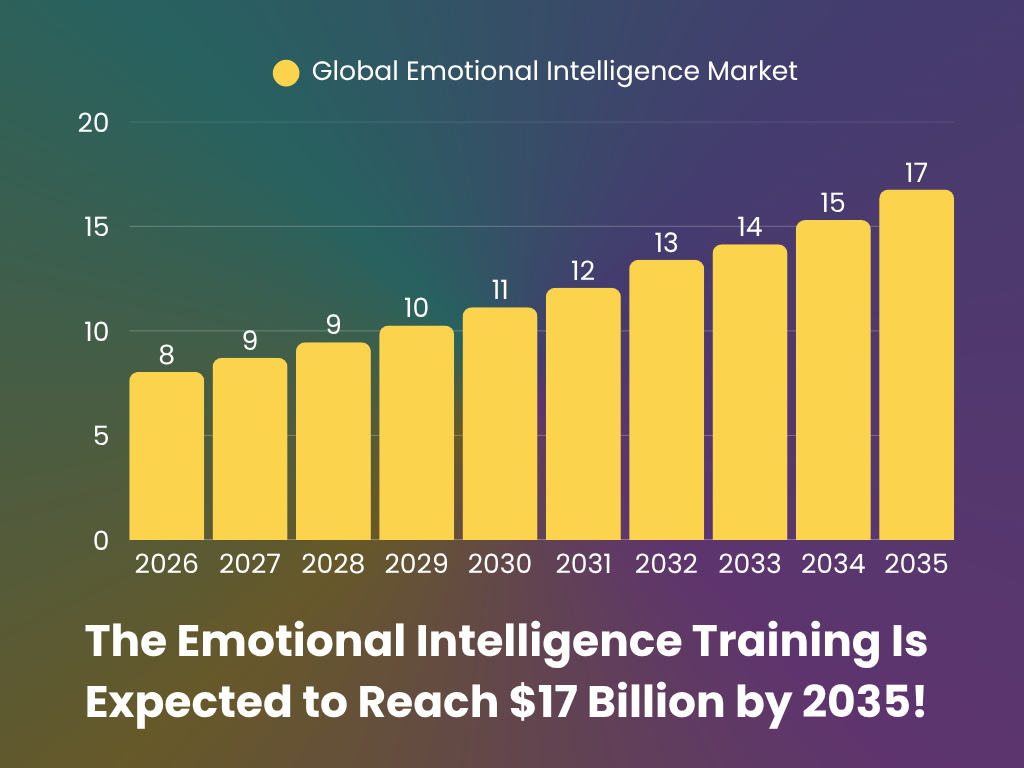
This growth is due to a growing recognition of the importance of emotional intelligence in professional development, which is leading to increased investment in emotional intelligence training programs.
8% of Job Satisfaction Can Be Attributed to Emotional Intelligence (Frontiers)
A meta-analysis published in Frontiers found a correlation coefficient of 0.29 between EI and job satisfaction.
This means that 8.4% of the variance in job satisfaction is associated with emotional intelligence.
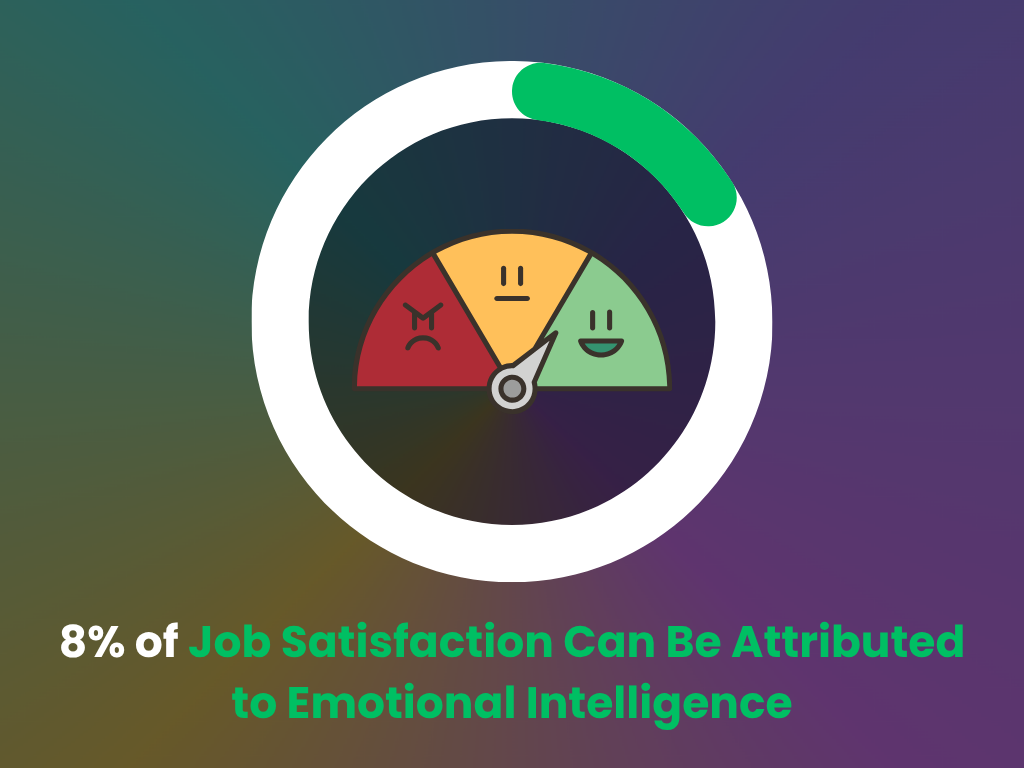
This relationship suggests that individuals with more developed emotional intelligence are better equipped to manage stress at work, build positive relationships with their colleagues, and cope with difficult situations, all of which contribute to greater job satisfaction.
75% of Managers Use EQ to Determine Promotions and Salary Increases (LHH)
According to a survey conducted by Lee Hecht Harrison, 75% of managers say they use emotional intelligence (EQ) to determine promotions and salary increases.
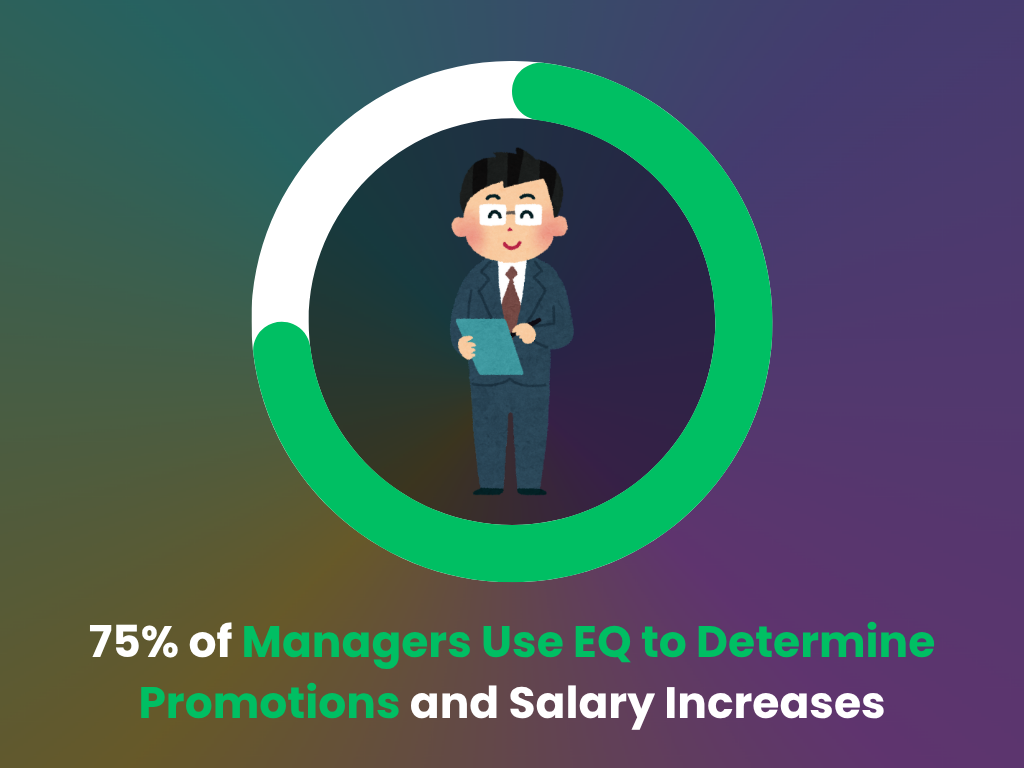
I would like to say that relying on emotional intelligence to make promotion decisions can introduce bias, as different managers may interpret the concept of "strong emotional intelligence" differently.