7 Eye-Opening Workplace Conflict Statistics to Know in 2026

Every office has it; the quiet clash of opinions, egos, and expectations.
These workplace conflicts don't just hurt feelings; they drain working hours and stifle innovation.
Let's dive into the latest statistics that reveal what really happens when pressure meets personality.
Key Workplace Conflict Statistics
- 62% of professionals have considered leaving their job due to conflicts in the workplace
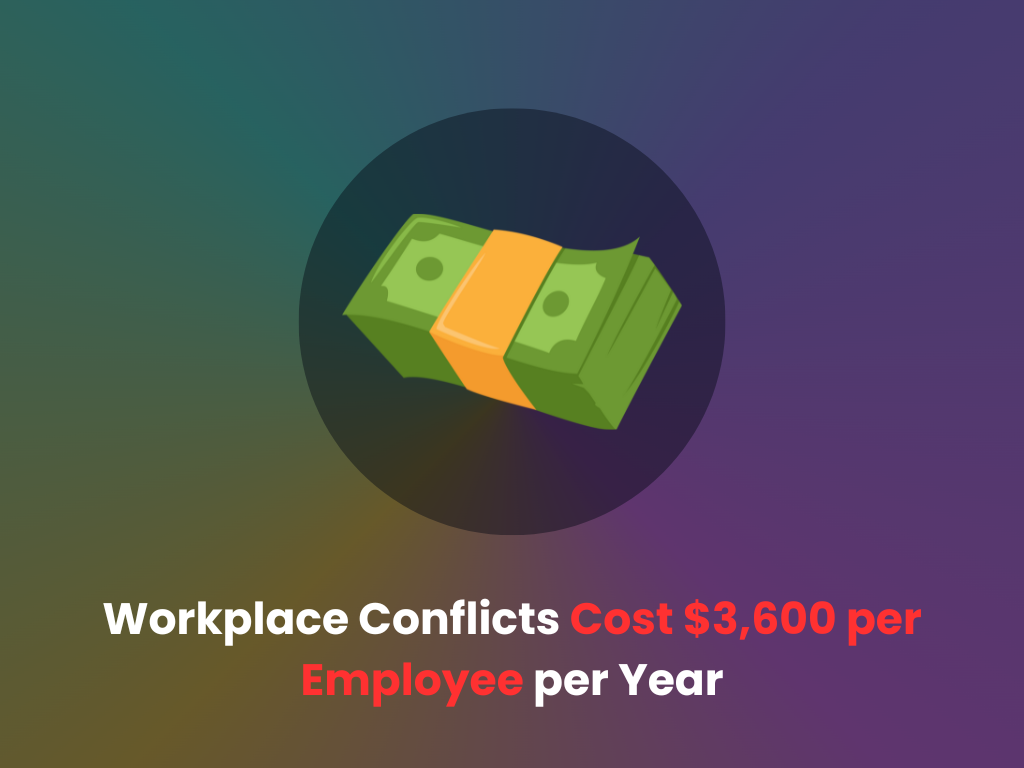
- $3,600 per employee each year is the cost of workplace conflicts for employers
- 49% of managers fail to demonstrate effective conflict management skills
Also read: EQ Statistics and Workplace Communication Statistics.
$3,600 per Employee Each Year Is the Cost of Workplace Conflicts for Employers (Inc.)
According to a report published in Inc., workplace conflicts, including absenteeism and "presenteeism," can cost employers approximately $3,600 per employee per year.
I believe this figure should serve as a warning and encourage us to implement more equitable and effective conflict resolution practices.
62% of Professionals Have Considered Leaving Their Job Due to Conflicts in the Workplace (Behavior Analysis in Practice)
A study published in the journal Behavior Analysis in Practice found that 62% of workers openly admitted that workplace conflict made them consider leaving their job.
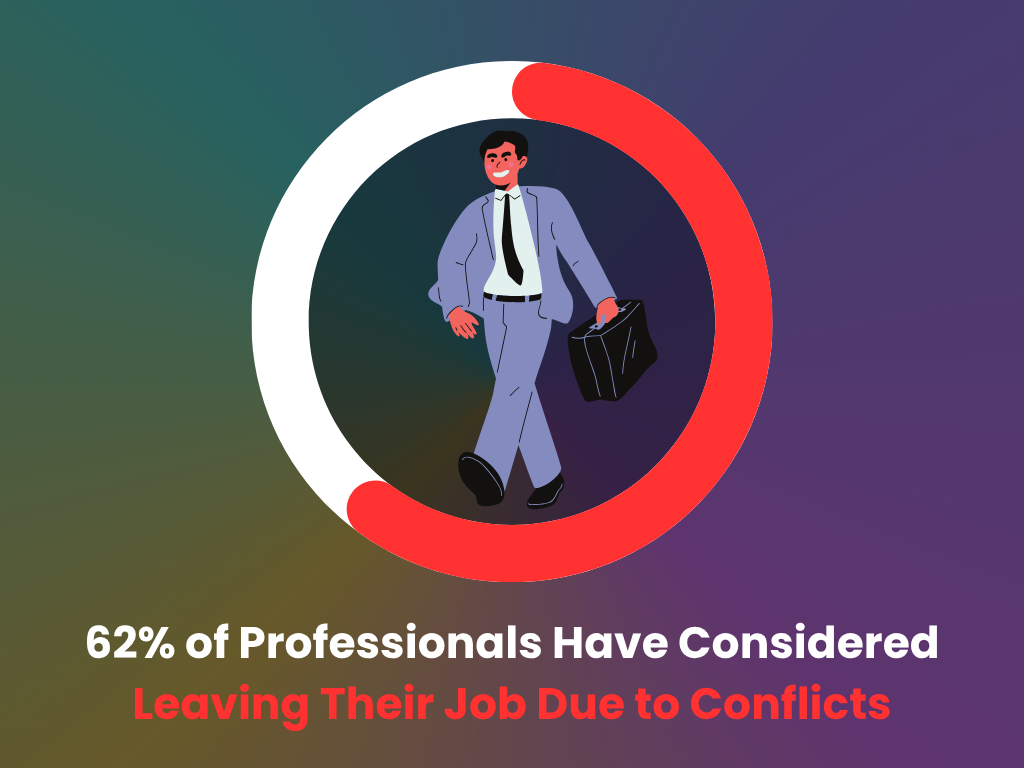
Although the study focuses specifically on behavior analysts, it clearly indicates that workplace conflicts are not trivial problems, but rather decisive factors in employee retention.
49% of Managers Fail to Demonstrate Effective Conflict Resolution Skills (DDI)
According to a study conducted by DDI, 49% of managers fail to demonstrate effective conflict resolution skills.
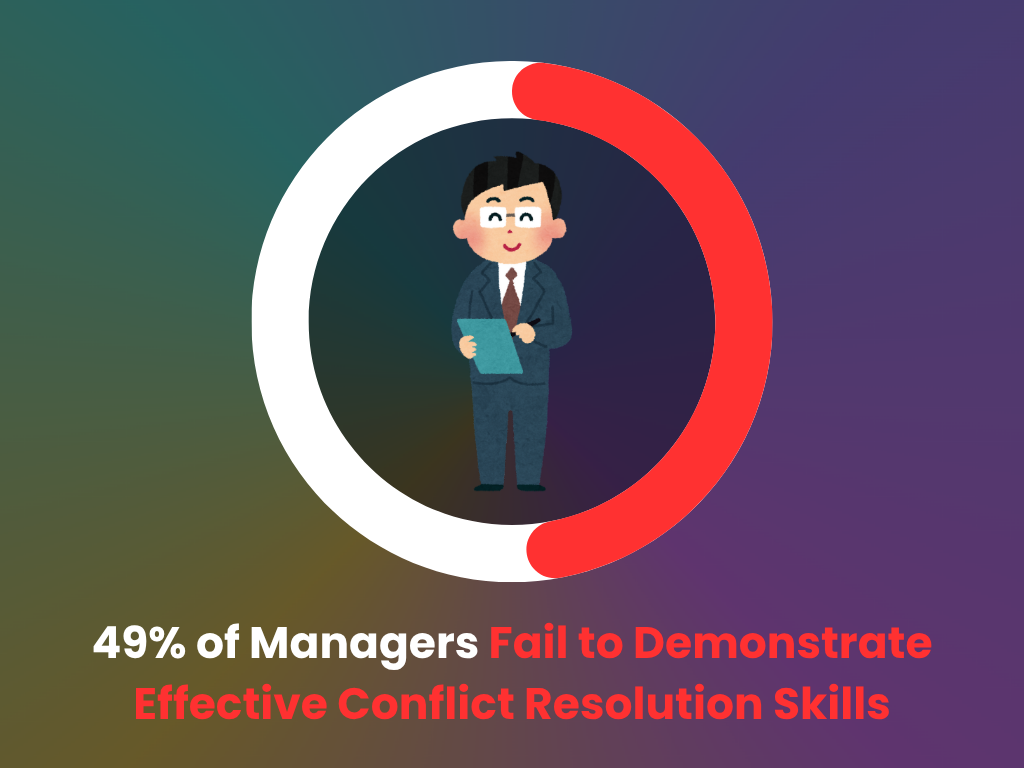
This reveals a systemic weakness within the management ranks: nearly half of them do not have the necessary skills to support their teams or empower employees in conflict situations.
73% of Professionals Say That Lack of Trust Is a Major Factor in Workplace Conflicts (Workplace Peace Institute)
According to a Workplace Peace Institute survey, 73% of professionals identify a lack of trust as a major factor in workplace conflicts, with personality conflicts (72%) and issues with role clarity (70%) also being cited.
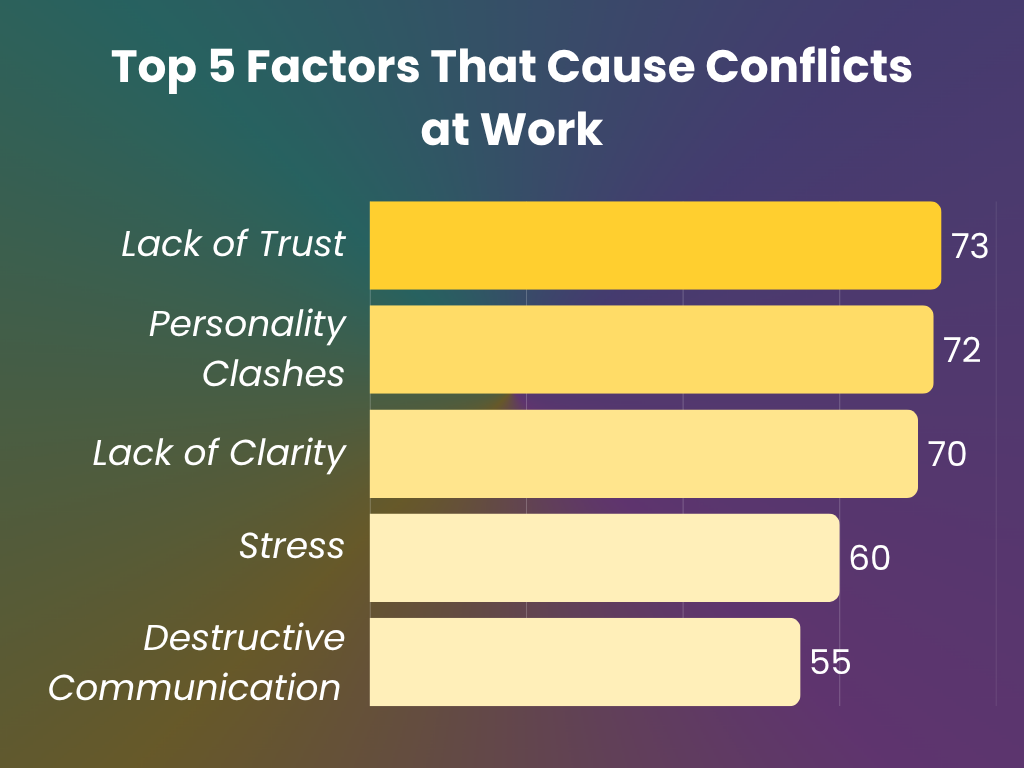
This highlights how managers often neglect to establish genuine cooperative relationships among workers.
If roles were more transparent, it would help reduce power imbalances that lead to conflicts and build more harmonious and collaborative workplaces.
On Average, Employees Spend 2 Hours per Week Managing Conflicts at Work (Workplace Peace Institute)
According to a report by the Workplace Peace Institute, workers spend an average of 2 hours per week managing conflicts in the workplace.
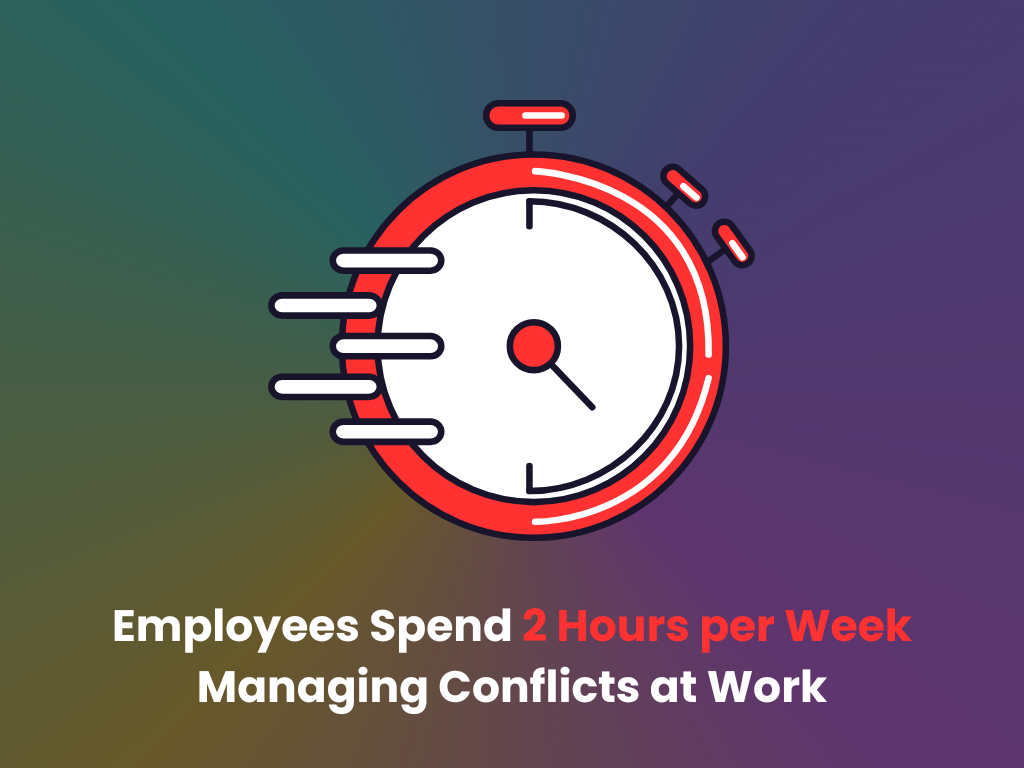
This data reveals that conflicts aren’t rare exceptions.
They’re a major waste of time and productivity.
47% of Employees Admit to Not Having Taken Any Steps to Resolve Disputes (CIPD)
According to a report from the Chartered Institute of Personnel and Development (CIPD), 47% of employees experiencing workplace conflict admitted that they took no action and simply ‘just let it go’.
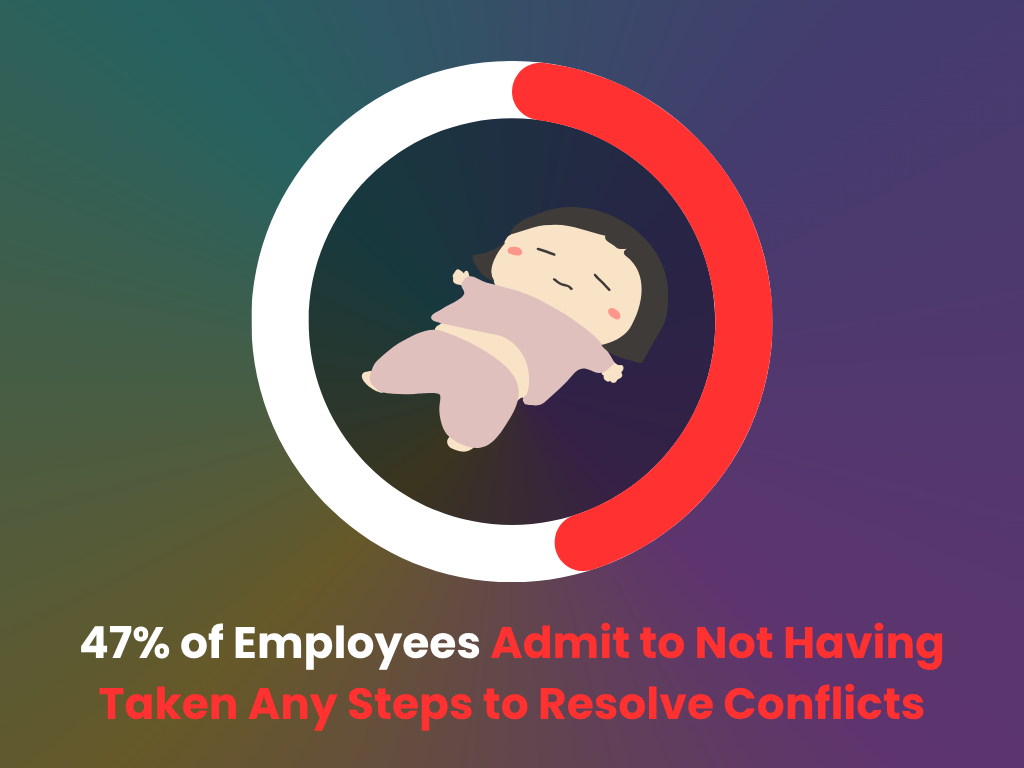
This suggests that nearly half of the workers feel unable or unwilling to participate in conflict resolution processes, highlighting systemic obstacles such as fear of retaliation, lack of trust in management, or the absence of collective support.
32 Percent of Conflict Occurs Between Management Levels (Workplace Peace Institute)
According to a report by the Workplace Peace Institute, 32 % of workplace conflicts occur between different management levels.
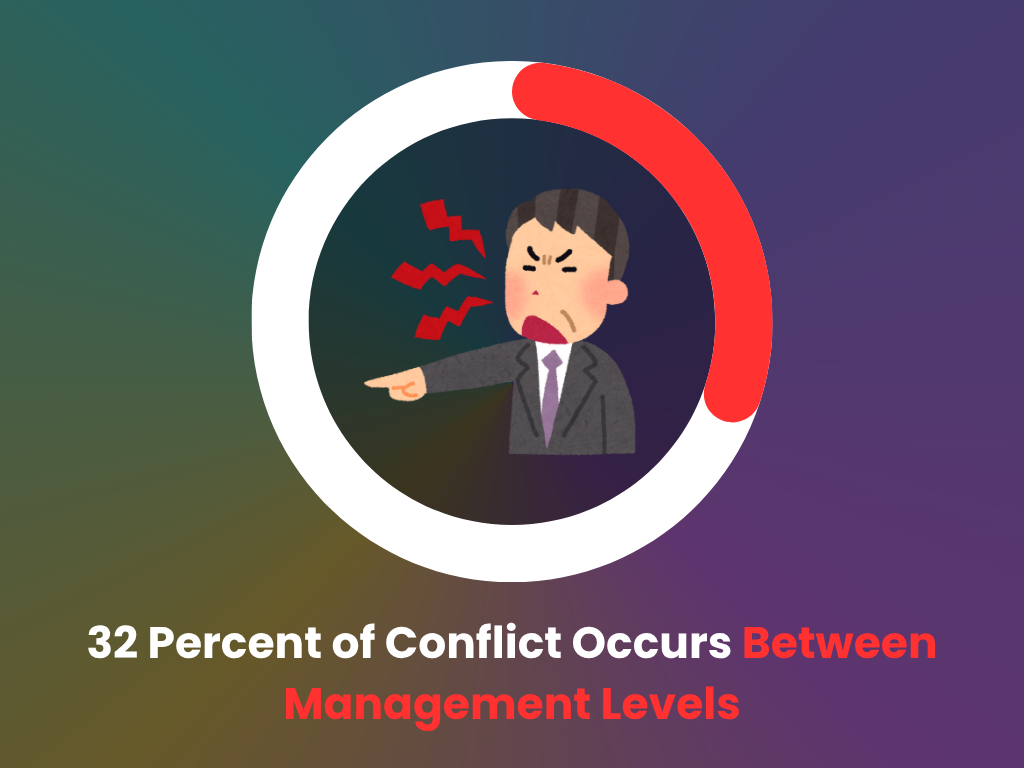
In my opinion, this finding underscores the importance of clear communication, consistent leadership practices, and conflict resolution training at all levels of management and between age groups in order to maintain a cohesive work environment.